The Wire columnist Ravi Nair lied, made baseless allegations and failed to substantiate them: Read how the Gandhinagar court verdict busts Leftist claims of victimhood
The Judicial Magistrate First Class Court in Gujarat’s Mansa convicted The Wire columnist and OCCPR partner journalist Ravi Nair under Section 500 of the IPC in a criminal defamation case filed by Adani Enterprises Limited (AEL). In continuation of the practice of elevating accused or convicted liars, rioters, and terror enablers to the status of heroes and martyrs, the leftist cabal is hailing Ravi Nair a ‘martyr’ who has been ‘silenced’ for writing against Adani. However, contrary to the victimhood narrative the leftist media is spinning, Ravi Nair was convicted for peddling lies against the Adani Group. Ravi Nair peddled lies about Adani Enterprises: The allegations The case arose from a complaint by Adani Enterprises, the flagship firm of the Adani Group, in 2021, which accused Ravi Nair of posting and circulating a series of tweets that the company said were false, malicious and damaging to its reputation. According to the company, the posts were aimed at eroding public trust and shaking investor confidence in the conglomerate. Through its counsels S V Thakkar and K P Raichura, the AEL alleged that between October 2020 and July 2021, accused Ravi Nair published defamatory content, particularly a series of tweets against the complainant on his X handle @t_d_h-nair, in addition to articles published on the anti-Adani website “Adani Watch”. The AEL alleged that Ravi Nair breached the boundary of fair criticism or personal opinions to pass off “scandalous, false, misleadıng, derogatory, and defamatory content as ‘facts’. The complainant attached the details of the series of tweets Ravi Nair published against the Adani Group, along with their engagement statistics such as likes, retweets, and quote tweets. The AEL argued that the narrative concocted by Nair through his tweets in question portrayed the Adani Group as “beneficiaries of undue political patronage, manipulators of laws and policies, and entities engaged in unethical, illegal, or improper business practices.” It was further alleged that several tweets published by the accused suggest that environmental laws were “tweaked or diluted to facilitate Adani-backed projects, that public assets such as ports and airports were transferred to Adani entities through misuse of governmental agencies, and that the Adani Group enjoys preferential treatment from the Central Government.” The Adani Enterprises also alleged that the content published by Nair suggested that the Adani Group was involved in corruption, coercive land acquisition, financial impropriety, regulatory violations, and even human rights abuses. In addition to the tweets, the complainant also brought to the court’s attention the articles published by Ravi Nair in the website “www.adaniwatch.org”, alleging that under the garb of investigative reporting, these articles peddled “unverified and defamatory material intended to harm” the Adani Group’s reputation, particularly in the eyes of international investors and institutions. The complainant further alleged that, despite claiming to be a journalist, Ravi Nair did not exercise due diligence or journalistic standards, and published defamatory material against AEL “willfully” and “deliberately”. It was further alleged by the complainant that the accused Ravi Nair neither sought to verify facts, rely on credible sources, nor sought clarification from Adani Enterprises. Highlighting the continuity, frequency, and thematic consistency of the tweets published by Ravi Nair, the complainant alleged that Ravi Nair’s actions were a part of “a deliberate and coordinated campaign to malign the complainant company and the Adani Group.” The AEL contended that the actions of the accused ‘journalist’ resulted in serious injury to the reputation and goodwill of the Adani Group. The complainant prayed before the court that the accused Ravi Nair be tried and, upon proof of guilt, be convicted for the offence punishable under Section 500 and/or other relevant provisions, the court deemed fit. The legal representatives of Adani Enterprises presented three witnesses and documentary evidence, including the tweets and articles they deemed defamatory. Prosecution Witness number 2, Brijesh Sureshbhai Gosai, who works as a Deputy Manager in the Adani Group’s Corporate Communication Department, deposed that during his routine social media search for monitoring digital media, Gosai came across the tweets published by accused Ravi Nair about the Adani Group. Gosai said that Nair’s tweet “falsely” claimed that only Gautam Adanı and Mukesh Ambani were the maın players in the CNG and LPG market, while in reality, there are several other major players like Torrent Gas in the CNG market. The PW-2 opined that the tweet dated 7th October 2020, was “sarcastic, misleading and likely to adversely affect the reputation of the Adani Group in the minds of readers.” About tweet number 54 dated 20th October 2020, Gosai said that it al
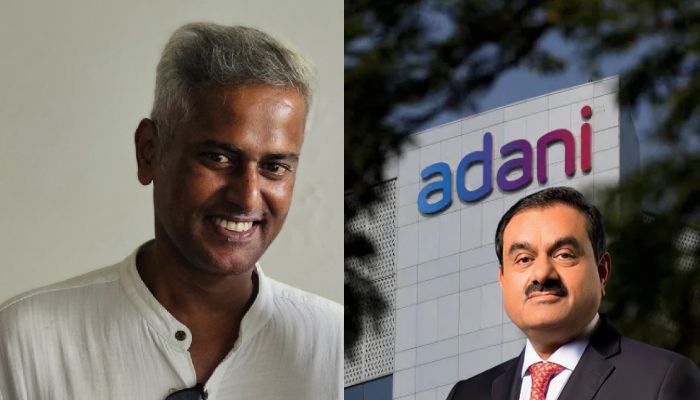

The Judicial Magistrate First Class Court in Gujarat’s Mansa convicted The Wire columnist and OCCPR partner journalist Ravi Nair under Section 500 of the IPC in a criminal defamation case filed by Adani Enterprises Limited (AEL). In continuation of the practice of elevating accused or convicted liars, rioters, and terror enablers to the status of heroes and martyrs, the leftist cabal is hailing Ravi Nair a ‘martyr’ who has been ‘silenced’ for writing against Adani.
However, contrary to the victimhood narrative the leftist media is spinning, Ravi Nair was convicted for peddling lies against the Adani Group.
Ravi Nair peddled lies about Adani Enterprises: The allegations
The case arose from a complaint by Adani Enterprises, the flagship firm of the Adani Group, in 2021, which accused Ravi Nair of posting and circulating a series of tweets that the company said were false, malicious and damaging to its reputation. According to the company, the posts were aimed at eroding public trust and shaking investor confidence in the conglomerate.
Through its counsels S V Thakkar and K P Raichura, the AEL alleged that between October 2020 and July 2021, accused Ravi Nair published defamatory content, particularly a series of tweets against the complainant on his X handle @t_d_h-nair, in addition to articles published on the anti-Adani website “Adani Watch”.
The AEL alleged that Ravi Nair breached the boundary of fair criticism or personal opinions to pass off “scandalous, false, misleadıng, derogatory, and defamatory content as ‘facts’. The complainant attached the details of the series of tweets Ravi Nair published against the Adani Group, along with their engagement statistics such as likes, retweets, and quote tweets.
The AEL argued that the narrative concocted by Nair through his tweets in question portrayed the Adani Group as “beneficiaries of undue political patronage, manipulators of laws and policies, and entities engaged in unethical, illegal, or improper business practices.”
It was further alleged that several tweets published by the accused suggest that environmental laws were “tweaked or diluted to facilitate Adani-backed projects, that public assets such as ports and airports were transferred to Adani entities through misuse of governmental agencies, and that the Adani Group enjoys preferential treatment from the Central Government.”
The Adani Enterprises also alleged that the content published by Nair suggested that the Adani Group was involved in corruption, coercive land acquisition, financial impropriety, regulatory violations, and even human rights abuses.
In addition to the tweets, the complainant also brought to the court’s attention the articles published by Ravi Nair in the website “www.adaniwatch.org”, alleging that under the garb of investigative reporting, these articles peddled “unverified and defamatory material intended to harm” the Adani Group’s reputation, particularly in the eyes of international investors and institutions.
The complainant further alleged that, despite claiming to be a journalist, Ravi Nair did not exercise due diligence or journalistic standards, and published defamatory material against AEL “willfully” and “deliberately”. It was further alleged by the complainant that the accused Ravi Nair neither sought to verify facts, rely on credible sources, nor sought clarification from Adani Enterprises.

Highlighting the continuity, frequency, and thematic consistency of the tweets published by Ravi Nair, the complainant alleged that Ravi Nair’s actions were a part of “a deliberate and coordinated campaign to malign the complainant company and the Adani Group.” The AEL contended that the actions of the accused ‘journalist’ resulted in serious injury to the reputation and goodwill of the Adani Group.
The complainant prayed before the court that the accused Ravi Nair be tried and, upon proof of guilt, be convicted for the offence punishable under Section 500 and/or other relevant provisions, the court deemed fit. The legal representatives of Adani Enterprises presented three witnesses and documentary evidence, including the tweets and articles they deemed defamatory.
Prosecution Witness number 2, Brijesh Sureshbhai Gosai, who works as a Deputy Manager in the Adani Group’s Corporate Communication Department, deposed that during his routine social media search for monitoring digital media, Gosai came across the tweets published by accused Ravi Nair about the Adani Group.
Gosai said that Nair’s tweet “falsely” claimed that only Gautam Adanı and Mukesh Ambani were the maın players in the CNG and LPG market, while in reality, there are several other major players like Torrent Gas in the CNG market.
The PW-2 opined that the tweet dated 7th October 2020, was “sarcastic, misleading and likely to adversely affect the reputation of the Adani Group in the minds of readers.”
About tweet number 54 dated 20th October 2020, Gosai said that it alleged that environmental laws were twisted or broken to facilitate the Adani Group projects; however, these allegations were “false, as environmental laws are equally applicable to the Adani Group and the general public, and the success of the Adani Group is due to its efficiency and quality.”
In addition, the PW-2 stated that the “Adani Watch” article was of a defamatory nature and did not specify which environmental laws were ‘violated’. About a tweet dated 15th January 2021, Gosai said that Ravi Nair claimed that there was misuse of government agencies in handıng over the management of Mumbai Airport to the Adanı Group.
Similar deposition was made by PW-3 Maheshkumar Dosabhaı Vadhare, who worked as a Production Coordınator in the Adanı Group from 2018 to 2021, thereafter as Deputy Manager from 2021 to 2025, and is presently working as an Associate Manager.
Arguments presented by the counsel of Ravi Nair
The advocate representing the leftist propagandist, disputed the maintainability of the defamation suit and contended that the complainant company was not a “person aggrieved” as the alleged defamatory material refers only to “Adani Group” and occasionally to “Gautam Adani”, “neither of whom is before the Court, and Adani Enterprises Limited, which has filed the complaint, is nowhere specifically named in the impugned tweets or articles.”
It was further contended that the authorisation relied upon by the complainant was “fundamentally defective”. The defence argued that no valid Board Resolution has been brought on record to show that the Board of Directors consented to the institution of the present complaint, and the alleged authorisation by the Company Secretary and Joint President (Legal) cannot substitute a decision of the Board as per the law.
The defence also raised a question over territorial jurisdiction, arguing that jurisdiction can arise only where the offence is committed or where its consequence ensues, and the prosecution has failed to establish either.
In addition, the defence argued that the very foundation of defamation is missing, as the prosecution has failed to demonstrate which exact part of the tweets constitutes a defamatory imputation. Further, it was submitted that the mere description of the tweets in question as “false” or “misleading” does not amount to defamation unless accompanied by intention or knowledge to harm reputation.”

The defence also argued that the complainant did not furnish any documentary evidence indicating that defendant Ravi Nair’s tweets caused a loss of reputation of the Adani Group in public, nor does it indicate that any of the Adani Group’s shareholders, investors, or third party was influenced or misled by the content in question. A similar argument was made in the context of Nair’s tweets affecting the foreign investors of the Adani Group.
The date of viewing of the allegedly defamatory content by the PW-1 was also disputed by the defence, which argued that no screenshots were contemporaneously taken, nor the links to articles referred to in the tweets examined, nor were the authors of those linked articles arraigned as accused, rendering the prosecution “selective and incomplete”. It must be noted that during cross-examination, PW-1 had admitted to not taking the screenshot of the content deemed defamatory by the prosecution.
It was further contended that criticism based on material available in the public domain, after reasonable verification, falls within the protection of the law.
Further, the counsel representing Ravi Nair contended that the complainant has failed to establish beyond a reasonable doubt that the accused authored or published the tweets in question. The defence argued that just because the tweets appear on a particular Twitter handle, authorship cannot be presumed in criminal proceedings without strict proof.

Pertinently, the defence submitted that mere falsity or incorrectness of a statement does not amount to defamation, and that the prosecution witnesses have failed to read or reproduce the alleged defamatory statements accurately in their depositions. The defence accused the complainant of giving their own interpretations and conclusions.
On reputational or financial loss supposedly suffered by the complainant company, the defence argued that the AEL “failed to produce any material whatsoever to show that the tweets or articles caused any actual damage.”
It was also contended that the complainant produced no evidence of a decline in market capitalisation, loss of contracts, withdrawal of investments, or adverse regulatory action. In addition, the defence argued that bald assertions of reputational harm cannot sustain a conviction in the absence of corroborative material.
The defence also emphasised that Nair’s tweets were in “good faith” since they were based on “research done from articles”, and that since the authors of the articles deemed defamatory by the complainant are not implicated in the present case, the defendant should be the benefit and the complaint be dismissed.
Arguments presented by Adani Enterprises
The Adani Group’s advocate submitted that the argument of the Nair’s advocate rests on peripheral and circumstantial aspects such as the location of the complainant, the laptop allegedly used, or the absence of a hotel bill, whereas the complainant himself has categorically stated that when he came across the objectionable tweets he was at Mansa, and mere denial without any contrary evidence cannot dislodge the complainant’s version.
The AEL further contended that while the defence was deliberately diverting attention to share price fluctuations and absence of financial loss, “the injury caused by defamation is not limited to immediate economic loss but includes damage to goodwill and reputation, which cannot always be quantified monetarily or reflected instantly in market prices.”

During the proceedings, the territorial jurisdiction became an issue; however, the counsel appearing for the Adani Enterprises submitted that complainant and PW-1 Anshul Rajendraprasad Saini, came across Ravi Nair’s “defamatory” tweets on 27th July 2021 while he was at Navrang Hotel in Mansa, Gandhinagar in Gujarat, for company related work. At that time, Saini worked at the communication department of Adani Enterprises. He was authorised by the AEL to institute and prosecute the present complaint on the company’s behalf.
It was also argued that the defence’s contention about territorial jurisdiction was “wholly baseless”, as merely questioning the absence of a hotel bill cannot negate the complainant’s sworn testimony.
The AEL advocate submitted that PW-1 deposed that he accessed and read Ravi Nair’s “defamatory” tweets against the Adani Group when he was at a hotel in Mansa while on official work. Thus, under Section 179 of the Code of Criminal Procedure, jurisdiction is attracted at the place where the consequence of the offence ensues, and in cases of defamation through electronic publication, the consequence ensues where the defamatory material is read and reputational injury is caused.
It was also emphasised that the accused has not disputed authorship of the tweets posted from his Twitter handle @t_d_h_nar and that the defence has merely raised technical objections without challenging the genuineness of the electronic evidence.
Countering the defence’s argument that no financial loss was caused, the complainant company stated that proof of monetary loss is not a sine qua non for the offence of defamation, and that “injury to reputation is itself the gravamen of the offence and that reputational harm cannot always be quantified in financial terms.”
In response to the defence’s plea of good faith and public interest, the AEL argued that “reckless allegations, insinuations, and sarcastic commentary without due verification cannot be protected under the guise of good faith or public interest.”
Moreover, the complainant company emphasised that the continuity and frequency of Ravi Nair’s tweets demonstrated a deliberate and sustained attempt to malign the Adani Group rather than a bona fide expression of opinion.
Court observation
The court rejected the defence’s challenge to the suit’s maintainability and the complainant, Adani Enterprises Limited, being a “person aggrieved”. The Judicial Magistrate, Damini Dixit, cited a previous Supreme Court observation that to satisfy the requirement of being a “person aggrieved”, it is not necessary that the complainant must be named verbatim in the defamatory publication. It suffices that the complainant is clearly identifiable, either expressly or by necessary implication.
“Applying these settled principles to the present case, this Court finds that the complaint, as well as the evidence on record, consistently asserts that the complainant company is the flagship and principal entity of what is popularly and commercially known as the “Adani Group” The publications relied upon by the complainant repeatedly refer to business activities, infrastructure projects, financialdealings, regulatory matters, and governmental interactions associated with “Adani” or “Adani Group” These references are not vague or abstract, but relate to identifiable commercial enterprises operating in the public domain,” the court said, adding that “it would be artificial and contrary to common sense to hold that imputations against the “Adanı Group” do not concern the complainant company.”

Regarding the defence’s argument of no reputation loss to Adani Enterprises, the judge highlighted that the Supreme Court has earlier recognised that the reputation of a company is “not confined to its registered name alone, but extends to the commercial identity by which it is known in the public domain.”
The court found the argument of defence that only a Director of the company could maintain the complaint is “devoid of substance”. “Section 199 CrPC does not mandate that the complaint must be instituted personally by the highest officer of the company. A company, being a juristic person, necessarily acts through authorised representatives. Once it is shown that the complaınt is instituted on behalf of the company by a duly authorised person, the requirement of Section 199 stands satisfied,” the court stated.
On the defence’s argument on territorial jurisdiction, the court stated that the complainant company maintained throughout the proceedings that PW-1, who first noticed the defamatory content by Ravi Nair, was at a hotel in Mansa (Gandhinagar, Gujarat) for official work. The court did not heed the defence’s attempt to discredit PW-1’s version merely due to an absence of hotel receipts, travel bills, etc.
“However, at the stage of determining territorial jurisdiction, the Court is not required to insist upon proof of jurisdictional facts with the same degree of strictness as required for proving guilt,” Judicial Magistrate Damini Dixit stated and emphasised that the court was “satisfied that the alleged consequence of the offence ensued within its territorial jurisdiction.”
Moving further court addressed the complainant, presenting electronic records of the alleged defamatory content, and the defence’s challenge to the admissibility and proof of such electronic evidence due to the complainant’s supposed failure to establish the source, device, and authenticity of the electronic records.
Regarding this, the court said, “The complainant has produced a certificate under Section 65B of the Evidence Act, which has been exhibited on record. PW-1 has deposed that the tweets and articles were accessed on an electronic device and that the printouts produced correspond to what was displayed on the screen at the relevant time.”
The court said that the law requires compliance with the substance of Section 65B, not a hyper-technical description of hardware specifications. The court further emphasised that the accused person, Ravi Nair, did not dispute that the Twitter handle from which the tweets were published belongs to him, nor was it claimed that the tweets and articles relied upon are fabricated or manipulated.
Regarding the admissibility of the electronic evidence submitted by the complainant, the court said, “The court is satisfied that the electronic evidence relied upon by the complainant has been brought on record in substantial compliance with the requirements of law and is admissible for consideration.”
While the accused leftist ‘journalist’ contended that since the alleged defamatory tweets and articles pertained to various subject matters and were published on different occasions, the court found that the publications relied upon by the complainant “cannot be viewed in isolation.”
The court noted that despite the fact that the tweets and articles in question pertain to different events and were published over a period of time, they “consistently target the complainant company and its group by alleging unethical conduct, manipulation of laws, misuse of governmental machinery, environmental violations, and financial impropriety.”
“In the present case, the publications disclose continuity of purpose and design, and cannot be said to be wholly independent or unrelated,” the court noted.
Regarding the core issue of defamation, the court highlighted the evidence on record to note that “the publications attribute conduct to the complainant company which, if believed, would lower its moral and commercial standing in the estimation of the public, investors, regulators, and business partners.”

Contrary to the defence’s argument that the content in question was mere reporting of facts, the court found that the imputations were “not confined to neutral reporting of facts. They go beyond mere narration and contain assertions suggesting cronyism, manipulation of statutory processes, lack of integrity, and unethical business practices. Such allegations, when published without substantiation, have a direct bearing on the reputation of a corporate entity operating in the public and financial domain.”

On the defence’s “fair criticism” and “expression of opinion” argument, the court stated that the Indian law provides its citizens the freedom of expression and fair criticism, expressions of opinion “cease to enjoy protection when they are presented as assertions of fact, particularly when they impute dishonesty or illegality without verification.”
Dismissing the defence’s ‘expression of opinion’ argument, the court noted that the manner in which the content against the Adani Group was published and promoted by Ravi Nair indicated that it was not a case of speculative commentary but rather a deliberate attempt at convey factual wrongdoing by the AEL.
“A careful reading of the publications shows that they are couched in a manner calculated to convey factual wrongdoing rather than speculative commentary. The language used is not tentative or exploratory, but declaratory and accusatory. An ordinary reader is likely to understand the imputations as statements of fact affecting the integrity and credibility of the complainant company,” the court noted.

Moreover, the court dismissed the defence’s ‘no financial loss’ argument, stating that “reputational harm is not always susceptible to mathematical measurement…. Viewed in totality, the publications form part of a sustained narrative portraying the complainant company in a disreputable light.”

Explaining the legal technicalities of defamation and reputation, the court noted that the Adani Group is a corporate entity active in various sectors, including infrastructure and energy, etc, and operates in a highly regulated environment and depends on public confidence, investor trust, and regulatory goodwill.
“Any imputation suggesting illegality, manipulation of laws, undue political influence, environmental wrongdoing, 6r financial impropriety is not a matter of mere opinion when directed against such an entity Such imputations strike at the very foundation of its reputation and business standing,” the court stated.
The court further cited some of the tweets made by the accused against the Adani Group.
In one tweet dated 7th October 2020, Ravi Nair wrote, “When it comes to Natural Gas, thete are two Major Private Players in India Mukesh Ambanı wants to be the number one LPG supplier in Indra and Gautam Adanı wants to be numero uno of the CNG market What a transparent move! Wah wah.”
In another tweet dated 26th November 2020, the accused ‘journalist’ wrote, “”When it comes to Adani group, Govt knows how to bend laws and rules to fit in PM Modı’s favorite crony Adani group is a bubble It will burst sooner than later and lot of public sector banks and scores of small investors will be doomed.”
Similarly, in a tweet dated 5th February 2021, Nair wrote, “Who Is this Adani? Adani had a documented history of corruption, bribery, abuses and human rights across the world It was also facing further criminal investigations for alleged involvement in multi-billion-dollar fraud in India.”
Citing other such tweets by Ravi Nair, the court noted that the content in question is not merely descriptive r interrogative, rather, “the imputations are framed in a manner that conveys assertions of fact rather than speculative opinion.”
“Expressions suggesting that laws have been “tweaked” to favour the complainant, that governmental agencies have been misused for its benefit, or that the complainant’s growth is attributable to political patronage, are not value-neutral statements They convey a clear suggestion of unethical or unlawful conduct,” the court said, adding that there is a subtle but crucial difference between fair criticism and defamatory imputation.

On the defence’s claim that the publications in question were part of public discourse and journalistic commentary, the court reiterated that the law “draws a clear line between responsible critique and reckless imputation.”
The court also noted that the medium of publication is irrelevant and that the publication of defamatory content on social media has the potential to reach a vast and diverse audience, including investors, regulators, and international stakeholders. The court noted that, given the vast and diverse audience social media platforms have, the probability of reputational harm is “significantly amplified”.
“When imputations of a serious nature are made through such platforms, the author cannot feign ignorance of their likely consequences Viewed cumulatively, the publications relied upon by the complainant disclose a pattern of imputations that go beyond isolated remarks or casual commentary They create a narrative portraying the complainant company as an entity thriving through illegitimate means and improper influence Such a portrayal, if accepted by readers, would unquestionably lower the complainant’s reputation in the estimation of right-thinking members of society,” the court stated.

The court noted that while the accused claimed to have made the publications after due research and in good faith, “he has not led any independent evidence to establish the truth of the imputations contained in the publications. No documentary material, official record, or verified data has been produced to substantiate the serious allegations made against the complainant company.”
“Good faith is not a matter of mere belief or assertion, it requires demonstrable prudence, verification, and restraint prior to publication, particularly where the imputations are grave and capable of causing serious reputational harm The record does not disclose any material to indicate that the accused undertook verification of facts, sought clarification from the complainant, or exercised caution commensurate with the seriousness of the allegations The language of the publications is categorical and accusatory, rather than tentative or exploratory,” the court added.
The court also rejected the defence’s challenge to the trustworthiness of the witnesses presented by the complainant, stating that “employment with a complainant company, by itself, does not render a witness untrustworthy.
“In the present case, the prosecution witnesses have deposed prmarily with regard to their access to the impugned publications, the nature of the imputations contained therein, and the impact of such publications on the complainant company Their evidence is broadly consistent on material particulars and does not suffer from contradictions that go to the root of the prosecution case,” the court stated, adding that the prosecution witnesses may have an interest in the outcome of the proceedings; however, that sone is not sufficient to discard their testimony.
The court concluded that the complainant provided sufficient oral and documentary evidence to successfully establish the essential foundational facts necessary for constituting the offence of defamation.
“The fact of publication, as well as access to such publications, has been established through the consistent testimony of the prosecution witnesses and the electronic record The defamatory character of the publications becomes evident upon a plain reading of the contents of the tweets themselves. It demonstrates that the accused has attributed to the complainant company and its group serious allegations of illegality, corruption, manipulation of laws, abuse of governmental machinery, financial impropriety, and unethical conduct,” the court stated.
“The imputations are not expressed tentatively or as matters requiring verification, but are stated categorically as assertions of fact Such statements, when published on a platform accessible to the public at large, are clearly capable of lowering the reputation of the complainant company in the estimation of investors, regulators, business partners, and right-thinking members of society Furthermore, these publications do not confine themselves to criticism of governmental policy or expression of opinion They directly impute discreditable conduct to the complainant company and portray its business growth as the product of corruption, cronyism, and illegality,” the court ruled.
The court further stated that far from being a fair comment or a permissible opinion, the content published by accused Ravi Nair “squarely falls within the mischief contemplated under Section 499 of the Indian Penal Code, being imputations made concerning the complainant company with knowledge or reason to believe that they would harm its reputation.”
According to the court, the publications in question “were not confined to abstract policy criticism, but attributed discreditable conduct to the complainant company itself.”
Highlighting the frequency, categorical tone, and dissemination through social media, the court noted that the accused “had knowledge, or at least reason to believe, that such imputations would cause harm to the reputation of the complainant company.”
The court also found that the accused failed to submit any material to justify the imputations on grounds of truth, good faith, or public interest.
“In these circumstances, the ingredients of the offence of defamation, as defined under Section 499 of the Indian Penal Code and punishable under Section 500 thereof, stand duly proved. The accused Mr Ravı Naır is held to be guilty of the offence under Section 499, punishable under Section 500 of the IPC,” the court ruled.
The court also stated that, given the fact that the accused claimed to be a journalist, he “cannot be heard to plead ignorance of the impact, reach, and consequences of statements published through digital platforms.”
The court decided not to give the convict the benefit of probation, noting that the accused is a mature individual fully cognizant of the legal implications of his actions.
“Granting leniency through probation would undermine the deterrent effect of the law and send a message of impunity to others in similar positions of trust Therefore, keeping in mind the social implications of a middle-ground sentence ensures that the offender realızes the consequences of their actions while signaling to the public that such violations will be met with firm judicial resolve,” the court order dated 10th February 2026 stated.
The court convicted and sentenced Ravi Nair to simple imprisonment for a term of one year and imposed a fine of Rs 5000/- under section 255(2) of the Criminal Procedure Code.
Leftists hail Ravi Nair a ‘martyr’ even as the court found him guilty
In what could be deemed an expression of distrust in the judiciary, the left liberal coterie is elevating Ravi Nair to the status of a martyr. In this vein, advocate Prashant Bhushan wrote on X, “This order is totally unfair & wrong. Ravi Nair is one of the finest investigative journalists in the world. He never wrote anything against Adani which was not true or unjustified. But should we be surprised?”
This order is totally unfair & wrong. Ravi Nair is one of the finest investigative journalists in the world. He never wrote anything against Adani which was not true or unjustified.
— Prashant Bhushan (@pbhushan1) February 11, 2026
But should we be surprised? https://t.co/XfxPmhHa1T
Meanwhile, a pro-Congress troll expressed solidarity with Nair and wrote, “In absolute solidarity with Ravi Nair @t_d_h_nair Adani is a big time fraud and one day all his sins will be accounted for, today he has the government and courts in his pocket, tomorrow he won’t. Also, this is a paid PR post by Adani , he is literally paying sell outs like Jaiky Yadav to mock a journalist doing independent journalism. Never be this blind for money that like sanghis, you lose the sense of what is decent and what is not.”

Similarly, leftist propaganda outlet, The New Minute’s editor, Dhanya Rajendran, wrote, “Ravi Nair’s conviction is nothing to celebrate, even for his detractors. The misuse of criminal defamation poses a real threat to everyone, especially journalists. What was the case about? What were his tweets? What did the judge say?”
Ravi Nair’s conviction is nothing to celebrate, even for his detractors. The misuse of criminal defamation poses a real threat to everyone, especially journalists.
— Dhanya Rajendran (@dhanyarajendran) February 11, 2026
What was the case about? What were his tweets? What did the judge say? Read the story. https://t.co/2VqdzhWT1F
This ‘martyrdom’ claim is nothing but a repeated pattern of painting accused and convicted individuals aligned with the leftist ideology as ‘victims’ of the ‘system’. From 2020 anti-Hindu Delhi Riots accused mastermind Umar Khalid, to now leftist propagandist Ravi Nair, the left liberal media and the extended ecosystem have a penchant for celebrating those convicted of wrongdoing as long as they belong to their ideological fold, even as facts and courts state otherwise.