UGC Equity Regulations: How the draft was modified to incorporate Indira Jaising’s demands and left glaring questions on possible misuse to target general caste students
The recently notified Promotion of Equity in Higher Education Institutions Regulations, 2026, have received a massive pushback across the country, with people hitting the streets against the regulations. After days of protests, Union Education Minister Dharmendra Pradhan finally addressed the controversy yesterday (27th January) and offered an assurance that the regulations would not be misused. However, the assurance did little to allay the legitimate fears of people opposing the regulations for pushing the stereotype that the general castes cannot be the victims of caste-based discrimination and excluding general category students from the grievance redressal mechanism. The UGC Equity Regulations 2026 are supposedly an ‘improvement’ over the Promotion of Equity in Higher Education Institutions Regulations, 2025. But, in reality, the 2026 regulations turned out to be anything but an ‘improvement’. According to Swarajya, unlike the 2026 regulations, the 2025 draft regulations reflected a balanced approach and pragmatic effort in addressing discrimination in educational institutions. The origins of the UGC regulations on equity The 2025 draft regulations emerged out of a PIL filed in 2019 by mothers of students of Rohith Vemula and Payal Tadvi, who died in 2016 and 2019, respectively. Their families alleged that the students committed suicide after being subjected to caste-based discrimination. The petitioner, represented by Senior Advocate Indira Jaising, along with advocates Prasanna S. and Disha Wadekar, sought the implementation of anti-discrimination measures in educational institutions. The PIL did not reportedly demand an entirely new set of regulations, but a strict enforcement of the existing University Grants Commission (Promotion of Equity in Higher Educational Institutions) Regulations, 2012. The 2012 rules required universities to establish Equal Opportunity Cells to handle complaints of discrimination, particularly against Scheduled Castes (SC) and Scheduled Tribes (ST) students. In the PIL, the petitioner alleged caste bias in admissions, evaluations, hostel allotments, and campus life, along with what they termed as the near-total failure to implement the 2012 framework. The petitioner claimed that there was no meaningful monitoring, sparse Equal Opportunity Cells, and zero integration with accreditation bodies like NAAC. The matter kept lying dormant until January 2025, when Justices Surya Kant and Ujjal Bhuyan reprimanded the University Grants Commission (UGC) for non-compliance. The judges directed the UGC to produce data on cells, complaints, and actions. In its response to the Apex Court, the UGC said that it was in the process of drafting updated regulations. The 2025 regulations adopted a measured approach to address caste-based discrimination in educational institutions The UGC released the Promotion of Equity in Higher Education Institutions) Regulations, 2025, in February last year for public consultation. The 2025 draft regulations struck a balance between enhancing protections and preserving institutional autonomy, fairness, and due process for all parties involved. While retaining focus on caste-based discrimination against SC/ST students, as demanded by the PIL, the draft rules defined discrimination as “unfair, differential, or biased treatment” based on caste or tribe identity and allowed flexibility for institutions to interpret and apply the rule contextually. The equity committee under the 2025 draft regulations was to be chaired by the head of the institution to ensure institutional accountability. At least one member on the committee was to be from the SC or ST community. The draft regulations encouraged the broad stakeholder inclusion of faculty, students, and administrative staff to promote collective responsibility. Embodying the principles of natural justice, the draft rules stressed procedural fairness and prevented hasty punishments, considering that the careers and reputations of parties would be at stake. The draft regulations, while accommodating the PIL’s demands, adopted a measured approach and provided a preventive framework and not a punitive one. The 2026 regulations are modelled on the recommendations of Indira Jaising However, the petitioners were not happy with the 2025 draft regulations, and Senior Advocate Indira Jaising proposed ten core changes in the draft. The proposed reforms included grievance committees with substantial marginalised representation and grant withdrawal for non-compliance. The Supreme Court fixed an 8-week deadline for the finalisation of the regulations. Finally, the Promotion of Equity in Higher Education Institutions Regulations, 2026, were notified on January 13, 2026. The final regulations were devoid of the balanced approach reflected in the 2025 regulations, and incorporated many of Jaising’s recommendations, such as bans on discrimination with debarment powers (Section 11), explicit anti-s
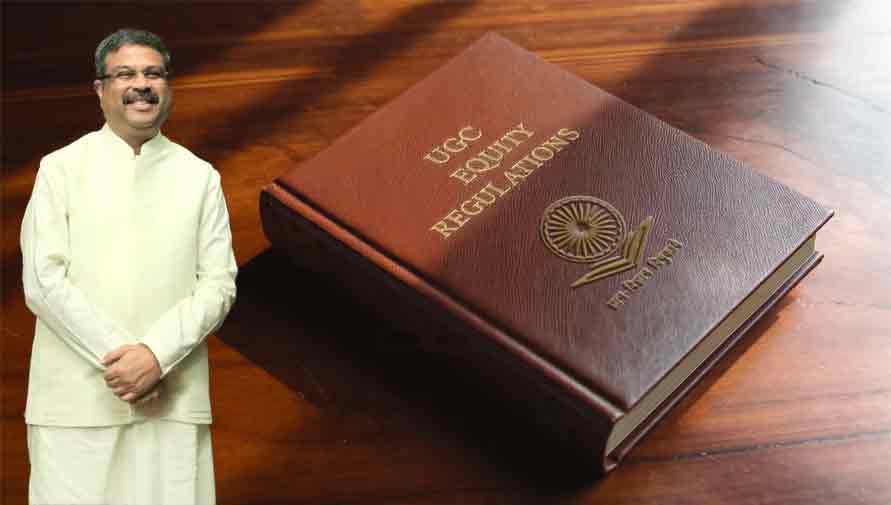

The recently notified Promotion of Equity in Higher Education Institutions Regulations, 2026, have received a massive pushback across the country, with people hitting the streets against the regulations. After days of protests, Union Education Minister Dharmendra Pradhan finally addressed the controversy yesterday (27th January) and offered an assurance that the regulations would not be misused. However, the assurance did little to allay the legitimate fears of people opposing the regulations for pushing the stereotype that the general castes cannot be the victims of caste-based discrimination and excluding general category students from the grievance redressal mechanism.
The UGC Equity Regulations 2026 are supposedly an ‘improvement’ over the Promotion of Equity in Higher Education Institutions Regulations, 2025. But, in reality, the 2026 regulations turned out to be anything but an ‘improvement’. According to Swarajya, unlike the 2026 regulations, the 2025 draft regulations reflected a balanced approach and pragmatic effort in addressing discrimination in educational institutions.
The origins of the UGC regulations on equity
The 2025 draft regulations emerged out of a PIL filed in 2019 by mothers of students of Rohith Vemula and Payal Tadvi, who died in 2016 and 2019, respectively. Their families alleged that the students committed suicide after being subjected to caste-based discrimination. The petitioner, represented by Senior Advocate Indira Jaising, along with advocates Prasanna S. and Disha Wadekar, sought the implementation of anti-discrimination measures in educational institutions.
The PIL did not reportedly demand an entirely new set of regulations, but a strict enforcement of the existing University Grants Commission (Promotion of Equity in Higher Educational Institutions) Regulations, 2012. The 2012 rules required universities to establish Equal Opportunity Cells to handle complaints of discrimination, particularly against Scheduled Castes (SC) and Scheduled Tribes (ST) students.
In the PIL, the petitioner alleged caste bias in admissions, evaluations, hostel allotments, and campus life, along with what they termed as the near-total failure to implement the 2012 framework. The petitioner claimed that there was no meaningful monitoring, sparse Equal Opportunity Cells, and zero integration with accreditation bodies like NAAC. The matter kept lying dormant until January 2025, when Justices Surya Kant and Ujjal Bhuyan reprimanded the University Grants Commission (UGC) for non-compliance. The judges directed the UGC to produce data on cells, complaints, and actions. In its response to the Apex Court, the UGC said that it was in the process of drafting updated regulations.
The 2025 regulations adopted a measured approach to address caste-based discrimination in educational institutions
The UGC released the Promotion of Equity in Higher Education Institutions) Regulations, 2025, in February last year for public consultation. The 2025 draft regulations struck a balance between enhancing protections and preserving institutional autonomy, fairness, and due process for all parties involved. While retaining focus on caste-based discrimination against SC/ST students, as demanded by the PIL, the draft rules defined discrimination as “unfair, differential, or biased treatment” based on caste or tribe identity and allowed flexibility for institutions to interpret and apply the rule contextually.
The equity committee under the 2025 draft regulations was to be chaired by the head of the institution to ensure institutional accountability. At least one member on the committee was to be from the SC or ST community. The draft regulations encouraged the broad stakeholder inclusion of faculty, students, and administrative staff to promote collective responsibility. Embodying the principles of natural justice, the draft rules stressed procedural fairness and prevented hasty punishments, considering that the careers and reputations of parties would be at stake. The draft regulations, while accommodating the PIL’s demands, adopted a measured approach and provided a preventive framework and not a punitive one.
The 2026 regulations are modelled on the recommendations of Indira Jaising
However, the petitioners were not happy with the 2025 draft regulations, and Senior Advocate Indira Jaising proposed ten core changes in the draft. The proposed reforms included grievance committees with substantial marginalised representation and grant withdrawal for non-compliance. The Supreme Court fixed an 8-week deadline for the finalisation of the regulations. Finally, the Promotion of Equity in Higher Education Institutions Regulations, 2026, were notified on January 13, 2026.
The final regulations were devoid of the balanced approach reflected in the 2025 regulations, and incorporated many of Jaising’s recommendations, such as bans on discrimination with debarment powers (Section 11), explicit anti-segregation clauses (Section 7(d)), diverse Equity Committee representation including OBCs/PwDs/women (Section 5(7)), confidentiality and anti-retaliation safeguards, institutional head duties (Section 4(3)), mandatory counseling (Section 7(f)), and proactive Equity Squads and Ambassadors.
The 2026 regulations ruled out the general castes as victims of caste-based violence by restricting the category of victims to SCs, STs, and OBCs. There is no provision for general category students to raise a complaint when subjected to caste-based discrimination. The 2026 regulations not only assume that caste-based discrimination is only directed towards people from the SC, ST, and OBC communities, but, in a way, promote reverse caste-based discrimination by excluding general castes, which form a large section of the academic community, from protection.
The new framework is blatantly biased against the general category students, who will have no institutional recourse if the rules are misused against them. This is the reason that the 2026 regulations are facing the outrage of people, mostly students, whose lives would be directly affected.