As Supreme Court stays UGC Regulations of 2026, read about the 2012 Rules that are currently in force and the key differences between them
On Thursday (29th January), the Supreme Court of India put a stay on the implementation of the draconian University Grants Commission (Promotion of Equity in Higher Education Institutions) Regulations of 2026. For the unversed, the new rules were notified on 13th January this year. The matter was heard on Thursday by a Bench comprising Chief Justice of India Surya Kant and Justice Joymalya Bagchi. The apex court held that the UGC Regulations of 2026 were vague, capable of misuse and lacked essential safeguards. As such, the Supreme Court directed the statutory body to continue with the 2012 regulations on ‘caste-based discrimination’ until further orders are given. Key provisions in the 2012 UGC Rules These regulations applied to all higher educational institutions in India. These included universities, colleges, and deemed-to-be varsities The primary focus was to promote ‘equality’ among students of all sections of the society. Every higher educational institution was directed to safeguard the interests of the students without any prejudice to their caste, creed, religion, language, ethnicity, gender, or disability. A special emphasis, however, was laid on the ‘treatment’ of students belonging to the Scheduled Castes or the Scheduled Tribes. The regulations explicitly stated that educational institutions cannot ‘discriminate’ against SCs and STs by breaching reservation policies, mishandling applications or withholding original documents to force fee payments The rules also barred labelling students as ‘reserved category’ or announcing the caste or religion of students in class. UGC Regulations of 2012 also sought to prevent ‘discrimination’ in the evaluation of exam papers, issuance of library books and access to laboratories or reading halls. These rules also banned segregation of students in hostels, mess halls, canteens or playgrounds. It was mandatory for every institution to establish an ‘Equal Opportunity Cell’ and appoint an ‘Anti-Discrimination Officer’ This Anti-Discrimination Officer could not be below the rank of Professor (in case of universities) and not below the rank of Associate Professor (in case of colleges). The Higher Education Institution was obligated to decide on a complaint within a maximum period of 60 days from the date of receipt. The maximum period to appeal against the complaint was set to 90 days. The UGC Rules of 2012 stated that punishments for ‘discrimination’ must be commensurate with the nature of the act. Punishment against students was taken in accordance with institutional statutes, while punishment against teachers is governed by the service rules and statutes. It was mandatory for all colleges and universities to upload all ‘anti-discrimination’ measures on their official websites UGC-Regulations-2012Download Key differences between the UGC Rules 2012 and the UGC Rules 2016 Some of the key differences between the two sets of regulations postulated by the University Grants Commission are stated below: The 2012 regulations did not limit the definition of discrimination to select caste groups only. However, the 2026 UGC guidelines explicitly left out General Category students. ‘Caste-based discrimination’ in the new regulation was defined as discrimination only on the basis of caste or tribe against the members of the scheduled castes, scheduled tribes, and other backward classes. The 2012 guidelines had no mention of students belonging to the Other Backward Classes (OBCs). The 2026 Regulations included OBC students as a protected category. The 2012 UGC Rules had provisions for SC/ST students, but it also emphasised protecting ‘all students’ while addressing the issue of discrimination. Maximum period of appeal has been reduced to 30 days in the 2026 UGC Regulations from 90 days as was the case with the 2012 UGC Rules Neither the UGC Regulations of 2012 nor 2026 specified punishment for filing false complaints. A detailed explanation of the draconian provisions of the University Grants Commission (Promotion of Equity in Higher Education Institutions) Regulations, 2026, can be read here.
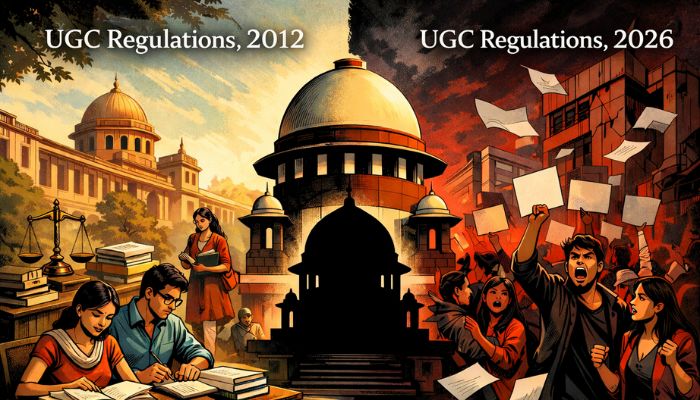

On Thursday (29th January), the Supreme Court of India put a stay on the implementation of the draconian University Grants Commission (Promotion of Equity in Higher Education Institutions) Regulations of 2026.
For the unversed, the new rules were notified on 13th January this year. The matter was heard on Thursday by a Bench comprising Chief Justice of India Surya Kant and Justice Joymalya Bagchi.
The apex court held that the UGC Regulations of 2026 were vague, capable of misuse and lacked essential safeguards. As such, the Supreme Court directed the statutory body to continue with the 2012 regulations on ‘caste-based discrimination’ until further orders are given.
Key provisions in the 2012 UGC Rules
- These regulations applied to all higher educational institutions in India. These included universities, colleges, and deemed-to-be varsities
- The primary focus was to promote ‘equality’ among students of all sections of the society. Every higher educational institution was directed to safeguard the interests of the students without any prejudice to their caste, creed,
- religion, language, ethnicity, gender, or disability.
- A special emphasis, however, was laid on the ‘treatment’ of students belonging to the Scheduled Castes or the Scheduled Tribes.
- The regulations explicitly stated that educational institutions cannot ‘discriminate’ against SCs and STs by breaching reservation policies, mishandling applications or withholding original documents to force fee payments
- The rules also barred labelling students as ‘reserved category’ or announcing the caste or religion of students in class.
- UGC Regulations of 2012 also sought to prevent ‘discrimination’ in the evaluation of exam papers, issuance of library books and access to laboratories or reading halls.
- These rules also banned segregation of students in hostels, mess halls, canteens or playgrounds.
- It was mandatory for every institution to establish an ‘Equal Opportunity Cell’ and appoint an ‘Anti-Discrimination Officer’
- This Anti-Discrimination Officer could not be below the rank of Professor (in case of universities) and not below the rank of Associate Professor (in case of colleges).
- The Higher Education Institution was obligated to decide on a complaint within a maximum period of 60 days from the date of receipt. The maximum period to appeal against the complaint was set to 90 days.
- The UGC Rules of 2012 stated that punishments for ‘discrimination’ must be commensurate with the nature of the act.
- Punishment against students was taken in accordance with institutional statutes, while punishment against teachers is governed by the service rules and statutes.
- It was mandatory for all colleges and universities to upload all ‘anti-discrimination’ measures on their official websites
Key differences between the UGC Rules 2012 and the UGC Rules 2016
Some of the key differences between the two sets of regulations postulated by the University Grants Commission are stated below:
- The 2012 regulations did not limit the definition of discrimination to select caste groups only. However, the 2026 UGC guidelines explicitly left out General Category students. ‘Caste-based discrimination’ in the new regulation was defined as discrimination only on the basis of caste or tribe against the members of the scheduled castes, scheduled tribes, and other backward classes.
- The 2012 guidelines had no mention of students belonging to the Other Backward Classes (OBCs). The 2026 Regulations included OBC students as a protected category.
- The 2012 UGC Rules had provisions for SC/ST students, but it also emphasised protecting ‘all students’ while addressing the issue of discrimination.
- Maximum period of appeal has been reduced to 30 days in the 2026 UGC Regulations from 90 days as was the case with the 2012 UGC Rules
- Neither the UGC Regulations of 2012 nor 2026 specified punishment for filing false complaints.
A detailed explanation of the draconian provisions of the University Grants Commission (Promotion of Equity in Higher Education Institutions) Regulations, 2026, can be read here.