Bareilly Namaz row: How it is not just about ‘offering prayers’ but a precursor to encroachment, land grab, and forced conversions
In Uttar Pradesh’s Bareilly district, the police detained 12 Muslim men for offering namaz in a private vacant house without obtaining administrative permission. The detained persons were also allegedly using the house as a makeshift mosque and madarsa. On social media, Islamists and their liberal allies peddled a Muslim victimhood narrative, framing mere detention and questioning of the Muslim men as ‘arrest’ and ‘persecution’. This particular incident aligns with a broader issue of informal religious activities in residential and public spaces, especially by Islamists and Christian missionaries, which are often the precursor of encroachment, land grab and eventual conversion attempts. What begins as a seemingly harmless practice of religious rituals soon evolves into de facto religious structures, and religious sentiments are weaponised to hold on to the illegally encroached properties as well as conversion activities in the name of the right to practice one’s religion. Although the Islamo-leftist cabal dismisses these concerns as mere Hindutva conspiracy theories, excuses to persecute ‘minorities’, and whatnot, several cases in the past demonstrate the blurring of the line between innocuous religious practice and strategic expansion and dominance. The Sanjauli Mosque case in Shimla perfectly exemplifies this. What started as a modest structure in the 20th century magnified into a five-storey building via illegal expansions by encroaching on government land. In 2024, local Hindus protested, and the matter reached the court. The court ordered the demolition of the illegal floors. In December 2025, the Himachal Pradesh High Court ordered the resumption of the demolition of the top three illegal floors, and by January 2026, the court ordered the demolition of all five stories. The Himachal Pradesh State Waqf Board appealed against previous demolition orders; however, the court upheld the order. This was not only a case of the illegal expansion of a small mosque. With the expansion of the mosque, the dominance of Muslims in Sanjauli also increased. OpIndia’s ground reports revealed that the local Hindus feared a demographic change in the area with an influx of Muslims there. It was reported that the harassment that Hindu females have been experiencing harassment from those coming to offer namaz at the mosque. Multiple incidents of voyeurism and stalking have been reported by locals, stating that some mosque visitors even peek inside Hindu houses and pass comments on women. In fact, the whole outrage over the illegal constructions in the Sanjauli Mosque escalated after a group of 5 to 6 Muslim immigrants assaulted a local youth and injured his head. The accused were sheltered in a mosque, from where they were nabbed by the police. Incidents like this have exhausted the patience of local Hindus. The peace of the hills had been plagued by rising crime committed by the Muslim immigrants. The illegal mosque in Sanjauli had become a haven for such criminals. OpIndia reported earlier how one man, Mohammed Salim, arrived in Sanjauli in 1990, occupied a piece of government land after a school built on it was shifted, constructed a single-story structure on it, which gradually transformed into a multi-storey building. He gradually turned it into a mosque and managed to obtain NOC fromthe Waqf Board. This one-storey structure expanded to a five-storey mosque, Namazis increased, and so did the harassment of local Hindus. A similar modus operandi was seen in the case of Al-Mateen Mosque in Delhi’s Seelampur. In March 2025, a dispute erupted over the expansion of this mosque. The local Hindus said, back then, that Muslims first come quietly, buy flats, then buy houses, build mosques, and gradually occupy the entire area. Following that, one day, as soon as they get a chance, the whole community unites and attacks the Hindus. The Al-Mateen Mosque began from a residential flat in 2013. Soon after, Muslims began offering Namaz there. Gradually, they converted that flat into a four-storey mosque. This flat-turned-mosque was used by Muslims during the 2020 anti-Hindu Delhi riots. It was reported that bullets were fired from the mosque during the riots, leaving three Hindu boys injured. After the anti-Hindu 2020 riots, the migration of Hindus has increased from Brahmapuri. In 2023, efforts for the mosque’s expansion intensified. The mosque-linked Muslims bought a nearby house from a Hindu. This was done to open a new gate for the mosque right in front of a Shiv Mandir built in 1984. As Hindus opposed this, tensions escalated, and the local Hindus were compelled to put up posters of ‘House for sale’. In one incident, Muslims allegedly threw animal bones and blood outside the houses of Hindus. Just as it was seen in the case of Sanjauli, in Seelampur too, one house was bought by a Muslim man, initially used for Namaz, then converted into a mosque, and then expanded and used as a fort or an attack base

In Uttar Pradesh’s Bareilly district, the police detained 12 Muslim men for offering namaz in a private vacant house without obtaining administrative permission. The detained persons were also allegedly using the house as a makeshift mosque and madarsa. On social media, Islamists and their liberal allies peddled a Muslim victimhood narrative, framing mere detention and questioning of the Muslim men as ‘arrest’ and ‘persecution’.
This particular incident aligns with a broader issue of informal religious activities in residential and public spaces, especially by Islamists and Christian missionaries, which are often the precursor of encroachment, land grab and eventual conversion attempts.
What begins as a seemingly harmless practice of religious rituals soon evolves into de facto religious structures, and religious sentiments are weaponised to hold on to the illegally encroached properties as well as conversion activities in the name of the right to practice one’s religion. Although the Islamo-leftist cabal dismisses these concerns as mere Hindutva conspiracy theories, excuses to persecute ‘minorities’, and whatnot, several cases in the past demonstrate the blurring of the line between innocuous religious practice and strategic expansion and dominance.
The Sanjauli Mosque case in Shimla perfectly exemplifies this. What started as a modest structure in the 20th century magnified into a five-storey building via illegal expansions by encroaching on government land. In 2024, local Hindus protested, and the matter reached the court. The court ordered the demolition of the illegal floors. In December 2025, the Himachal Pradesh High Court ordered the resumption of the demolition of the top three illegal floors, and by January 2026, the court ordered the demolition of all five stories. The Himachal Pradesh State Waqf Board appealed against previous demolition orders; however, the court upheld the order.
This was not only a case of the illegal expansion of a small mosque. With the expansion of the mosque, the dominance of Muslims in Sanjauli also increased. OpIndia’s ground reports revealed that the local Hindus feared a demographic change in the area with an influx of Muslims there. It was reported that the harassment that Hindu females have been experiencing harassment from those coming to offer namaz at the mosque. Multiple incidents of voyeurism and stalking have been reported by locals, stating that some mosque visitors even peek inside Hindu houses and pass comments on women.
In fact, the whole outrage over the illegal constructions in the Sanjauli Mosque escalated after a group of 5 to 6 Muslim immigrants assaulted a local youth and injured his head. The accused were sheltered in a mosque, from where they were nabbed by the police. Incidents like this have exhausted the patience of local Hindus. The peace of the hills had been plagued by rising crime committed by the Muslim immigrants. The illegal mosque in Sanjauli had become a haven for such criminals.
OpIndia reported earlier how one man, Mohammed Salim, arrived in Sanjauli in 1990, occupied a piece of government land after a school built on it was shifted, constructed a single-story structure on it, which gradually transformed into a multi-storey building. He gradually turned it into a mosque and managed to obtain NOC fromthe Waqf Board. This one-storey structure expanded to a five-storey mosque, Namazis increased, and so did the harassment of local Hindus.
A similar modus operandi was seen in the case of Al-Mateen Mosque in Delhi’s Seelampur. In March 2025, a dispute erupted over the expansion of this mosque. The local Hindus said, back then, that Muslims first come quietly, buy flats, then buy houses, build mosques, and gradually occupy the entire area. Following that, one day, as soon as they get a chance, the whole community unites and attacks the Hindus.
The Al-Mateen Mosque began from a residential flat in 2013. Soon after, Muslims began offering Namaz there. Gradually, they converted that flat into a four-storey mosque. This flat-turned-mosque was used by Muslims during the 2020 anti-Hindu Delhi riots. It was reported that bullets were fired from the mosque during the riots, leaving three Hindu boys injured. After the anti-Hindu 2020 riots, the migration of Hindus has increased from Brahmapuri. In 2023, efforts for the mosque’s expansion intensified. The mosque-linked Muslims bought a nearby house from a Hindu. This was done to open a new gate for the mosque right in front of a Shiv Mandir built in 1984.
As Hindus opposed this, tensions escalated, and the local Hindus were compelled to put up posters of ‘House for sale’. In one incident, Muslims allegedly threw animal bones and blood outside the houses of Hindus. Just as it was seen in the case of Sanjauli, in Seelampur too, one house was bought by a Muslim man, initially used for Namaz, then converted into a mosque, and then expanded and used as a fort or an attack base during riots.
The mosque structure expands, and so does the number of visitors, along with the exertion of Islamic dominance and suppression of local Hindu and other non-Muslim communities.
Another recurring pattern of small land patches, markers, etc, on public, forest, and government land, being converted into illegal Mazars, has been a menace seen across the country. Beginning with a piece or stone, they evolve into a raised cemented slab, with one person covering them up with green religious chadar and lighting incense sticks (Agarbatti), and in no time, these structures expand into permanent mazars without a permit. Be it illegal mazars built near the Ranjit Sagar Dam in Gujarat, or the ones inside Uttarakhand’s Rajaji Tiger Reserve, or the countless small mazars and dargahs popping up on railway stations, even between railway tracks, near airports, government land, and even in the middle of roads, etc.
Be it Gujarat, Assam, Uttar Pradesh or Uttarakhand, the state governments there have demolished hundreds of such illegal mazars and dargahs and freed the occupied land. In many cases, when investigated, these mazars were found to be just cemented slabs, having no real burials of any Muslim revered figure.
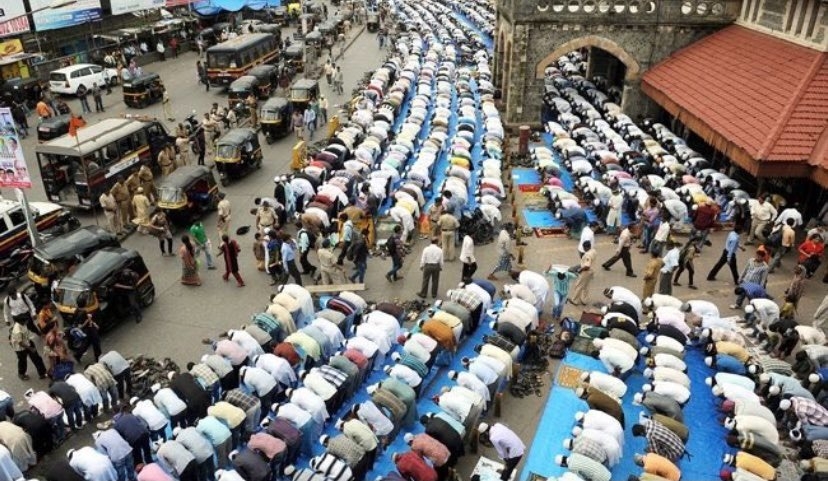
In many cases, Muslims offer namaz on roads, claiming a lack of space inside mosques; however, these have mostly been excuses to assert religious dominance in the area, a show of strength, and even a step in the direction of gradual land encroachment. Back in December 2022, a massive row erupted in Haryana’s Gurugram, after a group of Muslims started offering namaz in public places instead of going to Mosques or offering prayers at their own homes. Hindu rights groups staged a protest against namaz in public places and stopped six such prayers.
Similar incidents of Muslims offering namaz in public places in Gurugram were reported in 2021. It was reported that with the rise in incidents of Muslims coming in groups and offering namaz in public places, incidents of eve-teasing and chain snatching. Muslims argued that they offer Namaz at public places because they don’t have spaces, and the Jumma Namaz has to be congregational. However, in many instances, Muslims travelled 50 km to offer Namaz at public places at Gurugram, indicating that Namaz in public places was not a necessity or compulsion, but rather a deliberate tactic of asserting Islamic dominance.
Clearly, “offering namaz” is not an innocuous exercise; it is rather employed as a tactic for dominance and gradual encroachment. These are but small steps in the direction of what may potentially become ‘Muslim areas’. OpIndia has reported how these Muslim areas are created by either importing Muslims from outside into a Hindu-majority area or gradually by increasing population, or by driving out the non-Muslims using street veto, since Muslim ‘minorities’ largely enjoy political patronage of ‘secular’ political parties. Once ‘Muslim-dominated’, localities become ‘Muslim areas’, which essentially become no-go zones for Hindus. There have been incidents of Islamist mobs attacking Hindu religious processions passing in front of mosques in ‘Muslim areas’, or even cricket match victory celebrations, triggering attacks on Hindus from mosques.
Interestingly, this pattern of using a foothold to seize control and execute nefarious agendas is not confined to Islamists alone. Many Christian missionaries, out with the mission of luring non-Christians to Christianity using myriad tactics, also do the same. In February 2025, it was reported in Lucknow’s Gomti Nagar Extension area that local Hindus staged a protest against Christian prayer meetings in a residential house in Chhota Bharwara, after it was found to be operated as an unregistered church. This illegal house-turned-church was hosting up to 200 people weekly, and conversion activities were taking place there. The Christian missionaries were found to be purchasing properties in the area at inflated rates to establish influence and create a Christian-dominated locality. It was reported that if the Hindus refused to convert, the Christian missionaries put pressure on the locals to sell their houses.
The local Hindus were being instigated to convert to Christianity. The house in question was a church-like structure with no explicit religious symbols.
In Chhattisgarh and Jharkhand, Christian missionaries were earlier found to be encroaching on government and tribal lands and using the same for conversion activities. In many tribal areas. Christian missionaries have earlier been reported to have encroached on Hindu temple lands in Gujarat and Tamil Nadu. Be it Muslim immigrants or Christian missionaries, outsiders infiltrate tribal areas, establish residence, and engage in conversion activities to alter local demography, often beginning with innocuous prayer meetings or gatherings or benign private worship, but eventually resulting in land grabs, encroachments, and even religious conversion attempts.
This may or may not have been the eventuality in the recent Bareilly namaz-without-permission case; however, covering up such cases with the fake Muslim victimhood propaganda is a deliberate act of turning a blind eye to what may be a part of a prevalent pattern that poses a serious threat to national security and the Hindu-majority India’s demography.