Explained: Why is Delhi colder than Shimla this January
North India is still gripped by a brutal cold wave that’s making everyone stay indoors. Places like Gurugram, Delhi, and much of the National Capital Region (NCR) saw biting cold on Tuesday (13th January), with folks barely stepping out and officials on high alert. This chill has been relentless, turning daily life into a real struggle. #Weatherforecast#Delhi reeled under an intense cold spell today as temperatures plunged sharply. The #IMD said the city recorded a minimum of 2.9°C, with #Palam at 3.3°C and #LodhiRoad at 3°C. Dense fog is likely to persist over #DelhiNCR till the 17th. The country’s lowest… pic.twitter.com/eAjzM8eYen— All India Radio News (@airnewsalerts) January 12, 2026 Gurugram hits a historic Low According to the India Meteorological Department data, Gurugram witnessed the lowest temperature on Monday morning (12th January), with the minimum temperature touching only 0.6°C, the coldest January morning in the last 50 years. Image via Hindustan Times That matches the low from 22nd January, 1977, and it’s only happened a handful of times before, like minus 0.4°C on 5th December, 1966, 0°C on 11th January, 1970, and 0.3°C on 22nd January, 1979. Delhi was not too far behind with its minimum temperature of 3°C at the Safdarjung station. Temperatures in adjoining regions of Haryana and Rajasthan were also close to or below freezing points. Hisar touched 2.6°C, Karnal registered 3.5°C, and Fatehpur, in Rajasthan’s Sikar district, was below zero. Punjab’s Amritsar and Gurugram, despite being further away, touched a very chilly 1.1°C. Delhi is colder than Shimla What’s really surprising this time is how the plains are out-chilling the hills. Delhi and the neighbouring areas have been experiencing lower temperatures than the hill stations such as Shimla. Even on Monday, the 12th of January, Shimla was expected to reach a maximum of 16° C and a minimum of 9° C, whereas the minimum temperature for Delhi was expected to be 3-4.2° C with a maximum of 18-20° C. As a result of high temperatures, several hill stations in the Himalayan states didn’t receive snowfall this year, or received far less compared to previous years. Graph via Ease Weather Places in Himachal, such as Shimla and Kullu, have no warning, while Delhi will experience cold days every day, with partly cloudy conditions in the later part. Plains such as Delhi and Chandigarh are cooler than the mountainous region of Shimla. Why are the plains colder than the hills? This flip plains colder than hills comes down to some key weather tricks playing out this January. An active Western Disturbance brought clouds over the higher hills like Shimla, acting like a warm blanket at night. IMD Director General M Mohapatra explained that due to cloudy nights in the area, the minimums were a little higher there at 8.8 °C in Shimla, while other hills such as Kangra and Palampur were at 3°C, Jammu at 3.4°C, while other places like Mukteshwar in Uttarakhand were around 4.1 °C, and Mussoorie recorded 7.7°C. But in Delhi-NCR, clear skies let heat escape fast from the ground, that’s radiative cooling in action. No clouds means the earth loses warmth quickly at night, dropping temperatures sharply to 3°C in Delhi and even lower nearby areas. Add in strong northwesterly winds blowing icy air from snow-covered mountains straight into the open plains, and you’ve got this deep freeze. According to a report by NDTV, IMD’s Naresh Kumar noted no Western Disturbance over northwest India right now, just cold Himalayan winds stretching 5-6 km high, piling frigid air into the lowlands. Hills get mixed up by their height and slopes, plus those clouds trap ground heat, keeping Shimla cosier. Pollution and dry air in Delhi trap cold near the surface too, through temperature inversions. Other plains suffered: Hisar 2.6°C, Amritsar 1.1°C, Churu 1.3°C, Karnal 3.5°C, Meerut 4.5°C. Punjab’s Bathinda matched Gurugram at 0.6°C, and Rajasthan’s Fatehpur hit minus 0.4°C. In Gurugram outskirts and rural Haryana, frost blanketed cars, crops, and everything; mustard fields looked like they were dusted with sugar. Uttar Pradesh cities saw days between 13-19°C, Jammu and Kashmir had frozen Dal Lake bits during Chilla-i-Kalan, the peak winter harshness. Extreme cold hits other plains too The cold isn’t just Delhi’s problem; it’s slamming northwest India hard. Meteorologists point to clear skies, fierce northwesterly winds, skipping Western Disturbances, and bone-dry winter air fueling this radiative cooling frenzy. Ground frost showed up everywhere in NCR, from Faridabad to Rewari, icing over farms and vehicles, cutting visibility to zero in spots. IMD issues warning IMD has issued an Orange Alert on Delhi-NCR, warning cold wave or severe cold wave will stick around for the next 48 hours. Experts say it’ll ease after that, with a new weather system bumping minimums slightly from 15th January. Until then, North I
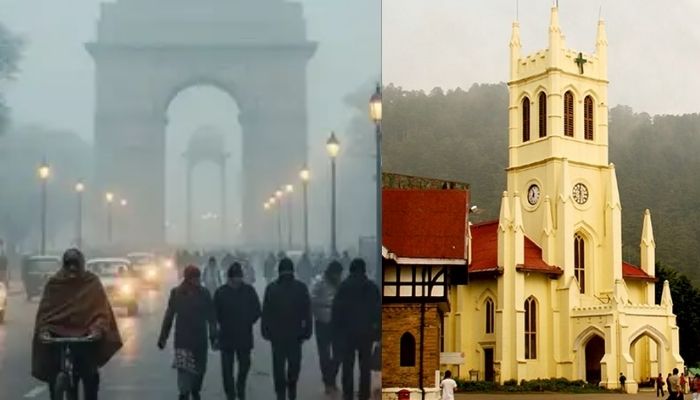

North India is still gripped by a brutal cold wave that’s making everyone stay indoors. Places like Gurugram, Delhi, and much of the National Capital Region (NCR) saw biting cold on Tuesday (13th January), with folks barely stepping out and officials on high alert. This chill has been relentless, turning daily life into a real struggle.
#Weatherforecast#Delhi reeled under an intense cold spell today as temperatures plunged sharply.
— All India Radio News (@airnewsalerts) January 12, 2026
The #IMD said the city recorded a minimum of 2.9°C, with #Palam at 3.3°C and #LodhiRoad at 3°C. Dense fog is likely to persist over #DelhiNCR till the 17th.
The country’s lowest… pic.twitter.com/eAjzM8eYen
Gurugram hits a historic Low
According to the India Meteorological Department data, Gurugram witnessed the lowest temperature on Monday morning (12th January), with the minimum temperature touching only 0.6°C, the coldest January morning in the last 50 years.

That matches the low from 22nd January, 1977, and it’s only happened a handful of times before, like minus 0.4°C on 5th December, 1966, 0°C on 11th January, 1970, and 0.3°C on 22nd January, 1979. Delhi was not too far behind with its minimum temperature of 3°C at the Safdarjung station.

Temperatures in adjoining regions of Haryana and Rajasthan were also close to or below freezing points. Hisar touched 2.6°C, Karnal registered 3.5°C, and Fatehpur, in Rajasthan’s Sikar district, was below zero. Punjab’s Amritsar and Gurugram, despite being further away, touched a very chilly 1.1°C.
Delhi is colder than Shimla
What’s really surprising this time is how the plains are out-chilling the hills. Delhi and the neighbouring areas have been experiencing lower temperatures than the hill stations such as Shimla.
Even on Monday, the 12th of January, Shimla was expected to reach a maximum of 16° C and a minimum of 9° C, whereas the minimum temperature for Delhi was expected to be 3-4.2° C with a maximum of 18-20° C. As a result of high temperatures, several hill stations in the Himalayan states didn’t receive snowfall this year, or received far less compared to previous years.

Places in Himachal, such as Shimla and Kullu, have no warning, while Delhi will experience cold days every day, with partly cloudy conditions in the later part. Plains such as Delhi and Chandigarh are cooler than the mountainous region of Shimla.
Why are the plains colder than the hills?
This flip plains colder than hills comes down to some key weather tricks playing out this January. An active Western Disturbance brought clouds over the higher hills like Shimla, acting like a warm blanket at night.
IMD Director General M Mohapatra explained that due to cloudy nights in the area, the minimums were a little higher there at 8.8 °C in Shimla, while other hills such as Kangra and Palampur were at 3°C, Jammu at 3.4°C, while other places like Mukteshwar in Uttarakhand were around 4.1 °C, and Mussoorie recorded 7.7°C.
But in Delhi-NCR, clear skies let heat escape fast from the ground, that’s radiative cooling in action. No clouds means the earth loses warmth quickly at night, dropping temperatures sharply to 3°C in Delhi and even lower nearby areas. Add in strong northwesterly winds blowing icy air from snow-covered mountains straight into the open plains, and you’ve got this deep freeze.
According to a report by NDTV, IMD’s Naresh Kumar noted no Western Disturbance over northwest India right now, just cold Himalayan winds stretching 5-6 km high, piling frigid air into the lowlands. Hills get mixed up by their height and slopes, plus those clouds trap ground heat, keeping Shimla cosier.
Pollution and dry air in Delhi trap cold near the surface too, through temperature inversions. Other plains suffered: Hisar 2.6°C, Amritsar 1.1°C, Churu 1.3°C, Karnal 3.5°C, Meerut 4.5°C. Punjab’s Bathinda matched Gurugram at 0.6°C, and Rajasthan’s Fatehpur hit minus 0.4°C.
In Gurugram outskirts and rural Haryana, frost blanketed cars, crops, and everything; mustard fields looked like they were dusted with sugar. Uttar Pradesh cities saw days between 13-19°C, Jammu and Kashmir had frozen Dal Lake bits during Chilla-i-Kalan, the peak winter harshness.
Extreme cold hits other plains too
The cold isn’t just Delhi’s problem; it’s slamming northwest India hard. Meteorologists point to clear skies, fierce northwesterly winds, skipping Western Disturbances, and bone-dry winter air fueling this radiative cooling frenzy. Ground frost showed up everywhere in NCR, from Faridabad to Rewari, icing over farms and vehicles, cutting visibility to zero in spots.
IMD issues warning
IMD has issued an Orange Alert on Delhi-NCR, warning cold wave or severe cold wave will stick around for the next 48 hours. Experts say it’ll ease after that, with a new weather system bumping minimums slightly from 15th January. Until then, North India is in a historic freeze. Authorities urge everyone, especially kids and the elderly, to skip early mornings and late nights outside.
Health advisories have urged people, especially the elderly and children, to avoid stepping out early in the morning or late at night. Officials have warned that shivering is the body’s first sign of losing heat and should not be ignored.