From Vedic hymns to Puranic legends, where Shiva Himself took His seat: Read the history of Junagadh’s Bhavnath Mahadev Temple
At the foothills of the Girnar mountain in Junagadh, the Bhavnath Mahadev Temple is not merely a place of worship; it is a living centre of Sanatan consciousness flowing uninterrupted for thousands of years. On one hand, the Girnar range has been a sacred land of penance for sages and seers; on the other, Bhavnath Mahadev stands as the pole star of that spiritual energy which makes this land truly Shiva-filled. While the fair held here on the occasion of Mahashivratri attracts the general public, the temple’s history, its architecture, and the Puranic traditions associated with it form a vast narrative in themselves. Located just a few kilometres from Junagadh in Gujarat, its significance extends across the country, especially during the Mahashivratri fair, often referred to as the ‘Mini Kumbh’. Girnar and the Shaiva tradition: Vedic-Puranic context In ancient texts, Girnar is referred to as ‘Revatak’ or ‘Revatachal’. The Prabhas Khand of the Skanda Purana describes the Girnar region as an extremely sacred land of Shiva. The Shiva Purana states that wherever penance and self-restraint reach their highest peak, Shiva resides, and Girnar is one such sacred seat of austerity. According to local belief, the Shiva Linga of Bhavnath Mahadev is swayambhu, self-manifested, meaning it was not installed by human hands but appeared on its own. This is why he is worshipped as ‘Bhavnath’, the Lord of Creation. The Girnar region has long been a confluence of Jain, Vaishnava, and Shaiva traditions, but the unbroken Shaiva stream visible here finds its centre in Bhavnath Mahadev. The legend of the Bhavnath temple is described in the Prabhas Khand of the Skanda Purana and in the Vastrapath Kshetra Mahatmya. According to the Purana, Lord Shiva once left Kailasa and came to Earth, choosing Girnar (Revatachal or Ujjayant Parvat) for his penance. Unaware of this, Goddess Parvati set out in search of him. When the gods and Parvati performed penance, Shiva manifested here in the form of Bhavnath as a swayambhu Linga. It is believed this divine manifestation occurred on the full moon day of the bright fortnight of Vaishakh. Thereafter, Goddess Parvati also took her seat on Girnar in the form of Ambika. Another well-known legend says that when Shiva and Parvati were travelling through the sky in a celestial chariot, one of Parvati’s divine ornaments (or garment) fell near Mrigi Kund. Because of this, the region became sanctified as ‘Vastraputa Kshetra’, and the Shiva Linga manifested here. This account is also recorded in the book Gujaratna Lokotsavo ane Melapublished by the Gujarat Government’s Information Department (pp. 12–13). The Skanda Purana describes Girnar as a confluence of Shiva, Vishnu, and the Goddess. Shiva established his seat here, Parvati resided as Ambika, and Vishnu dwelt as Damodar at Damodar Kund. In this sense, the Bhavnath temple is like a spiritual triveni sangam, where the grace of all three deities is believed to flow. Historical and Puranic background The Bhavnath temple is not considered a human construction but the result of Shiva’s divine manifestation. The Puranas place it in ancient times, and some local traditions trace it back to the era of the Mahabharata (around 5,000 years ago). There are two Shiva Lingas here: a smaller swayambhu one and a larger one, which, according to legend, was installed by the immortal Ashwatthama. Girnar is believed to be the abode of eighty-four Siddhas. The Navnaths, 84 Siddhas, 64 Yoginis, and 52 Viras are said to have their seats here. Folklore holds that immortals like Ashwatthama, the Pandavas, Gopichand, and Bharthari come to bathe in Mrigi Kund on the midnight of Mahashivratri and then visit Bhavnath for darshan, moving among the ascetics during the Bhavnath Kumbh fair in the guise of sadhus. The areas around the temple, such as Sudarshan Lake (from the Mauryan period, 3rd century BCE), are ancient, but the temple itself is considered even older. Over time, it fell into disrepair and underwent several phases of renovation and restoration, including strengthening after the 2001 earthquake. Historians believe the present structure took shape in the medieval period. The Junagadh region was ruled by the Mauryas, Guptas, Chalukyas (Solankis), and later the Chudasamas. Especially between the 10th and 12th centuries, many Shiva temples were built in Gujarat under the Solanki rulers. The architectural style of the Bhavnath temple also reflects the Solanki era, particularly in its stone carvings and the design of the sanctum. Although epigraphic evidence is limited, local tradition and regional historians agree that the temple’s मूल form is ancient and has been preserved through successive restorations over different periods. Architectural style The architecture of the Bhavnath Mahadev temple does not aim at grand spectacle but reflects the gravity of penance and spiritual discipline. The sanctum is relatively small and houses
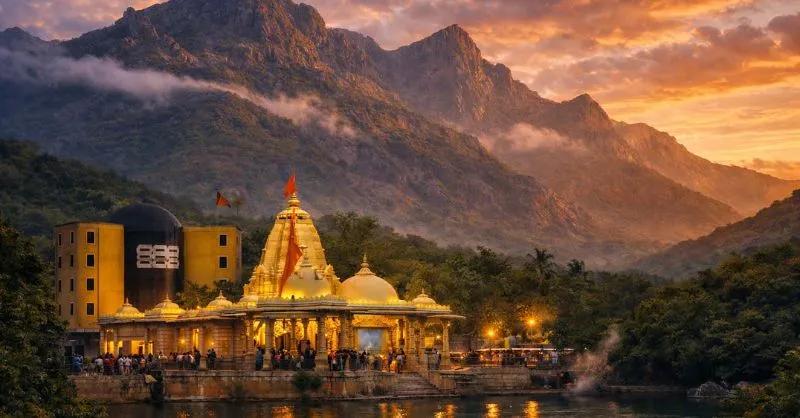

At the foothills of the Girnar mountain in Junagadh, the Bhavnath Mahadev Temple is not merely a place of worship; it is a living centre of Sanatan consciousness flowing uninterrupted for thousands of years. On one hand, the Girnar range has been a sacred land of penance for sages and seers; on the other, Bhavnath Mahadev stands as the pole star of that spiritual energy which makes this land truly Shiva-filled.
While the fair held here on the occasion of Mahashivratri attracts the general public, the temple’s history, its architecture, and the Puranic traditions associated with it form a vast narrative in themselves. Located just a few kilometres from Junagadh in Gujarat, its significance extends across the country, especially during the Mahashivratri fair, often referred to as the ‘Mini Kumbh’.
Girnar and the Shaiva tradition: Vedic-Puranic context
In ancient texts, Girnar is referred to as ‘Revatak’ or ‘Revatachal’. The Prabhas Khand of the Skanda Purana describes the Girnar region as an extremely sacred land of Shiva. The Shiva Purana states that wherever penance and self-restraint reach their highest peak, Shiva resides, and Girnar is one such sacred seat of austerity.
According to local belief, the Shiva Linga of Bhavnath Mahadev is swayambhu, self-manifested, meaning it was not installed by human hands but appeared on its own. This is why he is worshipped as ‘Bhavnath’, the Lord of Creation. The Girnar region has long been a confluence of Jain, Vaishnava, and Shaiva traditions, but the unbroken Shaiva stream visible here finds its centre in Bhavnath Mahadev.
The legend of the Bhavnath temple is described in the Prabhas Khand of the Skanda Purana and in the Vastrapath Kshetra Mahatmya. According to the Purana, Lord Shiva once left Kailasa and came to Earth, choosing Girnar (Revatachal or Ujjayant Parvat) for his penance. Unaware of this, Goddess Parvati set out in search of him. When the gods and Parvati performed penance, Shiva manifested here in the form of Bhavnath as a swayambhu Linga. It is believed this divine manifestation occurred on the full moon day of the bright fortnight of Vaishakh. Thereafter, Goddess Parvati also took her seat on Girnar in the form of Ambika.
Another well-known legend says that when Shiva and Parvati were travelling through the sky in a celestial chariot, one of Parvati’s divine ornaments (or garment) fell near Mrigi Kund. Because of this, the region became sanctified as ‘Vastraputa Kshetra’, and the Shiva Linga manifested here. This account is also recorded in the book Gujaratna Lokotsavo ane Melapublished by the Gujarat Government’s Information Department (pp. 12–13).
The Skanda Purana describes Girnar as a confluence of Shiva, Vishnu, and the Goddess. Shiva established his seat here, Parvati resided as Ambika, and Vishnu dwelt as Damodar at Damodar Kund. In this sense, the Bhavnath temple is like a spiritual triveni sangam, where the grace of all three deities is believed to flow.
Historical and Puranic background
The Bhavnath temple is not considered a human construction but the result of Shiva’s divine manifestation. The Puranas place it in ancient times, and some local traditions trace it back to the era of the Mahabharata (around 5,000 years ago). There are two Shiva Lingas here: a smaller swayambhu one and a larger one, which, according to legend, was installed by the immortal Ashwatthama.
Girnar is believed to be the abode of eighty-four Siddhas. The Navnaths, 84 Siddhas, 64 Yoginis, and 52 Viras are said to have their seats here. Folklore holds that immortals like Ashwatthama, the Pandavas, Gopichand, and Bharthari come to bathe in Mrigi Kund on the midnight of Mahashivratri and then visit Bhavnath for darshan, moving among the ascetics during the Bhavnath Kumbh fair in the guise of sadhus.
The areas around the temple, such as Sudarshan Lake (from the Mauryan period, 3rd century BCE), are ancient, but the temple itself is considered even older. Over time, it fell into disrepair and underwent several phases of renovation and restoration, including strengthening after the 2001 earthquake.
Historians believe the present structure took shape in the medieval period. The Junagadh region was ruled by the Mauryas, Guptas, Chalukyas (Solankis), and later the Chudasamas. Especially between the 10th and 12th centuries, many Shiva temples were built in Gujarat under the Solanki rulers. The architectural style of the Bhavnath temple also reflects the Solanki era, particularly in its stone carvings and the design of the sanctum.
Although epigraphic evidence is limited, local tradition and regional historians agree that the temple’s मूल form is ancient and has been preserved through successive restorations over different periods.
Architectural style
The architecture of the Bhavnath Mahadev temple does not aim at grand spectacle but reflects the gravity of penance and spiritual discipline. The sanctum is relatively small and houses the Shiva Linga. The shikhara follows the traditional Nagara style, representative of North Indian temple architecture. Its stone construction, restrained ornamentation, and harmony with the natural surroundings are its defining features.
Here, architecture serves not merely aesthetic purposes but spiritual focus, as if the entire structure is designed to draw the seeker inward on a journey of inner contemplation.
Naga Sadhu tradition and spiritual mystery
The very mention of Bhavnath Mahadev evokes the image of the Naga sadhus’ midnight procession on Mahashivratri. Considered custodians of the Shaiva akhara tradition, the Naga ascetics regard this place as a centre of exceptional spiritual power. It is believed that on the night of Mahashivratri, Shiva himself roams the Girnar region. This tradition is not merely a religious event but a symbol of the unbroken continuity of the Sanatan ascetic tradition.
In Junagadh’s cultural identity, Bhavnath Mahadev occupies a central place. This is not just a site of worship but also a space of social and cultural interaction. For centuries, it has been a meeting point for seekers, pilgrims, and saints. Situated at the foothills of Girnar, the temple remains as alive today as it was centuries ago.
When we look at Bhavnath Mahadev, we do not see just a temple. We see a tradition that stretches from the hymns of the Vedas to the narratives of the Puranas. This temple shows that Indian spirituality is not confined to texts alone but is also inscribed in geography itself. The winds that strike the peaks of Girnar seem even today to repeat the same message, Shiva is eternal, and so is his tradition. Bhavnath Mahadev stands as the living symbol of that very eternity, steadfast, serene, and infinite.