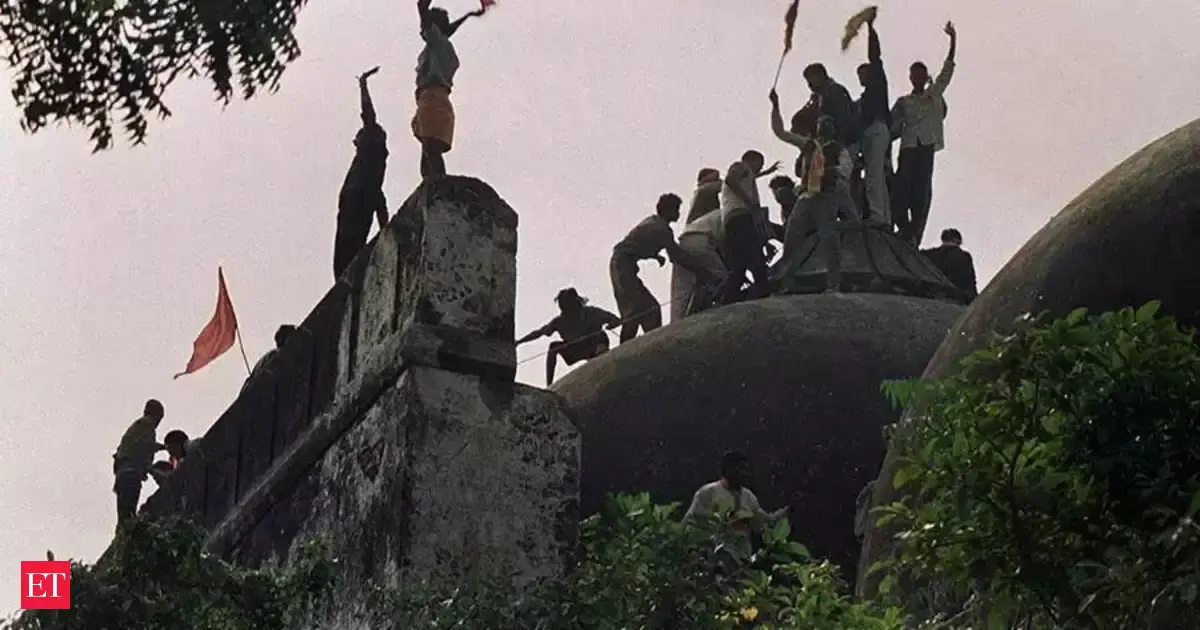
Hindus in Vadodara protest against the suspected sale of properties in Hindu-majority areas to non-Hindus, in violation of the Disturbed Areas Act: Read what the law is and why it was introduced
Protests erupted in the Gayatrinagar society of the Gorwa area in the Vadodara district of Gujarat on Friday (13th February) after two houses in a Hindu-majority society were sold to non-Hindus in violation of the Disturbed Areas Act 1991. Members of local Hindu organisations and Sangharsh Samiti raised slogans and took out a protest march to the office of the District Magistrate. They submitted a memorandum demanding the implementation of the Act. According to the protesters, two residential properties in the society, which has a Hindu majority, were transferred to non-Hindu persons. The owners initially said that the houses were rented out, but the locals suspected that a sale had been made with respect to the properties. The memorandum sought an enquiry into whether the transactions carried out in violation of the Disturbed Areas Act and demanded appropriate legal action. The residents said that they had approached the Municipal Commissioner before, but no action was taken. What is the Disturbed Areas Act? The Gujarat Prohibition of Transfer of Immovable Property and Provision for Protection of Tenants from Eviction from Premises in Disturbed Areas Act, 1991, commonly known as the Disturbed Areas Act, was introduced by the Gujarat government to prevent the polarisation of the population in communally sensitive areas. Under the law, the seller and the buyer of a property are required to obtain the permission of the District Magistrate before effecting the sale of the property. The District Magistrate then investigates whether the sale is being made under duress or inducement. If the District Magistrate is not satisfied with the circumstances of the sale, he can deny permission for it. Why was it introduced? A trend was witnessed in several areas of Gujarat wherein people from the Muslim community purchased residential properties at high prices in Hindu-majority areas and settled there. Gradually, frequent clashes started erupting in such areas, forcing the Hindu residents to migrate. This trend led to demographic changes in the areas. During the 1980s, several incidents of communal violence happened in Gujarat. Communal riots broke out in cities like Ahmedabad, Vadodara, Kheda, Bharuch, and Surat, severely affecting the Hindu population of the areas. Hindus were forced to sell their houses at petty prices and migrate to safer areas. It was at this time that the need to take some preventive measures was felt. Consequently, the Gujarat government introduced the Disturbed Areas Act in 1986. The law prohibited the transfer of property in disturbed areas, both to protect Hindus from this problem and to counter the threat of demographic change. The law initially had some loopholes, and therefore, it was repealed and re-enacted as the Gujarat Disturbed Areas Act, 1991. The new act empowered the state government to declare some areas as ‘disturbed’. Later in 2019, some major changes were introduced to the law, which were approved by the President of India in 2020. Following the amendments, the powers of the District Magistrate were broadened under the law. The District Magistrate was now empowered to investigate factors such as polarisation or unfair grouping, and demographic changes in relation to the sale of a property. The law was stayed by the Gujarat High Court in January 2021, after several Islamic organisations, including the Jamiat Ulema-e-Hind, filed a petition against it. In 2023, the state government decided to withdraw the 2019 amendments to the law. Currently, the 1991 law is in effect. When is an area declared as ‘disturbed’ According to Section 3 of the Act, the state government declares an area a ‘disturbed area’ based on a report from the District Magistrate and the police. The official notification under the Act is issued by the state government itself. Factors like a tense situation, riots, violence, or long-standing communal imbalance are taken into consideration in declaring an area as ‘disturbed’. Following the 2002 riots, several areas in Gujarat (notably Juhapura, Sarkhej, and Gomtipur in Ahmedabad) were declared disturbed areas to prevent further divisions and the sale of property under threat or pressure. The notification is valid for 5 years after publication in the state gazette. The implementation of the Act in an area can be extended depending on the situation. Any transfers of property in a disturbed area without the approval of the District Magistrate are invalid as per the Act. Before the sale of a property, the District Magistrate examines the applications and affidavits of the seller and the buyer, along with police reports, statements from neighbours, and Revenue Department documents. Grounds added after the amendment, such as “impairment of demographic balance” and “unfair grouping,” are not applicable due to the High Court’s stay order. Therefore, the District Magistrate cannot cancel any transfer on these grounds and can o
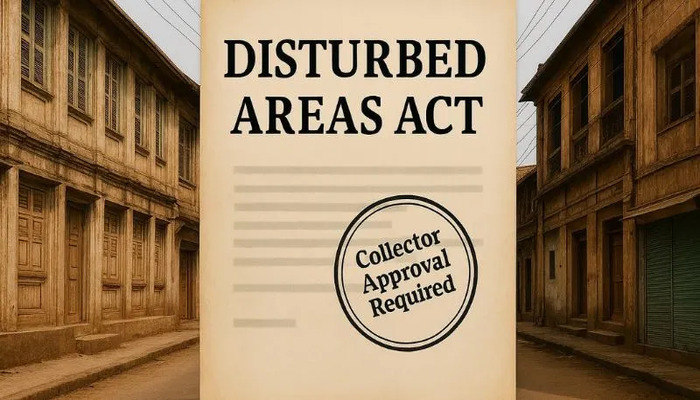

Protests erupted in the Gayatrinagar society of the Gorwa area in the Vadodara district of Gujarat on Friday (13th February) after two houses in a Hindu-majority society were sold to non-Hindus in violation of the Disturbed Areas Act 1991.
Members of local Hindu organisations and Sangharsh Samiti raised slogans and took out a protest march to the office of the District Magistrate. They submitted a memorandum demanding the implementation of the Act. According to the protesters, two residential properties in the society, which has a Hindu majority, were transferred to non-Hindu persons. The owners initially said that the houses were rented out, but the locals suspected that a sale had been made with respect to the properties.
The memorandum sought an enquiry into whether the transactions carried out in violation of the Disturbed Areas Act and demanded appropriate legal action. The residents said that they had approached the Municipal Commissioner before, but no action was taken.
What is the Disturbed Areas Act?
The Gujarat Prohibition of Transfer of Immovable Property and Provision for Protection of Tenants from Eviction from Premises in Disturbed Areas Act, 1991, commonly known as the Disturbed Areas Act, was introduced by the Gujarat government to prevent the polarisation of the population in communally sensitive areas.
Under the law, the seller and the buyer of a property are required to obtain the permission of the District Magistrate before effecting the sale of the property. The District Magistrate then investigates whether the sale is being made under duress or inducement. If the District Magistrate is not satisfied with the circumstances of the sale, he can deny permission for it.
Why was it introduced?
A trend was witnessed in several areas of Gujarat wherein people from the Muslim community purchased residential properties at high prices in Hindu-majority areas and settled there. Gradually, frequent clashes started erupting in such areas, forcing the Hindu residents to migrate. This trend led to demographic changes in the areas.
During the 1980s, several incidents of communal violence happened in Gujarat. Communal riots broke out in cities like Ahmedabad, Vadodara, Kheda, Bharuch, and Surat, severely affecting the Hindu population of the areas. Hindus were forced to sell their houses at petty prices and migrate to safer areas. It was at this time that the need to take some preventive measures was felt.
Consequently, the Gujarat government introduced the Disturbed Areas Act in 1986. The law prohibited the transfer of property in disturbed areas, both to protect Hindus from this problem and to counter the threat of demographic change. The law initially had some loopholes, and therefore, it was repealed and re-enacted as the Gujarat Disturbed Areas Act, 1991. The new act empowered the state government to declare some areas as ‘disturbed’.
Later in 2019, some major changes were introduced to the law, which were approved by the President of India in 2020. Following the amendments, the powers of the District Magistrate were broadened under the law. The District Magistrate was now empowered to investigate factors such as polarisation or unfair grouping, and demographic changes in relation to the sale of a property.
The law was stayed by the Gujarat High Court in January 2021, after several Islamic organisations, including the Jamiat Ulema-e-Hind, filed a petition against it. In 2023, the state government decided to withdraw the 2019 amendments to the law. Currently, the 1991 law is in effect.
When is an area declared as ‘disturbed’
According to Section 3 of the Act, the state government declares an area a ‘disturbed area’ based on a report from the District Magistrate and the police. The official notification under the Act is issued by the state government itself. Factors like a tense situation, riots, violence, or long-standing communal imbalance are taken into consideration in declaring an area as ‘disturbed’.
Following the 2002 riots, several areas in Gujarat (notably Juhapura, Sarkhej, and Gomtipur in Ahmedabad) were declared disturbed areas to prevent further divisions and the sale of property under threat or pressure. The notification is valid for 5 years after publication in the state gazette. The implementation of the Act in an area can be extended depending on the situation.
Any transfers of property in a disturbed area without the approval of the District Magistrate are invalid as per the Act. Before the sale of a property, the District Magistrate examines the applications and affidavits of the seller and the buyer, along with police reports, statements from neighbours, and Revenue Department documents.
Grounds added after the amendment, such as “impairment of demographic balance” and “unfair grouping,” are not applicable due to the High Court’s stay order. Therefore, the District Magistrate cannot cancel any transfer on these grounds and can only make decisions based on the 1991 criteria. State government rehabilitation schemes are exempted from this law, allowing for the transfer of property to new settlements and other procedures for those displaced by violence.
Areas where the Act is currently in effect
The Disturbed Areas Act is in effect in several districts of Gujarat. The list of areas is updated periodically by the state government. Several areas in Ahmedabad, Vadodara, Surat, Bharuch, Panchmahal, Anand, Narmada, Godhra, Bhavnagar, Amreli, and other cities have been covered under the Act.
Most areas in Ahmedabad city, such as Juhapura, Meghaninagar, Odhav, Gomtipur, Danilimda, and Sarkhej-Jamalpur-Kankaria, fall under the Disturbed Currents Act. Recently, new areas like Vastrapur, Thaltej, and Bodakdev in the western region of Ahmedabad were added to the Act through a public notification. The Act is also implemented in several areas in districts like Surat, Vadodara, and Anand. Recently, the implementation of the Act in Anand city and some areas of Anand district was extended for 5 years.
The entire procedure under the law is supervised by government officials, including the District Magistrate, the Police Commissioner/SP, and the Revenue Department. Areas to be covered under the law are notified by the state government. At present, around 1000 areas in Gujarat are notified under the law. All the property transactions in the notified areas are subject to the District Magistrate’s approval.