India set to hold discussions with France for acquiring 114 Rafale fighter jets: Read how the deal will boost India’s air defence as well as domestic manufacturing
In a step to boost its air defence capabilities, India is set to discuss a deal with France for acquiring 114 fourth and fifth-generation Rafale jets. The contract, valued at around ₹3.25 lakh crore, is to be negotiated in a high-level Defence Ministry meeting scheduled for this week. The deal, which is set to be one of India’s largest aircraft procurement deals, will include the delivery of 12-18 Rafale jets to India in fly-away condition, while the rest will be made in India. This will take the total number of jets in the Indian Air Force’s Rafale fighter squadron to 176. Currently, the Indian Air Force operates with 29 fighter squadrons, while the sanctioned critical strength of fighter squadrons is 42. This is the reason that India is making efforts to expand its fighter squadron to set up a robust air defence. Last year, in April 2025, India contracted with France for the procurement of 26 Dassault Rafale-M (Marine) jets for $7.4 billion. After France itself, India is the only country with both the naval and the air force variants of Rafale jets. The latest negotiations with France regarding Rafale jets come at a time when the US and Russia have offered India their 5th-generation fighter jets, the F-35 and the Su-57, respectively. A deal to boost India’s domestic defence manufacturing The agreement, once finalised, would bolster India’s aim of strengthening domestic manufacturing by allowing for the domestic production of the jets with over 30% indigenous content. However, this is lower than the required 50%-60% indigenous content under the Make in India deals. Additionally, India has requested that France enable the integration of Indian weapons and other indigenous systems into the jets. However, the source codes of the jets will remain with France only. In June 2024, Tata Advanced Systems Limited (TASL) signed a deal with Dassault Aviation of France for the induction of domestically manufactured Rafales into the Indian Air Force and the Army. The contract was an important step towards enhancing India’s defence self-reliance, as it facilitated the flow of modern defence technologies into the country. Besides, the TASL is in the process of designing and constructing an exclusive manufacturing unit in Hyderabad to tailor Rafale jets as per the strategic requirements of India. The facility will be capable of producing 24 fuselages (main body of the aircraft) annually. The first unit from the facility is expected to be delivered by 2028. Moreover, apart from the MRO facility to come up in Hyderabad, an MRO facility is also being established in Uttar Pradesh. All these facilities will cumulatively bring 60% of strategic Rafale manufacturing into India in terms of value. Why Rafale jets? The Indian Ministry of Defence received the proposal prepared by the Indian Air Force for the 114 Rafale jets a few months ago. After getting the Defence Ministry’s approval, the proposal will need clearance from the Cabinet Committee on Security. The fresh efforts of India for the acquisition of the Rafale jets come after the highly effective performance of the jets against Pakistan during Operation Sindoor. The jets managed to comprehensively beat the Chinese PL-15 air-to-air missiles using their Spectra Electronic Warfare suite. India strengthening air defence amid rising regional threats Amid the rising regional threats to its national security, India has been firming its air defence by expanding its fighter squadron with high-performance, advanced aircraft. As part of its plans for air defence modernisation, India has already placed orders for 180 LCA Mar 1A jets and is planning to induct indigenous fifth-generation fighter jets in large numbers after 2035. Under the proposed deal, France is also planning to establish a maintenance, repair and overhaul (MRO) facility for the M-88 engines, fitted in Rafale jets, in Hyderabad. A firm has been set up by Dassault Aviation, the maker of Rafale jets, to oversee the maintenance of French-origin fighter jets. Several Indian aerospace firms are expected to be part of the domestic manufacturing of Rafale jets. India-France Defence Partnership The current negotiations follow the 38th India–France Strategic Dialogue in New Delhi last week, which was co-chaired by India’s National Security Adviser Ajit Doval and Emmanuel Bonne, diplomatic adviser to French President Emmanuel Macron. At the dialogue, Doval and Bonne discussed defence cooperation, regional and global security issues, technology partnerships, space collaboration, and civil nuclear energy. They also reviewed progress on joint defence projects and discussed new opportunities for co-development and co-production. The India-France defence partnership has rapidly expanded over the last decade. The defence cooperation between the two countries extends from Rafale fighter jets and includes submarines, helicopters, and joint military exercises. The current deal for Rafales is an ex
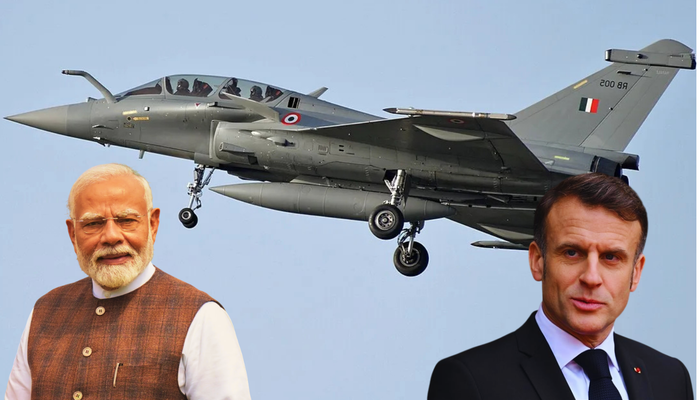

In a step to boost its air defence capabilities, India is set to discuss a deal with France for acquiring 114 fourth and fifth-generation Rafale jets. The contract, valued at around ₹3.25 lakh crore, is to be negotiated in a high-level Defence Ministry meeting scheduled for this week.
The deal, which is set to be one of India’s largest aircraft procurement deals, will include the delivery of 12-18 Rafale jets to India in fly-away condition, while the rest will be made in India. This will take the total number of jets in the Indian Air Force’s Rafale fighter squadron to 176. Currently, the Indian Air Force operates with 29 fighter squadrons, while the sanctioned critical strength of fighter squadrons is 42. This is the reason that India is making efforts to expand its fighter squadron to set up a robust air defence.
Last year, in April 2025, India contracted with France for the procurement of 26 Dassault Rafale-M (Marine) jets for $7.4 billion. After France itself, India is the only country with both the naval and the air force variants of Rafale jets. The latest negotiations with France regarding Rafale jets come at a time when the US and Russia have offered India their 5th-generation fighter jets, the F-35 and the Su-57, respectively.
A deal to boost India’s domestic defence manufacturing
The agreement, once finalised, would bolster India’s aim of strengthening domestic manufacturing by allowing for the domestic production of the jets with over 30% indigenous content. However, this is lower than the required 50%-60% indigenous content under the Make in India deals. Additionally, India has requested that France enable the integration of Indian weapons and other indigenous systems into the jets. However, the source codes of the jets will remain with France only.
In June 2024, Tata Advanced Systems Limited (TASL) signed a deal with Dassault Aviation of France for the induction of domestically manufactured Rafales into the Indian Air Force and the Army. The contract was an important step towards enhancing India’s defence self-reliance, as it facilitated the flow of modern defence technologies into the country. Besides, the TASL is in the process of designing and constructing an exclusive manufacturing unit in Hyderabad to tailor Rafale jets as per the strategic requirements of India. The facility will be capable of producing 24 fuselages (main body of the aircraft) annually. The first unit from the facility is expected to be delivered by 2028.
Moreover, apart from the MRO facility to come up in Hyderabad, an MRO facility is also being established in Uttar Pradesh. All these facilities will cumulatively bring 60% of strategic Rafale manufacturing into India in terms of value.
Why Rafale jets?
The Indian Ministry of Defence received the proposal prepared by the Indian Air Force for the 114 Rafale jets a few months ago. After getting the Defence Ministry’s approval, the proposal will need clearance from the Cabinet Committee on Security. The fresh efforts of India for the acquisition of the Rafale jets come after the highly effective performance of the jets against Pakistan during Operation Sindoor. The jets managed to comprehensively beat the Chinese PL-15 air-to-air missiles using their Spectra Electronic Warfare suite.
India strengthening air defence amid rising regional threats
Amid the rising regional threats to its national security, India has been firming its air defence by expanding its fighter squadron with high-performance, advanced aircraft. As part of its plans for air defence modernisation, India has already placed orders for 180 LCA Mar 1A jets and is planning to induct indigenous fifth-generation fighter jets in large numbers after 2035.
Under the proposed deal, France is also planning to establish a maintenance, repair and overhaul (MRO) facility for the M-88 engines, fitted in Rafale jets, in Hyderabad. A firm has been set up by Dassault Aviation, the maker of Rafale jets, to oversee the maintenance of French-origin fighter jets. Several Indian aerospace firms are expected to be part of the domestic manufacturing of Rafale jets.
India-France Defence Partnership
The current negotiations follow the 38th India–France Strategic Dialogue in New Delhi last week, which was co-chaired by India’s National Security Adviser Ajit Doval and Emmanuel Bonne, diplomatic adviser to French President Emmanuel Macron. At the dialogue, Doval and Bonne discussed defence cooperation, regional and global security issues, technology partnerships, space collaboration, and civil nuclear energy. They also reviewed progress on joint defence projects and discussed new opportunities for co-development and co-production.
The India-France defence partnership has rapidly expanded over the last decade. The defence cooperation between the two countries extends from Rafale fighter jets and includes submarines, helicopters, and joint military exercises. The current deal for Rafales is an example of India’s balanced approach with respect to defence cooperation and domestic defence manufacturing.