Naxalism won’t be allowed to fester again: Read how the Modi govt is working on a multi-pronged approach to make sure Left Wing terrorism finds no ground to grow
India is edging closer to its goal of becoming a “Naxal-free” nation by 31st March, with the Centre rolling out a detailed 10-point plan to make sure that areas cleared of Left-Wing Extremism remain peaceful, The Economic Times reported. The new strategy goes beyond security measures and focuses on development, better livelihoods and everyday governance, while also stepping up action against Maoist networks in urban areas. Officials familiar with the discussions said the plan is meant for the post-Left-Wing Extremism phase and focuses on stabilising districts that have lived through years of violence. It brings together faster delivery of government schemes, a change in security strategy and tougher steps to break the money and support systems of Maoist groups. The roadmap was discussed during recent high-level meetings involving senior officials from the Centre and states. From battlegrounds to stable districts One of the most important changes under the new approach is the shift in security thinking. Instead of treating these regions only as conflict zones, the Centre wants them to move towards normal administration and everyday peace. The idea is to ensure that once violence reduces, the gains are not lost because of weak governance or lack of development. Officials say this change is crucial because many areas that were once strongholds of extremism still struggle with basic facilities. If everyday problems are not addressed, there is always a risk of unrest returning. The new strategy is designed to prevent that slide. Why development still holds the key The need for a strong development push was underlined during the Chief Secretaries’ Conference held between 26th to 28th December, 2025. Data shared at the meeting showed that poverty levels remain much higher in Left-Wing Extremism-affected districts compared to the national average. While poverty across India stands at around 15%, it goes beyond 20% in LWE-hit areas. In districts such as Lakhisarai, Latehar, Malkangiri, Sukma and West Singhbhum, more than 40% of the population lives in poverty. These figures, drawn from 2019-21 data, explain why development remains central to the fight against Naxalism. Most families in these regions depend on forest produce and rain-fed farming. Non-farm job options are limited, irrigation coverage is poor and access to markets is weak. Even where progress has been made in building roads and installing mobile towers, some villages remain difficult to reach. Education and health gaps remain wide Education and healthcare continue to lag behind in many affected districts. School dropout rates are high, especially after the primary level. In several schools, even basic facilities such as functional girls’ toilets are missing, making it harder for children, particularly girls, to continue their studies. Health centres often struggle with staff shortages and limited facilities. Maternal care remains uneven, and infant and maternal death rates are higher than the national average. Clean water and sanitation are also ongoing challenges in remote pockets. Financial literacy and access to skill training institutes remain limited, reducing job options for young people. Security strategy gets a reset One of the most significant changes under the 10-point plan is the shift in security handling. The Centre wants to gradually move away from a Central Armed Police Forces-led conflict response to a system where state police take the lead in maintaining peace. The belief is that local police are better placed to understand community issues and build trust with residents. Over time, CAPF camps will be handed over to state police, marking a move from short-term control to long-term peace maintenance. Alongside this, the Centre is pushing for a more responsive civil administration. District officials are expected to stay engaged with communities, address grievances quickly and ensure that government services reach people on time. Government schemes reach the last mile To close long-standing gaps, LWE-affected states have been asked to ensure full coverage of 137 central government schemes spread across 20 ministries. A special relaxation has been given to allow faster rollout, keeping in mind the challenges of working in remote and forested areas. One key initiative is the faster rollout of the Swamitva scheme using drones. The aim is to provide clear land ownership records to every rural household. Officials say proper land records can reduce disputes, improve access to loans and give families a sense of security. Focus on better livelihoods Livelihoods form a major pillar of the post-LWE plan. Studies from the Bastar division highlight the scale of the challenge. Nearly 70% of households there earn less than ₹10,000 a month, with more than a third surviving on under ₹6,000. A large majority earn no more than ₹15,000. The Centre now wants to raise average monthly in


India is edging closer to its goal of becoming a “Naxal-free” nation by 31st March, with the Centre rolling out a detailed 10-point plan to make sure that areas cleared of Left-Wing Extremism remain peaceful, The Economic Times reported.
The new strategy goes beyond security measures and focuses on development, better livelihoods and everyday governance, while also stepping up action against Maoist networks in urban areas.
Officials familiar with the discussions said the plan is meant for the post-Left-Wing Extremism phase and focuses on stabilising districts that have lived through years of violence. It brings together faster delivery of government schemes, a change in security strategy and tougher steps to break the money and support systems of Maoist groups.
The roadmap was discussed during recent high-level meetings involving senior officials from the Centre and states.
From battlegrounds to stable districts
One of the most important changes under the new approach is the shift in security thinking. Instead of treating these regions only as conflict zones, the Centre wants them to move towards normal administration and everyday peace. The idea is to ensure that once violence reduces, the gains are not lost because of weak governance or lack of development.
Officials say this change is crucial because many areas that were once strongholds of extremism still struggle with basic facilities. If everyday problems are not addressed, there is always a risk of unrest returning. The new strategy is designed to prevent that slide.
Why development still holds the key
The need for a strong development push was underlined during the Chief Secretaries’ Conference held between 26th to 28th December, 2025. Data shared at the meeting showed that poverty levels remain much higher in Left-Wing Extremism-affected districts compared to the national average.
While poverty across India stands at around 15%, it goes beyond 20% in LWE-hit areas. In districts such as Lakhisarai, Latehar, Malkangiri, Sukma and West Singhbhum, more than 40% of the population lives in poverty. These figures, drawn from 2019-21 data, explain why development remains central to the fight against Naxalism.
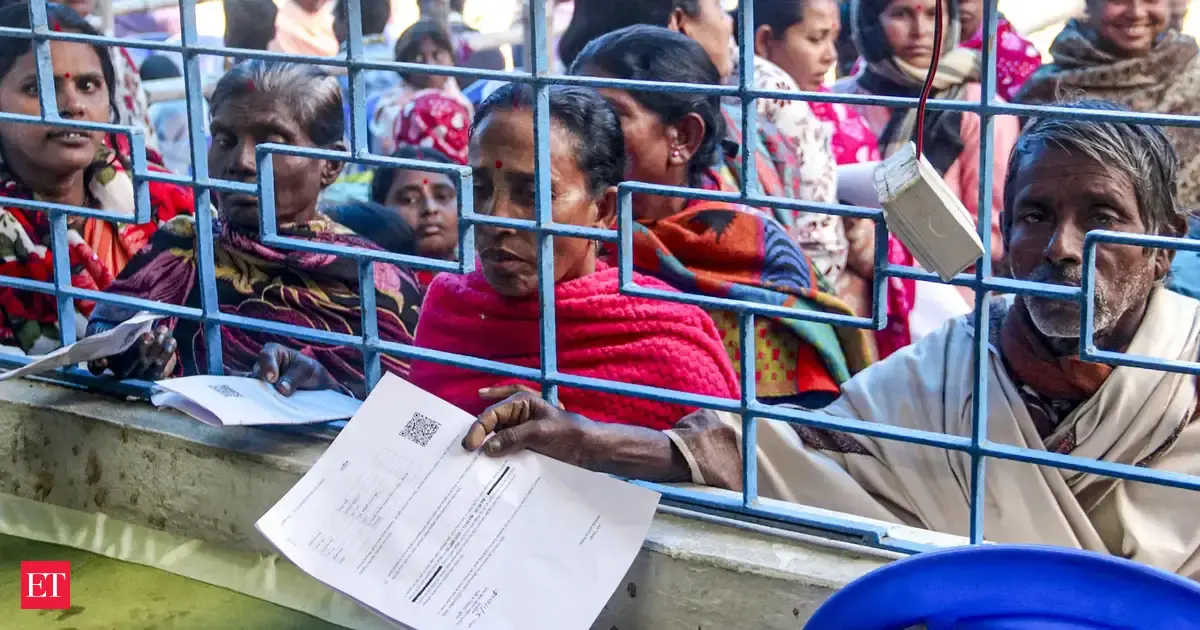
Most families in these regions depend on forest produce and rain-fed farming. Non-farm job options are limited, irrigation coverage is poor and access to markets is weak. Even where progress has been made in building roads and installing mobile towers, some villages remain difficult to reach.
Education and health gaps remain wide
Education and healthcare continue to lag behind in many affected districts. School dropout rates are high, especially after the primary level. In several schools, even basic facilities such as functional girls’ toilets are missing, making it harder for children, particularly girls, to continue their studies.
Health centres often struggle with staff shortages and limited facilities. Maternal care remains uneven, and infant and maternal death rates are higher than the national average. Clean water and sanitation are also ongoing challenges in remote pockets. Financial literacy and access to skill training institutes remain limited, reducing job options for young people.
Security strategy gets a reset
One of the most significant changes under the 10-point plan is the shift in security handling. The Centre wants to gradually move away from a Central Armed Police Forces-led conflict response to a system where state police take the lead in maintaining peace.
The belief is that local police are better placed to understand community issues and build trust with residents. Over time, CAPF camps will be handed over to state police, marking a move from short-term control to long-term peace maintenance.
Alongside this, the Centre is pushing for a more responsive civil administration. District officials are expected to stay engaged with communities, address grievances quickly and ensure that government services reach people on time.
Government schemes reach the last mile
To close long-standing gaps, LWE-affected states have been asked to ensure full coverage of 137 central government schemes spread across 20 ministries. A special relaxation has been given to allow faster rollout, keeping in mind the challenges of working in remote and forested areas.
One key initiative is the faster rollout of the Swamitva scheme using drones. The aim is to provide clear land ownership records to every rural household. Officials say proper land records can reduce disputes, improve access to loans and give families a sense of security.
Focus on better livelihoods
Livelihoods form a major pillar of the post-LWE plan. Studies from the Bastar division highlight the scale of the challenge. Nearly 70% of households there earn less than ₹10,000 a month, with more than a third surviving on under ₹6,000. A large majority earn no more than ₹15,000.
The Centre now wants to raise average monthly incomes to ₹25,000-30,000. This will be done by widening livelihood options, encouraging group-based work, improving links to markets and bringing in technology where possible. Officials believe steady incomes are one of the strongest safeguards against the return of extremism.
Breaking the money chain
Along with development and governance, the plan takes a tough stand on the financial and logistical networks linked to Maoist groups. There is a proposal to hand over major LWE-related cases to the National Investigation Agency, with coordinated action by the Enforcement Directorate, the CBI and the Income Tax Department.
States have been encouraged to set up special courts to ensure strong investigations and faster trials. Better coordination between states is also planned to curb the supply of weapons and funding. A new policy to regulate tendu leaf collection, a known source of Maoist income, is also being worked on.
Urban networks under watch
The Centre has also made it clear that its focus is not limited to rural and forest areas. A key target of the plan is the Maoist support system operating in urban centres. Officials say such networks often work quietly from within institutions, providing ideological, legal or logistical support.
The strategy includes identifying such front organisations through surveillance and investigation, followed by swift legal action. The aim is to ensure that extremist influence does not rebuild itself in cities even as rural areas stabilise.
How the Modi Government changed the fight against naxalism
Over the past decade, the government led by Prime Minister Narendra Modi has steadily pushed Naxalism to the margins by combining firm security action with visible development work. Instead of treating the issue only as a law-and-order problem, the focus shifted to improving daily life in remote districts.
Roads, electricity, mobile connectivity, housing, toilets and banking services were expanded in areas that were once cut off. Welfare schemes were pushed aggressively, reducing the space for extremist groups to influence everyday life.
Targeted security operations cleared core Naxal zones, while outreach programmes, health camps and job schemes helped rebuild trust with local communities. As governance improved, violence dropped sharply and the geographical spread of Naxalism shrank.
With the new post-LWE plan, the Centre now wants to lock in these gains for good. By focusing on development, dignity and long-term peace, the government hopes to ensure that areas once known for conflict move firmly towards stability, growth and a normal way of life.