Inland Waterways and Coastal Cargo Promotion Scheme: Read how the Modi government plans to boost the economy using rivers and coastlines
The rivers and long coastline of India are soon going to play a much bigger role in the economic development of the country. In the Union Budget 2026-27, the Modi government has announced major initiatives to develop the inland waterways and coastal shipping of the country. The aim is to make the transportation of cargo cheaper, cleaner, and more efficient. Union Budget 2026–27 announced a Coastal Cargo Promotion Scheme aimed at incentivising a modal shift of cargo from rail and road to waterways, strengthening sustainable and cost-effective logistics in the country. The initiative targets an increase in the share of inland… pic.twitter.com/3UZ8ONSwXg— Ministry of Ports, Shipping and Waterways (@shipmin_india) February 2, 2026 The key to this development is the Coastal Cargo Promotion Scheme. This scheme aims to encourage companies to transport their cargo from roads and railways to the rivers and coastlines. The government is also keen to enhance the share of inland waterways and coastal shipping in India’s cargo transport from the present 6% to 12% by 2047. Budget announces Coastal Cargo Promotion scheme to incentivise modal shift from rail and road to waterways.We aim to increase share of inland waterways and coastal shipping from 6% to 12% by 2047.#ViksitBharatBudget pic.twitter.com/t8BAmlrovf— Sarbananda Sonowal (@sarbanandsonwal) February 1, 2026 According to officials, this will help reduce logistics costs, fuel consumption, carbon emissions, and pressure on highways and rail routes. Coastal Cargo Promotion Scheme: a big push for green logistics The newly announced Coastal Cargo Promotion Scheme is designed to support sustainable logistics and long-term infrastructure growth. By promoting waterways for cargo transport, the government expects to build a strong domestic ecosystem that can meet the rising demand for containerised cargo. As per the scheme, India aims to handle a total of one million TEUs annually for the next 10 years. The move is expected to create a new market in excess of ₹1 lakh crore, besides providing massive employment opportunities and developing supporting industries, thus reducing dependence on imports. Along with the Bharat Container Shipping Line, the scheme is seen as a decisive step toward maritime self-reliance and a more resilient supply chain. Inland waterways expansion from 5 to 111 waterways The Union Budget has given fresh momentum to India’s inland waterways programme, which has been expanding steadily since 2014. Before 2014, India had only five national waterways. Today, that number has grown to 111 waterways under the National Waterways Act. Over the next five years, the government plans to operationalise 20 more National Waterways, further widening the network. Cargo movement on inland waterways has jumped sharply from 18.1 million metric tonnes in 2013-14 to 145.5 million metric tonnes in 2024-25, marking nearly 700 %growth at a compound annual growth rate of about 21%, as per government data. The operational length of waterways has also expanded from 2,716 km to over 5,155 km, helping reduce congestion on roads and railways. National Waterway-5 on the Mahanadi river in Odisha One of the most important announcements in the Budget is the focused development of National Waterway-5 on the Mahanadi river system in Odisha. An important announcement in the Budget – development of NW-5 in Odisha. #ViksitBharatBudget pic.twitter.com/3GlUQstCXP— Sarbananda Sonowal (@sarbanandsonwal) February 1, 2026 This waterway will link the mineral-rich areas of Talcher and Angul with major industrial hubs such as Kalinga Nagar and ports at Paradeep Port and Dhamra Port. Major terminals will be built at Kakudi, Kurunti and Pankapal, with coal, coking coal and limestone as the main cargo. The corridor has an estimated cargo potential of 10 million tonnes by 2032, which could rise to 20 million tonnes by 2047. The total investment is expected to be around ₹13,000 crore. This project will unlock the economic potential of eastern India by directly connecting mineral belts, factories and ports. Skill development and Ship repair building capacity To support the growing waterways sector, the Budget announced the setting up of Regional Centres of Excellence (RCoE) for skill development. Training institutes will be established in Kolkata and Varanasi, helping young people across the waterway network gain specialised skills in inland shipping and logistics. A dedicated ship repair ecosystem for inland vessels will also be developed at Varanasi and Patna, improving reliability and creating skilled jobs. Exciting news from the Union Budget 2026–27! A cutting-edge ship repair ecosystem for inland waterways is set to launch in Varanasi and Patna. This initiative targets the maintenance and repair of vessels cruising our vital inland routes, supercharging the reliability of inland… pic.twitter.com/bFlvLKenoL— Ministry of Ports,
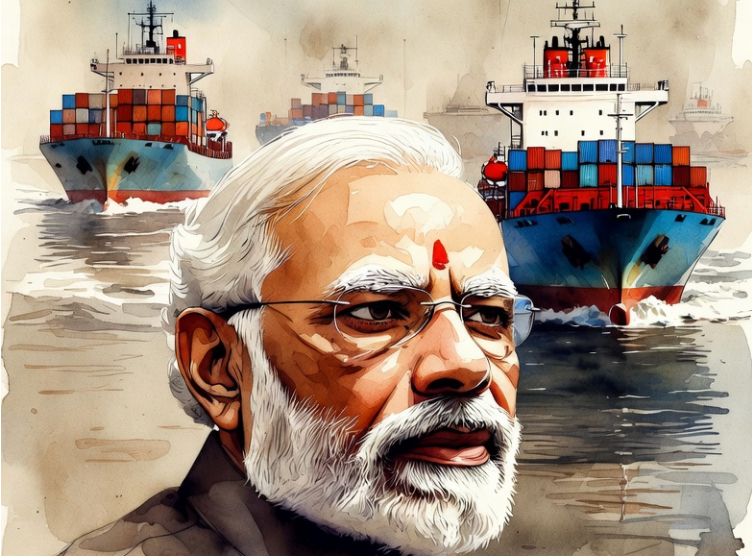

The rivers and long coastline of India are soon going to play a much bigger role in the economic development of the country. In the Union Budget 2026-27, the Modi government has announced major initiatives to develop the inland waterways and coastal shipping of the country. The aim is to make the transportation of cargo cheaper, cleaner, and more efficient.
Union Budget 2026–27 announced a Coastal Cargo Promotion Scheme aimed at incentivising a modal shift of cargo from rail and road to waterways, strengthening sustainable and cost-effective logistics in the country. The initiative targets an increase in the share of inland… pic.twitter.com/3UZ8ONSwXg
— Ministry of Ports, Shipping and Waterways (@shipmin_india) February 2, 2026
The key to this development is the Coastal Cargo Promotion Scheme. This scheme aims to encourage companies to transport their cargo from roads and railways to the rivers and coastlines. The government is also keen to enhance the share of inland waterways and coastal shipping in India’s cargo transport from the present 6% to 12% by 2047.
Budget announces Coastal Cargo Promotion scheme to incentivise modal shift from rail and road to waterways.
— Sarbananda Sonowal (@sarbanandsonwal) February 1, 2026
We aim to increase share of inland waterways and coastal shipping from 6% to 12% by 2047.#ViksitBharatBudget pic.twitter.com/t8BAmlrovf
According to officials, this will help reduce logistics costs, fuel consumption, carbon emissions, and pressure on highways and rail routes.
Coastal Cargo Promotion Scheme: a big push for green logistics
The newly announced Coastal Cargo Promotion Scheme is designed to support sustainable logistics and long-term infrastructure growth. By promoting waterways for cargo transport, the government expects to build a strong domestic ecosystem that can meet the rising demand for containerised cargo.
As per the scheme, India aims to handle a total of one million TEUs annually for the next 10 years. The move is expected to create a new market in excess of ₹1 lakh crore, besides providing massive employment opportunities and developing supporting industries, thus reducing dependence on imports.
Along with the Bharat Container Shipping Line, the scheme is seen as a decisive step toward maritime self-reliance and a more resilient supply chain.
Inland waterways expansion from 5 to 111 waterways
The Union Budget has given fresh momentum to India’s inland waterways programme, which has been expanding steadily since 2014.
Before 2014, India had only five national waterways. Today, that number has grown to 111 waterways under the National Waterways Act. Over the next five years, the government plans to operationalise 20 more National Waterways, further widening the network.
Cargo movement on inland waterways has jumped sharply from 18.1 million metric tonnes in 2013-14 to 145.5 million metric tonnes in 2024-25, marking nearly 700 %growth at a compound annual growth rate of about 21%, as per government data.
The operational length of waterways has also expanded from 2,716 km to over 5,155 km, helping reduce congestion on roads and railways.
National Waterway-5 on the Mahanadi river in Odisha
One of the most important announcements in the Budget is the focused development of National Waterway-5 on the Mahanadi river system in Odisha.
An important announcement in the Budget – development of NW-5 in Odisha. #ViksitBharatBudget pic.twitter.com/3GlUQstCXP
— Sarbananda Sonowal (@sarbanandsonwal) February 1, 2026
This waterway will link the mineral-rich areas of Talcher and Angul with major industrial hubs such as Kalinga Nagar and ports at Paradeep Port and Dhamra Port.
Major terminals will be built at Kakudi, Kurunti and Pankapal, with coal, coking coal and limestone as the main cargo. The corridor has an estimated cargo potential of 10 million tonnes by 2032, which could rise to 20 million tonnes by 2047. The total investment is expected to be around ₹13,000 crore.
This project will unlock the economic potential of eastern India by directly connecting mineral belts, factories and ports.
Skill development and Ship repair building capacity
To support the growing waterways sector, the Budget announced the setting up of Regional Centres of Excellence (RCoE) for skill development.
Training institutes will be established in Kolkata and Varanasi, helping young people across the waterway network gain specialised skills in inland shipping and logistics. A dedicated ship repair ecosystem for inland vessels will also be developed at Varanasi and Patna, improving reliability and creating skilled jobs.
Exciting news from the Union Budget 2026–27!
— Ministry of Ports, Shipping and Waterways (@shipmin_india) February 3, 2026
A cutting-edge ship repair ecosystem for inland waterways is set to launch in Varanasi and Patna. This initiative targets the maintenance and repair of vessels cruising our vital inland routes, supercharging the reliability of inland… pic.twitter.com/bFlvLKenoL
Another RCoE is being developed in Dibrugarh, Assam, strengthening capacity in the Northeast.
Better connectivity through freight corridors and ports
To improve multimodal transport, the Budget proposed new Dedicated Freight Corridors connecting Dankuni in the east to Surat in the west. These corridors will improve port connectivity, speed up cargo movement and support industrial logistics.
Stronger integration of inland waterways with ports such as Paradeep and Dhamra is expected to further reduce the load on roads and railways.
Seaplanes, Ship ownership and tax incentives
The Budget also announced plans to indigenise seaplane manufacturing, along with a Viability Gap Funding scheme to support operations. This move aims to boost tourism and improve connectivity to remote and island regions, including the Andaman and Nicobar Islands and Lakshadweep.
To promote Indian ship ownership, the government extended the tax deduction period for units in GIFT IFSC and Offshore Banking Units from 10 to 20 consecutive years within a 25-year period.
The customs duty exemption on small vessel imports has been extended until March 2028, while the exemption on large vessels has been permanently removed. These measures are expected to encourage Indian flagging, fleet expansion and tonnage growth.
Using India’s geography to drive growth
The Union Budget clearly positions inland waterways, coastal shipping, shipbuilding and container manufacturing as key drivers of India’s logistics strength and trade competitiveness.
With a strong focus on the three Kartavyas, accelerating growth, fulfilling aspirations and ensuring Sabka Saath, Sabka Vikas, the government aims to use India’s natural geography to fuel economic expansion.
By turning rivers and coastlines into highways of commerce, the Modi government is betting on greener transport, lower costs and a more balanced, inclusive growth model for the decades ahead.