Koraput and Malkangiri districts in Odisha are finally free of Naxalism: Read how Operation Kagar and a strategic river bridge made this possible
In a major success under the ongoing anti-Naxal operations, two Odisha districts of Koraput and Malkangiri were recently declared Naxal-free by the authorities. The Koraput district was declared Naxal-free on Thursday (5th February) after the surrender of Maoist ACM cadre Mamta Podiami to DIG, South West region, Dr Kanwar Vishal Singh. Podiami surrendered with an SLR (Self-Loading Rifle) and 10 rounds of ammunition. “After declaring Malkangiri district Naxal-free yesterday, today we are declaring Koraput district Naxal-free. Today, a Naxal cadre of ACM rank, Mamata, surrendered with an SLR rifle, ten rounds of ammunition, and other materials. There was a reward of Rs 5.5 lakh for her, and Rs 1.65 lakh for her SLR. She will receive these benefits… A few days ago, 22 Naxals surrendered in Malkangiri, where our DGP of Odisha Police was present… Even after declaring Koraput Naxal-free, we will remain fully alert…” said DIG, South West region, Dr Kanwar Vishal Singh, speaking to the media. #WATCH | Odisha: Koraput district was declared naxal-free after Maoist ACM cadre Mamta Podiam surrendered to DIG, South West region, Dr Kanwar Vishal Singh with an SLR (Self-Loading Rifle) and 10 rounds of ammunition. DIG, South West region, Dr Kanwar Vishal Singh says, "After… pic.twitter.com/u21boSdXXu— ANI (@ANI) February 6, 2026 According to DIG Singh, Podiami, a resident of Chhattisgarh, was involved in many anti-government activities in the bordering areas of Odisha and Chhattisgarh. She was booked in 2023 by Katekalyan police in Bijapur district for violence. Podiami will now be given the amount of reward that she carried along with the amount of reward on the weapon she surrendered. “She will be entitled to financial assistance of ₹5.5 lakh announced on her head, along with an additional ₹1.65 lakh for surrendering the weapon. Besides, she will get all benefits under the state’s surrender and rehabilitation policy,” the DIG said, urging the remaining Naxal cadres in other areas of the state to lay down the weapons and join the mainstream. Odisha’s Director General of Police, Y B Khurania, assured full support of the Odisha government to the Naxals who chose to surrender. “I appeal to the CPI cadres and leaders to come and join the mainstream society. The Odisha government assures that all cadres who choose to surrender will receive full support, protection and assistance under the comprehensive rehabilitation and reintegration programme, enabling them to rebuild their lives in a peaceful and dignified manner,” DGP Y B Khurania said. According to police, Koraput has become the fourth district under the south-western police range, after Malkangiri, Nuapada and Nabarangpur, to become Naxal-free. The development comes ahead of the March 31, 2026, deadline of eradicating the Left Wing Extremism from the country. A day before, on Wednesday (4th February), the Malkangiri district was declared Naxal-free following the surrender of Maoist leader Sukhram Markram, who carried a reward of ₹21 lakh. Days before, the Nabrangpur district was also declared Maoist-free after nine Naxals laid down weapons in Chhattisgarh. Sukhram Markam was the area committee member of the banned CPI(Maoist). He surrendered one SLR rifle, ammunition and other articles to the police. According to police, Markam was involved in a series of violent incidents across Odisha, Andhra Pradesh and Chhattisgarh. However, now that he has laid down his weapons, he will receive full assistance from the state government in leading a normal life. Malkangiri SP Binod Patil said that Sukhram Markam will get benefits under the Odisha government’s rehabilitation policy. Major anti-Naxal operations in Koraput and Malkangiri In May 2025, dreaded Maoist leader Kunjam Hidma was arrested by the Odisha police in a special operation in the dense Petguda forests of the Koraput district. He was arrested after the district police received the input that he had been hiding in the forest area after escaping from Chhattisgarh. Hidma, originally from the Janaguda village in Chhattisgarh’s Bijapur, was wanted in Koraput, Odisha, for multiple crimes over the years. One AK-47 rifle, 35 rounds of ammunition, 117 electric and non-electric detonators, walkie-talkies, gunpowder, and Maoist literature were seized from Hidma’s possession. In December 2025, 22 Maoists, carrying a combined bounty of ₹2.18 crore, surrendered in the Malkangiri district. Among the Maoists were 10 women, including a divisional committee member (DCM) and six area committee members (ACMs). 19 of the surrendered Maoist cadres belonged to the Dandakaranya special zonal committee (DKSZC), while two were from the Andhra-Odisha border special zonal committee (AOBSZC) and one from the Gadchiroli area committee. They were all involved in a series of violence in Odisha and Chhattisgarh. Anti-Naxal operations assisted by infrastructural improvement Crucial infrastructural development and th
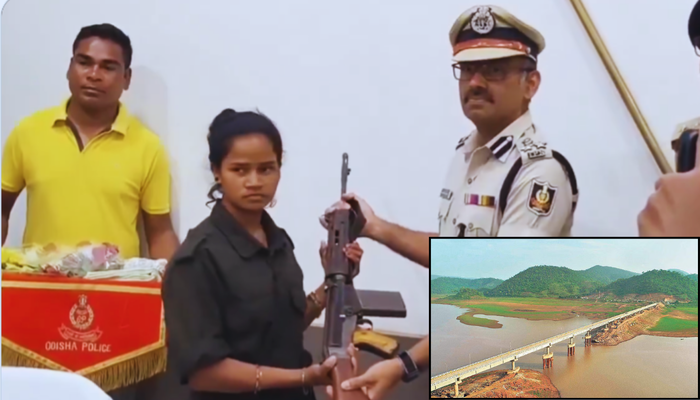

In a major success under the ongoing anti-Naxal operations, two Odisha districts of Koraput and Malkangiri were recently declared Naxal-free by the authorities. The Koraput district was declared Naxal-free on Thursday (5th February) after the surrender of Maoist ACM cadre Mamta Podiami to DIG, South West region, Dr Kanwar Vishal Singh. Podiami surrendered with an SLR (Self-Loading Rifle) and 10 rounds of ammunition.
“After declaring Malkangiri district Naxal-free yesterday, today we are declaring Koraput district Naxal-free. Today, a Naxal cadre of ACM rank, Mamata, surrendered with an SLR rifle, ten rounds of ammunition, and other materials. There was a reward of Rs 5.5 lakh for her, and Rs 1.65 lakh for her SLR. She will receive these benefits… A few days ago, 22 Naxals surrendered in Malkangiri, where our DGP of Odisha Police was present… Even after declaring Koraput Naxal-free, we will remain fully alert…” said DIG, South West region, Dr Kanwar Vishal Singh, speaking to the media.
#WATCH | Odisha: Koraput district was declared naxal-free after Maoist ACM cadre Mamta Podiam surrendered to DIG, South West region, Dr Kanwar Vishal Singh with an SLR (Self-Loading Rifle) and 10 rounds of ammunition.
— ANI (@ANI) February 6, 2026
DIG, South West region, Dr Kanwar Vishal Singh says, "After… pic.twitter.com/u21boSdXXu
According to DIG Singh, Podiami, a resident of Chhattisgarh, was involved in many anti-government activities in the bordering areas of Odisha and Chhattisgarh. She was booked in 2023 by Katekalyan police in Bijapur district for violence. Podiami will now be given the amount of reward that she carried along with the amount of reward on the weapon she surrendered. “She will be entitled to financial assistance of ₹5.5 lakh announced on her head, along with an additional ₹1.65 lakh for surrendering the weapon. Besides, she will get all benefits under the state’s surrender and rehabilitation policy,” the DIG said, urging the remaining Naxal cadres in other areas of the state to lay down the weapons and join the mainstream.
Odisha’s Director General of Police, Y B Khurania, assured full support of the Odisha government to the Naxals who chose to surrender. “I appeal to the CPI cadres and leaders to come and join the mainstream society. The Odisha government assures that all cadres who choose to surrender will receive full support, protection and assistance under the comprehensive rehabilitation and reintegration programme, enabling them to rebuild their lives in a peaceful and dignified manner,” DGP Y B Khurania said.
According to police, Koraput has become the fourth district under the south-western police range, after Malkangiri, Nuapada and Nabarangpur, to become Naxal-free. The development comes ahead of the March 31, 2026, deadline of eradicating the Left Wing Extremism from the country.
A day before, on Wednesday (4th February), the Malkangiri district was declared Naxal-free following the surrender of Maoist leader Sukhram Markram, who carried a reward of ₹21 lakh. Days before, the Nabrangpur district was also declared Maoist-free after nine Naxals laid down weapons in Chhattisgarh. Sukhram Markam was the area committee member of the banned CPI(Maoist). He surrendered one SLR rifle, ammunition and other articles to the police.
According to police, Markam was involved in a series of violent incidents across Odisha, Andhra Pradesh and Chhattisgarh. However, now that he has laid down his weapons, he will receive full assistance from the state government in leading a normal life. Malkangiri SP Binod Patil said that Sukhram Markam will get benefits under the Odisha government’s rehabilitation policy.
Major anti-Naxal operations in Koraput and Malkangiri
In May 2025, dreaded Maoist leader Kunjam Hidma was arrested by the Odisha police in a special operation in the dense Petguda forests of the Koraput district. He was arrested after the district police received the input that he had been hiding in the forest area after escaping from Chhattisgarh. Hidma, originally from the Janaguda village in Chhattisgarh’s Bijapur, was wanted in Koraput, Odisha, for multiple crimes over the years. One AK-47 rifle, 35 rounds of ammunition, 117 electric and non-electric detonators, walkie-talkies, gunpowder, and Maoist literature were seized from Hidma’s possession.
In December 2025, 22 Maoists, carrying a combined bounty of ₹2.18 crore, surrendered in the Malkangiri district. Among the Maoists were 10 women, including a divisional committee member (DCM) and six area committee members (ACMs). 19 of the surrendered Maoist cadres belonged to the Dandakaranya special zonal committee (DKSZC), while two were from the Andhra-Odisha border special zonal committee (AOBSZC) and one from the Gadchiroli area committee. They were all involved in a series of violence in Odisha and Chhattisgarh.
Anti-Naxal operations assisted by infrastructural improvement
Crucial infrastructural development and the resultant connectivity to remote Naxal-infested areas provided a much-needed operational ease to the Centre’s anti-Naxal strategy. The 910-metre bridge built over the river Gurupriya in 2018 in the Malkangiri district, once considered a Naxal breeding ground, was a part of this crucial infrastructural enhancement. The Malkangiri district shares a border with Andhra Pradesh and Chhattisgarh and was affected by Left-wing extremism.
The Swabhiman Anchal area of the Malkangiri district was isolated in the early 1960s due to the construction of a 65-km water channel as part of the Balimela reservoir project. The isolated geography offered a perfect hideout to Maoists, who thrived in the area. In 2008, they carried out an ambush attack against security personnel near the Balimela reservoir, killing 39 of them. In February 2011, Maoists abducted the then Malkangiri District Collector R Vineel Krishna and a junior engineer while they were inspecting works in the cut-off areas. They were and kept hostage by the Maoists for eight days, and were released only after securing the release of top Maoist leader Ganti Prasadam. Later on, four BSF personnel, including a commandant, were killed in a landmine blast. The isolated and challenging geography of the area emboldened the Naxals, who intensified attacks on security forces.
However, the construction of the Gurupriya river bridge proved lethal for the Naxals in the Malkangiri district. The bridge connected around 170 villages in the Naxal-affected areas. Its construction started in the mid 1980s with an estimated cost of ₹8 crore, but ended up taking over four decades at an expenditure of ₹172 crore. The reason for the delay in the construction of the bridge was the resistance of Maoists, who could foresee that the construction of the bridge would lead to the eradication of their strongholds. Subsequently, the central government deployed BSF personnel in the area in 2015 to complete the construction of the bridge.
After the bridge, the government constructed all-weather roads in the villages, accommodating over 30,000 people. As a result, almost all habitations in the Swabhiman Anchal were connected with all-weather roads. This dealt a major blow to the Maoist dominance in the area. This was followed by the BSF setting up multiple company operating bases (COB), which are heavily-armed outposts, to combat Maoists in the Swabhiman Anchal.
Operation Kagar and the centre’s commitment to a Naxal-free India
Over the last decade, the central government has amped up operations in Naxal strongholds to entirely uproot the Maoist cadres. The government has adopted a two-pronged strategy of eliminating the Maoist cadres through military operations clubbed with development-oriented works such as expansion of roads, transport facilities, water, electricity and other welfare schemes of the government reaching the villagers.
As part of this strategy, the central government launched Operation Kagar in January 2024 to eradicate Naxalism in Chhattisgarh, Maharashtra (Gadchiroli), Odisha, Jharkhand, Madhya Pradesh and Telangana. Under the operation, around 1 lakh para-military troops, including the Central Reserve Police Force (CRPF), its elite CoBRA units, District Reserve Guards DRG), and state police, equipped with modern technology, have been deployed in the left-wing terrorism affected areas to completely uproot the naxal terrorism from its last remaining strongholds.
The success of the centre’s anti-Naxal operation can be estimated from the fact that from 2015 to 2025, the number of Naxal-affected districts came down from 106 to 18. Out of these districts, 12 were considered the worst affected by Naxalism. However, this number further dropped to just 6 worst Naxal-affected districts, including Bijapur, Kanker, Narayanpur, and Sukma in Chhattisgarh, West Singhbhum in Jharkhand and Gadhchiroli in Maharashtra.
Last month, the Centre released a detailed 10-point plan to ensure that areas cleared of Left-Wing Extremism remain peaceful. The plan is meant for the post-Left-Wing Extremism phase and focuses on stabilising districts that have lived through years of violence. It aligns with the development-oriented part of the Centre’s two-pronged strategy for eliminating Naxalism.