NGT clears the Great Nicobar Project: Read how Congress has been opposing the mega project crucial for India
The National Green Tribunal (NGT) has cleared the Centre’s ambitious Great Nicobar mega infrastructure project, saying that there is no “good ground” to interfere with the environmental clearance granted in 2022. The project, which is estimated to cost over ₹90,000 crore, was challenged by several petitioners who questioned its environmental impact. The National Green Tribunal cleared the Great Nicobar Island mega-infrastructure project, disposing of the petitions challenging the environmental clearances granted to the project. https://t.co/vPBnAooTkv— The Hindu (@the_hindu) February 16, 2026 A six-member special bench headed by NGT Chairperson Justice Prakash Shrivastava has held that the environmental clearance (EC) is adequate. The tribunal has also noted that a High-Powered Committee (HPC), formed as per the NGT’s directions in 2023 to re-examine some concerns, has already dealt with the remaining issues. The NGT has made it clear that there should be “full and strict compliance” with the EC conditions while implementing the project. The tribunal also rejected a set of petitions, including those filed by environmentalist Ashish Kothari, which had raised concerns about violations of the Island Coastal Regulation Zone (ICRZ) Notification, 2019. The Petitioners had argued that nearly 700 hectares of the proposed site fell within restricted ICRZ zones. However, the HPC headed by former Environment Secretary Leena Nandan concluded that no part of the core project area falls within no-development zones. The NGT accepted these findings. The bench also recorded the Centre’s submission that parts of the port infrastructure earlier shown under CRZ 1A and 1B in the draft master plan would be removed in the revised plan. It further directed the Environment Ministry to ensure that construction does not cause shoreline erosion or damage sandy beaches used by turtles and birds for nesting. Specific protection measures for species such as the leatherback sea turtle, Nicobar megapode, saltwater crocodile, robber crab and Nicobar macaque were also noted in the order. The tribunal cited inputs from the Zoological Survey of India, which said there are no coral reefs in the core site and that any scattered coral formations would be scientifically translocated. What is the Great Nicobar Project? The mega project is planned near Galathea Bay on Great Nicobar Island and spans around 166 sq km. It involves the diversion of nearly 130 sq km of forest land and the felling of close to one million trees. The proposal includes an international container transhipment terminal, a dual-use civil and military airport, an integrated township and a 450-MVA gas- and solar-based power plant. According to a pre-feasibility report prepared in March 2021, the project aims to boost India’s strategic presence in the Indian Ocean Region and strengthen national security. The NGT order also referred to the island’s location in the broader context of China’s “string of pearls” strategy and India’s “Act East” policy, noting that the Indian Ocean has become a key zone of strategic competition. Great Nicobar lies along a major east–west shipping route and is almost equally distant from Colombo, Port Klang and Singapore. At present, around 25% of India’s cargo is transshipped through foreign ports, with Colombo alone handling nearly 40% of India’s transhipment traffic. The government argues that the Galathea Bay port, with its natural depth of 18-20 metres, can reduce this dependence and save thousands of crores annually in port revenue and related economic activity. The project is planned in four phases. Phase 1 is targeted for completion by 2028 and is expected to handle 4 million TEUs. By 2058, the capacity is projected to reach 16 million TEUs. BJP attacks Congress after NGT order Soon after the NGT verdict, the Bharatiya Janata Party (BJP) stepped up its criticism of the Congress leadership. Union Coal and Mines Minister G Kishan Reddy called the tribunal’s decision a “victory of truth” and accused Sonia Gandhi and Rahul Gandhi of trying to stall a project of strategic and economic importance. Reddy said India’s heavy dependence on foreign ports highlights the need for a domestic transhipment hub. He claimed that efforts to block the project had failed once again after the NGT’s ruling. Sonia Gandhi’s criticism of the Project Congress leader Sonia Gandhi has been one of the strongest critics of the Great Nicobar Project. In an editorial titled “The making of an ecological disaster in the Nicobar,” she described the project as a “totally misplaced ₹72,000 crore expenditure” and claimed that it could pose an “existential danger” to indigenous communities such as the Nicobarese and Shompen tribes. She accused the government of ignoring tribal rights and weakening legal safeguards. Gandhi also questioned the process followed for environmental and social impact assessments and criticised com

The National Green Tribunal (NGT) has cleared the Centre’s ambitious Great Nicobar mega infrastructure project, saying that there is no “good ground” to interfere with the environmental clearance granted in 2022. The project, which is estimated to cost over ₹90,000 crore, was challenged by several petitioners who questioned its environmental impact.
The National Green Tribunal cleared the Great Nicobar Island mega-infrastructure project, disposing of the petitions challenging the environmental clearances granted to the project. https://t.co/vPBnAooTkv
— The Hindu (@the_hindu) February 16, 2026
A six-member special bench headed by NGT Chairperson Justice Prakash Shrivastava has held that the environmental clearance (EC) is adequate. The tribunal has also noted that a High-Powered Committee (HPC), formed as per the NGT’s directions in 2023 to re-examine some concerns, has already dealt with the remaining issues.
The NGT has made it clear that there should be “full and strict compliance” with the EC conditions while implementing the project.
The tribunal also rejected a set of petitions, including those filed by environmentalist Ashish Kothari, which had raised concerns about violations of the Island Coastal Regulation Zone (ICRZ) Notification, 2019.
The Petitioners had argued that nearly 700 hectares of the proposed site fell within restricted ICRZ zones. However, the HPC headed by former Environment Secretary Leena Nandan concluded that no part of the core project area falls within no-development zones. The NGT accepted these findings.
The bench also recorded the Centre’s submission that parts of the port infrastructure earlier shown under CRZ 1A and 1B in the draft master plan would be removed in the revised plan. It further directed the Environment Ministry to ensure that construction does not cause shoreline erosion or damage sandy beaches used by turtles and birds for nesting.
Specific protection measures for species such as the leatherback sea turtle, Nicobar megapode, saltwater crocodile, robber crab and Nicobar macaque were also noted in the order. The tribunal cited inputs from the Zoological Survey of India, which said there are no coral reefs in the core site and that any scattered coral formations would be scientifically translocated.
What is the Great Nicobar Project?
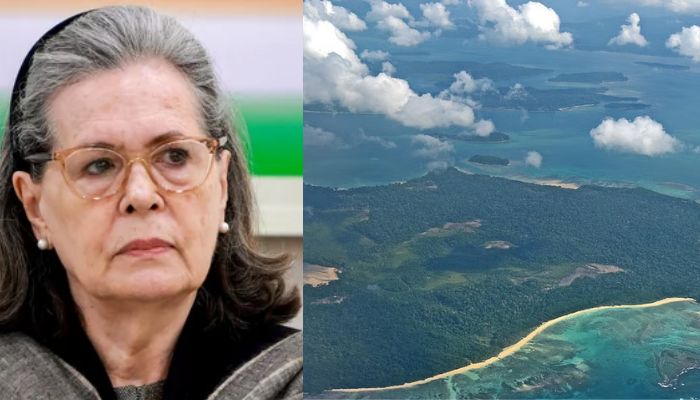
The mega project is planned near Galathea Bay on Great Nicobar Island and spans around 166 sq km. It involves the diversion of nearly 130 sq km of forest land and the felling of close to one million trees. The proposal includes an international container transhipment terminal, a dual-use civil and military airport, an integrated township and a 450-MVA gas- and solar-based power plant.
According to a pre-feasibility report prepared in March 2021, the project aims to boost India’s strategic presence in the Indian Ocean Region and strengthen national security. The NGT order also referred to the island’s location in the broader context of China’s “string of pearls” strategy and India’s “Act East” policy, noting that the Indian Ocean has become a key zone of strategic competition.
Great Nicobar lies along a major east–west shipping route and is almost equally distant from Colombo, Port Klang and Singapore. At present, around 25% of India’s cargo is transshipped through foreign ports, with Colombo alone handling nearly 40% of India’s transhipment traffic.
The government argues that the Galathea Bay port, with its natural depth of 18-20 metres, can reduce this dependence and save thousands of crores annually in port revenue and related economic activity.
The project is planned in four phases. Phase 1 is targeted for completion by 2028 and is expected to handle 4 million TEUs. By 2058, the capacity is projected to reach 16 million TEUs.
BJP attacks Congress after NGT order
Soon after the NGT verdict, the Bharatiya Janata Party (BJP) stepped up its criticism of the Congress leadership. Union Coal and Mines Minister G Kishan Reddy called the tribunal’s decision a “victory of truth” and accused Sonia Gandhi and Rahul Gandhi of trying to stall a project of strategic and economic importance.
Reddy said India’s heavy dependence on foreign ports highlights the need for a domestic transhipment hub. He claimed that efforts to block the project had failed once again after the NGT’s ruling.
Sonia Gandhi’s criticism of the Project
Congress leader Sonia Gandhi has been one of the strongest critics of the Great Nicobar Project. In an editorial titled “The making of an ecological disaster in the Nicobar,” she described the project as a “totally misplaced ₹72,000 crore expenditure” and claimed that it could pose an “existential danger” to indigenous communities such as the Nicobarese and Shompen tribes.
She accused the government of ignoring tribal rights and weakening legal safeguards. Gandhi also questioned the process followed for environmental and social impact assessments and criticised compensatory afforestation measures.
Her article argued that the project threatens one of the world’s most unique ecosystems and could cause long-term damage to flora and fauna.
The larger strategic debate
Supporters of the project say that the criticism overlooks the strategic and economic aspects. They point out that India currently depends on foreign ports like Colombo, Singapore and Port Klang for a significant portion of its cargo movement. With China having a strong presence in the region, including operating a terminal at Colombo, the government views the Great Nicobar project as vital for reducing strategic vulnerabilities.
The Centre has also said that development zones have been carefully marked to minimise impact on tribal settlements and that all legal processes, including multiple reviews by expert bodies and the NGT, have been followed.
With the NGT’s latest order, the path is now clear for the project to move ahead, subject to strict compliance with environmental conditions. The debate, however, continues between those who see it as a major step for India’s maritime strength and those who fear long-term ecological consequences.