Rajasthan: Nagaur police seize 10,000 kg ammonium nitrate ahead of Republic Day, accused Suleman Khan arrested; Read what FIR says
On the intervening night of 24th and 25th January, Nagaur police in Rajasthan carried out a major security operation and seized around 10,000 kg of ammonium nitrate along with a huge cache of detonators, fuse wires and other explosive material from a farmhouse in the Thanwala police station area. The raid was conducted in Harsaur village. The explosives were stored illegally in multiple rooms of a farm structure built on agricultural land. #WATCH | Nagaur, Rajasthan | SP Mridul Kachhawa says, "For quite some time, the Nagaur police had been receiving intelligence reports indicating that large quantities of explosive materials were being bought, sold, and stored in the district… Yesterday, the district police… pic.twitter.com/hzpG9Vpzil— ANI (@ANI) January 25, 2026 The police arrested one accused identified as Suleman Khan during the raid. According to police officials, the recovery was among the largest ammonium nitrate seizures in recent years. Notably, ammonium nitrate was used in a car blast near the Red Fort in Delhi in November last year. The development came at a sensitive time as security has been heightened across the country ahead of Republic Day celebrations. OpIndia accessed the FIR in the matter. Detonators, fuse wires and blasting material recovered According to police, the seizure was not limited to ammonium nitrate alone. Large quantities of detonators, detonating cords, safety fuse wires and other accessories commonly used in blasting operations were also recovered. Officials pointed out that the material seized was sufficient to cause devastation if used for unlawful purposes or mishandled. Senior officers indicated that preliminary questioning suggested the explosives were being supplied to those involved in legal and illegal mining activities in the state. However, given the volume and timing of the seizure, the possibility of wider misuse has not been ruled out. Central agencies have been informed and are expected to join the investigation. What the FIR says The FIR has been registered at Thanwala police station in Nagaur district of Rajasthan on 25th January on the complaint of ASI Surendra Kumar under Sections 5 and 9(b) of the Explosives Act, Section 5 of the Explosive Substances Act, and Sections 112(2) and 288 of the Bharatiya Nyaya Sanhita (BNS) against 58-year-old Suleman Khan of Harsaur. Source: Rajashtan Police How the raid unfolded According to the details provided by ASI Surendra Kumar in the FIR, he, along with police staff, departed from the police station on 24th January at 4:51 PM. The team reached the kachcha road leading to Harsaur, where they met SI Vijay Singh, DST in charge, and other team members. The DST team informed ASI Surendra that there could be explosive material stored in a house built in the fields belonging to Suleman. Additional police personnel were called. When the police team reached the front of the house, one person was found who was identified as Suleman Khan. When he was asked about the items kept inside the rooms, he initially did not provide any satisfactory answer. After being questioned further, he stated that explosive material was kept inside. The team opened the rooms and checked them. In one of the rooms, white plastic sacks were found filled with ammonium nitrate. In another room, multiple cartons and bundles of explosive accessories and blasting material were found, including detonators, blue and red wire bundles, gelatine sticks, dudet and AP SOD packets. It was noted in the FIR that Suleman acknowledged that the material was explosive in nature. The police then asked him to produce any licence or permit authorising him to keep such explosive material in his possession. Suleman failed to provide the same. On this basis, the complainant stated that Suleman’s act of illegally storing explosive material created an apprehension of danger to human life and serious damage to property. Though police requested people present nearby to become independent witnesses, they refused to help. Thereafter, constable Mukesh and constable Narsiram were appointed as witnesses. The seizure also included detonators comprising three large cartons with 1,250 units each, five smaller cartons weighing 20 kg each, and one carton containing 388 detonators. In addition, 12 cartons of blue safety fuse wire weighing 10.5 kg each and three plastic sacks containing a total of 15 bundles were recovered. Red safety fuse wire was seized in eight cartons of 1,500 metres each, four cartons marked “Tiger Card” of 1,500 metres each, and two plastic sacks containing five bundles. Source: Rajashtan Police The recovery further included five cartons of large gelatine sticks with nine units per carton, 25 cartons of smaller gelatine sticks weighing 25 kg each, dudet consisting of four large cartons with 500 units each, five smaller cartons with 400 units each, one carton containing 200 units, and one plastic sack. Two wooden ca
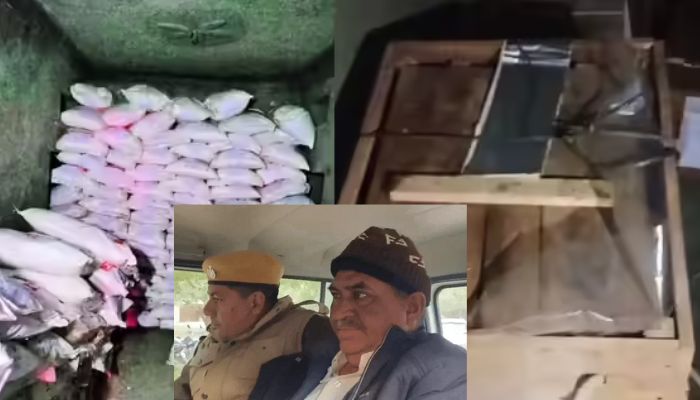

On the intervening night of 24th and 25th January, Nagaur police in Rajasthan carried out a major security operation and seized around 10,000 kg of ammonium nitrate along with a huge cache of detonators, fuse wires and other explosive material from a farmhouse in the Thanwala police station area. The raid was conducted in Harsaur village. The explosives were stored illegally in multiple rooms of a farm structure built on agricultural land.
#WATCH | Nagaur, Rajasthan | SP Mridul Kachhawa says, "For quite some time, the Nagaur police had been receiving intelligence reports indicating that large quantities of explosive materials were being bought, sold, and stored in the district… Yesterday, the district police… pic.twitter.com/hzpG9Vpzil
— ANI (@ANI) January 25, 2026
The police arrested one accused identified as Suleman Khan during the raid. According to police officials, the recovery was among the largest ammonium nitrate seizures in recent years. Notably, ammonium nitrate was used in a car blast near the Red Fort in Delhi in November last year. The development came at a sensitive time as security has been heightened across the country ahead of Republic Day celebrations. OpIndia accessed the FIR in the matter.
Detonators, fuse wires and blasting material recovered
According to police, the seizure was not limited to ammonium nitrate alone. Large quantities of detonators, detonating cords, safety fuse wires and other accessories commonly used in blasting operations were also recovered. Officials pointed out that the material seized was sufficient to cause devastation if used for unlawful purposes or mishandled.
Senior officers indicated that preliminary questioning suggested the explosives were being supplied to those involved in legal and illegal mining activities in the state. However, given the volume and timing of the seizure, the possibility of wider misuse has not been ruled out. Central agencies have been informed and are expected to join the investigation.
What the FIR says
The FIR has been registered at Thanwala police station in Nagaur district of Rajasthan on 25th January on the complaint of ASI Surendra Kumar under Sections 5 and 9(b) of the Explosives Act, Section 5 of the Explosive Substances Act, and Sections 112(2) and 288 of the Bharatiya Nyaya Sanhita (BNS) against 58-year-old Suleman Khan of Harsaur.

How the raid unfolded
According to the details provided by ASI Surendra Kumar in the FIR, he, along with police staff, departed from the police station on 24th January at 4:51 PM. The team reached the kachcha road leading to Harsaur, where they met SI Vijay Singh, DST in charge, and other team members. The DST team informed ASI Surendra that there could be explosive material stored in a house built in the fields belonging to Suleman.
Additional police personnel were called. When the police team reached the front of the house, one person was found who was identified as Suleman Khan. When he was asked about the items kept inside the rooms, he initially did not provide any satisfactory answer. After being questioned further, he stated that explosive material was kept inside.
The team opened the rooms and checked them. In one of the rooms, white plastic sacks were found filled with ammonium nitrate. In another room, multiple cartons and bundles of explosive accessories and blasting material were found, including detonators, blue and red wire bundles, gelatine sticks, dudet and AP SOD packets.
It was noted in the FIR that Suleman acknowledged that the material was explosive in nature. The police then asked him to produce any licence or permit authorising him to keep such explosive material in his possession. Suleman failed to provide the same.
On this basis, the complainant stated that Suleman’s act of illegally storing explosive material created an apprehension of danger to human life and serious damage to property.
Though police requested people present nearby to become independent witnesses, they refused to help. Thereafter, constable Mukesh and constable Narsiram were appointed as witnesses.
The seizure also included detonators comprising three large cartons with 1,250 units each, five smaller cartons weighing 20 kg each, and one carton containing 388 detonators. In addition, 12 cartons of blue safety fuse wire weighing 10.5 kg each and three plastic sacks containing a total of 15 bundles were recovered. Red safety fuse wire was seized in eight cartons of 1,500 metres each, four cartons marked “Tiger Card” of 1,500 metres each, and two plastic sacks containing five bundles.

The recovery further included five cartons of large gelatine sticks with nine units per carton, 25 cartons of smaller gelatine sticks weighing 25 kg each, dudet consisting of four large cartons with 500 units each, five smaller cartons with 400 units each, one carton containing 200 units, and one plastic sack. Two wooden cartons of AP SOD were also seized, one containing 20 packets and another containing six packets.
After confirming the recovery, Suleman was made aware of the offence and informed of his constitutional rights. He was then arrested at the spot, and a seizure memo and arrest memo were prepared. The seizure memo and arrest memo are crucial as they are required to be submitted in court. Furthermore, the raid was videographed.
Accused has history of similar offences
Police stated that Suleman has a criminal history, with three previous cases registered against him under explosives related laws. Two of those cases are reportedly pending before courts. He was acquitted in one earlier matter. Police are now probing the source of the ammonium nitrate, how it was transported and stored, and whether there are links to a larger supply network operating across districts or states.
In a statement, Superintendent of Police, Mridul Kachhawa, said, “A major action was carried out yesterday by the district police. A large quantity of explosive material has been seized from the spot, which is substantial in amount and possibly. This is the biggest action under the Explosives Act in the state so far. Around 10,000 kilograms of ammonium nitrate have been seized.”
VIDEO | Rajasthan: Nagaur police seized nearly 10,000 kg of ammonium nitrate and other material used to make explosives.
— Press Trust of India (@PTI_News) January 26, 2026
Nagaur superintendent of police Mridul Kachhawa says, "A major action was carried out yesterday by the district police. A large quantity of explosive… pic.twitter.com/gEXGX6TzvY
Delhi Red Fort blast case
The seizure in Nagaur has renewed focus on the repeated misuse of ammonium nitrate in terror attacks and large-scale blasts. Notably, it is the same explosive material that was used in the deadly blast near Delhi’s Red Fort on 10th November 2025, in which 15 people were killed. The blast was linked to a white-collar terror module associated with the Al Falah university network.
Security experts have repeatedly warned that while ammonium nitrate has legitimate industrial and agricultural uses, its diversion in bulk quantities poses a serious national security risk. The Nagaur seizure, coming just a day before Republic Day, has been described by officials as a crucial intervention that may have prevented a major disaster.