Sharjeel Imam and the sob story session at Delhi Press Club: Debunking tall claims made by the ‘secular-liberal’ gang
At a press conference on January 29, 2026, at the Press Club of India to mark six years since UAPA-accused Sharjeel Imam’s arrest, a number of speakers portrayed his case as a stark illustration of judicial overreach and state repression of dissent. The proceedings were started by activist Harsh Mander, who criticised the deterioration of democratic values and presented Imam’s prolonged incarceration as a strategy to silence critics of laws like the Citizenship Amendment Act. Rashmi Singh, a lawyer connected to The Wire, followed him. She claimed that Imam’s speeches were misconstrued as seditious, even though “they only promoted peaceful protests” and demanded bail as a fundamental right in the face of trial delays. During his own brief interrogation, Sharjeel’s brother Muzzammil Imam then related personal stories of alleged police brutality, portraying the family’s alleged experience as representative of targeted harassment against Muslims. Manoj Kumar Jha, a Rajya Sabha MP, added a political perspective by criticising the parliamentary abuse of laws such as UAPA and calling for changes to safeguard civil liberties. Journalist Saba Naqvi highlighted the so-called larger trend of anti-terror laws being used as ‘weapons against minorities.’ Journalist Aditya Menon emphasised Imam’s scholastic background and the intellectual loss resulting from his imprisonment, describing it as a frightening precedent for free expression. Retired University of Delhi professor Nandita Narain also gave a speech, concentrating on alleged unfairness in the administration of justice. Sharjeel Imam has completed six years in prison. A mourning meeting was organized at the Press Club of India, attended by 'concerned citizens' including Harsh Mander, Saba Naqvi, Colin Gonsalves, Apoorvanand, and Sharjeel Imam's brother, Muzammil Imam.During the event, Muzammil… pic.twitter.com/UiPdTAGqy5— OpIndia.com (@OpIndia_com) January 29, 2026 A careful examination of the data, court decisions, and background information points to a story more in line with legal accountability than pure unfairness, despite their collective narrative portraying Imam as a victim of a vengeful system. Scrutinizing the so called Symposium on Sharjeel Imam In his opening remarks, which were motivated by human rights concerns, Harsh Mander accused the Delhi police of portraying the 2020 riots as a planned conspiracy by the accused, claiming that authorities could have easily put an end to the violence if they had decided to act quickly. He admitted giving a similar speech the day after Jamia Millia Islamia students were allegedly beaten in the library by Delhi police in December 2019, but he pointed out that Umar Khalid expressed identical ideas more skilfully and stated he was still free while Khalid was behind bars. Mander appreciated Khalid for stressing Gandhian nonviolence and promoting communal harmony, but he made a hazy distinction between the terms terror and communal violence, saying that if a Muslim group attacked someone, it might be called a terror attack, while a Hindu group might be written off as Gau Rakshaks, ‘Rambhakts,’ or vigilantes. He described a recent phone call with Khalid while he was out on interim bail, in which Khalid said he wanted to have an honest discussion about the poor state of the nation. In closing, Mander decried the imprisonment of some of India’s brightest brains and hearts while praising Sharjeel Imam and Khalid as ‘role models’ for the younger generation. This account prompts further examination, as court documents from the Delhi High Court in 2022 reveal that Khalid’s speeches, despite assertions of nonviolence, were perceived to possess a tendency to create public disorder during rising tensions, with preliminary evidence highlighting differences in his involvement in the conspiracy case compared to others who received relief. The judiciary’s consistent denial of bail for Khalid emphasizes significant distinctions in both content and context, such as forensic connections like call logs linking his provocative speech to the unrest that resulted in 53 fatalities. Regarding the police response, official documents assert that the violence was a coordinated ‘regime change operation‘ carried out amid anti-CAA protests, dismissing claims of simple suppression given the alleged scale and organisation. Khalid’s personal hopes for discussion do not alter the evidential criteria established by the Supreme Court in January 2026, which denied his bail due to qualitative differences with his co-accused. Rashmi Singh’s analysis, noting that Imam’s call for ‘chakka jam’ (road blockades) lacked any violent purpose and hence should not be considered sedition, is based on her writings in The Wire, where she stated Imam is paying the price of being misunderstood. However, this viewpoint ignores the complete context of his comments, which ranged from ordinary protests to suggestions of strategic isolation of
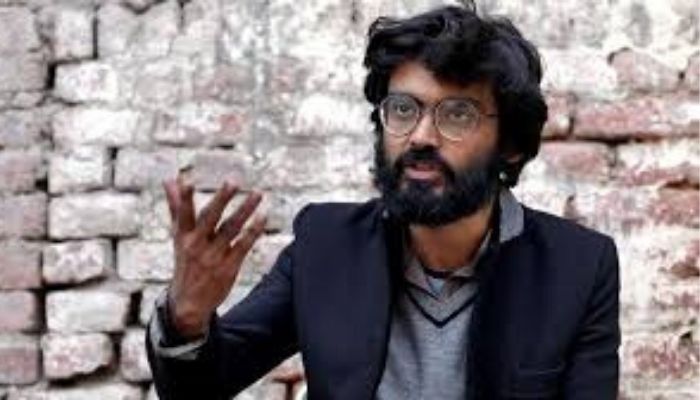

At a press conference on January 29, 2026, at the Press Club of India to mark six years since UAPA-accused Sharjeel Imam’s arrest, a number of speakers portrayed his case as a stark illustration of judicial overreach and state repression of dissent.
The proceedings were started by activist Harsh Mander, who criticised the deterioration of democratic values and presented Imam’s prolonged incarceration as a strategy to silence critics of laws like the Citizenship Amendment Act. Rashmi Singh, a lawyer connected to The Wire, followed him. She claimed that Imam’s speeches were misconstrued as seditious, even though “they only promoted peaceful protests” and demanded bail as a fundamental right in the face of trial delays.
During his own brief interrogation, Sharjeel’s brother Muzzammil Imam then related personal stories of alleged police brutality, portraying the family’s alleged experience as representative of targeted harassment against Muslims. Manoj Kumar Jha, a Rajya Sabha MP, added a political perspective by criticising the parliamentary abuse of laws such as UAPA and calling for changes to safeguard civil liberties. Journalist Saba Naqvi highlighted the so-called larger trend of anti-terror laws being used as ‘weapons against minorities.’ Journalist Aditya Menon emphasised Imam’s scholastic background and the intellectual loss resulting from his imprisonment, describing it as a frightening precedent for free expression. Retired University of Delhi professor Nandita Narain also gave a speech, concentrating on alleged unfairness in the administration of justice.
Sharjeel Imam has completed six years in prison. A mourning meeting was organized at the Press Club of India, attended by 'concerned citizens' including Harsh Mander, Saba Naqvi, Colin Gonsalves, Apoorvanand, and Sharjeel Imam's brother, Muzammil Imam.
— OpIndia.com (@OpIndia_com) January 29, 2026
During the event, Muzammil… pic.twitter.com/UiPdTAGqy5
A careful examination of the data, court decisions, and background information points to a story more in line with legal accountability than pure unfairness, despite their collective narrative portraying Imam as a victim of a vengeful system.
Scrutinizing the so called Symposium on Sharjeel Imam
In his opening remarks, which were motivated by human rights concerns, Harsh Mander accused the Delhi police of portraying the 2020 riots as a planned conspiracy by the accused, claiming that authorities could have easily put an end to the violence if they had decided to act quickly. He admitted giving a similar speech the day after Jamia Millia Islamia students were allegedly beaten in the library by Delhi police in December 2019, but he pointed out that Umar Khalid expressed identical ideas more skilfully and stated he was still free while Khalid was behind bars. Mander appreciated Khalid for stressing Gandhian nonviolence and promoting communal harmony, but he made a hazy distinction between the terms terror and communal violence, saying that if a Muslim group attacked someone, it might be called a terror attack, while a Hindu group might be written off as Gau Rakshaks, ‘Rambhakts,’ or vigilantes. He described a recent phone call with Khalid while he was out on interim bail, in which Khalid said he wanted to have an honest discussion about the poor state of the nation. In closing, Mander decried the imprisonment of some of India’s brightest brains and hearts while praising Sharjeel Imam and Khalid as ‘role models’ for the younger generation.
This account prompts further examination, as court documents from the Delhi High Court in 2022 reveal that Khalid’s speeches, despite assertions of nonviolence, were perceived to possess a tendency to create public disorder during rising tensions, with preliminary evidence highlighting differences in his involvement in the conspiracy case compared to others who received relief. The judiciary’s consistent denial of bail for Khalid emphasizes significant distinctions in both content and context, such as forensic connections like call logs linking his provocative speech to the unrest that resulted in 53 fatalities. Regarding the police response, official documents assert that the violence was a coordinated ‘regime change operation‘ carried out amid anti-CAA protests, dismissing claims of simple suppression given the alleged scale and organisation. Khalid’s personal hopes for discussion do not alter the evidential criteria established by the Supreme Court in January 2026, which denied his bail due to qualitative differences with his co-accused.
Rashmi Singh’s analysis, noting that Imam’s call for ‘chakka jam’ (road blockades) lacked any violent purpose and hence should not be considered sedition, is based on her writings in The Wire, where she stated Imam is paying the price of being misunderstood.
However, this viewpoint ignores the complete context of his comments, which ranged from ordinary protests to suggestions of strategic isolation of regions (Chicken Neck), threatening secession. Framed allegations highlight the chronology of increasing tensions that resulted in the February 2020 anti-Hindu Delhi riots, which killed 53 people in communal confrontations. Prosecutors use evidence such as call records and chats to link Imam to a claimed plot, but Rashmi and others dismissed these as fabrications. The irony is that such defences use Supreme Court precedents on bail while rejecting the same court’s assessment that Imam and his co-accused, Umar Khalid, are on a ‘qualitatively different footing’ based on existing evidence. One can’t help but notice the selective anger, and dismissing the speeches’ potential influence during a turbulent time risks simplifying legal reality.
Muzzammil Imam’s dramatic account of his 2020 interrogation, in which police allegedly stripped him, beat him, shoved a pistol into his mouth, and recorded the humiliation, was intended to personalise the family’s hardship while emphasising claimed anti-Muslim bias. However, the claims have not been verified in official records. Muzzammil’s brief detention arose from investigations into the riots’ funding and coordination, in which Imam is accused based on digital evidence. The Supreme Court’s bail denial focused on prima facie evidence rather than vendetta, implying that the story of pure victimisation may be more appealing in press rooms than in courtrooms. This demonstrates a pattern in which family testimony intensifies drama while adding nothing to proving innocence during ongoing investigations.
Manoj Kumar Jha’s intervention took a legislative approach, questioning the Supreme Court’s denial of bail to Imam and Khalid, citing troubling concerns about personal liberty, particularly after over five years in custody with no significant trial progress, which he described as a blow to the criminal justice system. He used his own example of a ‘chakka jam’ hindering the road to replace a collapsed wall at Girls Hostel, while comparing Imam’s case on a similar footing of blockade.
Nonetheless, this objection should be balanced against judicial logic, as the Supreme Court clearly said in January 2026 that Imam and Khalid are on a ‘qualitatively different footing‘ due to prima facie evidence, justifying denial notwithstanding time served. Transcripts indicate Imam’s comments to blocking the Chicken’s Neck route to isolate Assam and northeast, which courts regarded as threatening sovereignty rather than a simple chakka jam, raising concerns about the limits of activism in a vulnerable geopolitical situation. Jha’s wording minimises particular claims in Imam’s case, such as a conspiracy linked to disturbances through forensic evidence, which courts have judged adequate to overturn conventional bail precedents.
Saba Naqvi’s speech focused on the systemic weaponization of anti terror laws against Muslim dissenters, drawing parallels with cases like Khalid’s, in which minority face disproportionate scrutiny for opposing policies such as the CAA. She stated that such laws penalize legitimate protest, creating alienation and undermining democratic spaces, while also emphasizing how the media and opposition frequently normalize these inequities, advocating a repeal to restore equity. She admitted that discrimination did not originate after 2014, but had existed prior to that. Naqvi’s emphasis on alienation, while accurate in sociopolitical debate, may neglect how evidential standards, not simply bias, influence bail decisions in complex conspiracy cases.
Aditya Menon’s remarks praised Imam’s intellectual prowess as a scholar, condemning his imprisonment as a terrible loss to scholarly discourse and a precedent that stifles free expression among young minds skeptical of Islamophobia. He compared Imam’s statements to non violent agitations such as the 2008 Amarnath protests, claiming they were metaphorical calls for strategic blockades rather than sedition, and positioned Imam as a beacon of Muslim political agency, urging recognition of his brilliance in the face of shrinking democratic spaces. Menon emphasized how such situations limit minorities political influence.
However, this laudatory perspective invites examination on judicial interpretations. In 2022, the Delhi court framed sedition charges, considering the ‘Chicken’s Neck’ metaphor as statements harmful to integration, as opposed to the Amarnath comparison, which lacks similar geographical implications. Prosecutors’ evidence, including linkages to riot coordination, supported a prima facie case, as confirmed by the Supreme Court’s bail denial, which emphasized qualitative differences. Sharjeel imam’s academic credentials do not shield him from scrutiny of speech that judges deem to foster animosity, particularly during times of disturbance that resulted in fatalities.
Nandita Narain claimed what she described as double standards in the Indian government’s approach to justice, arguing that laws like UAPA are ‘selectively enforced against Muslim activists’ and intellectuals like Imam, while similar actions by others go unchecked, framing his incarceration as part of a pattern of suppressing academic freedom and dissent from minorities. She compared Israel’s conduct in Gaza to India’s treatment of minorities and cited Hitler’s use of enemy hatred as a means of gaining power, comparing the current administration to such strategies in creating division. Narain urged unity to confront these injustices and presented Imam as an example of moral opposition.
This critique demands for nuance, as UAPA has been employed in cases beyond minorities, such as against accused in the Elgar Parishad probe involving non-Muslims. Imam’s particular remarks on regional disruption are highlighted in court documents, such as the Delhi court decision from 2022, as grounds for charges rather than merely academic expression. Conspiracy allegations are supported by evidence such as contact trails. While worries about academic freedom are valid, it would be oversimplified to compare India’s multiparty democracy, where elections, the free press, and judicial scrutiny continue, to the solitary authoritarianism of Nazi Germany or the particular geopolitical conflict of Israel’s Gaza policy.
Conclusion
From Mander’s human rights concerns to Narain’s striking historical parallels, the press conference’s passionate appeals frequently paint a skewed picture that downplays the significance of the court’s rulings and the evidence in Imam’s case. The facts, from forensic connections to the 2020 riots and repeated judicial affirmations of prima facie grounds, quietly affirm that accountability, not animosity, drives the proceedings in an India firmly committed to democratic principles, where strong institutions, regular elections, and a watchful judiciary serve as barriers against overreach. The enduring strength of India’s legal system emerges as trials proceed and the evidence is thoroughly examined, not as a tool of division but as a protector of public order and national unity. This serves as a reminder that true justice thrives on balanced inquiry, not on echoes of exaggerated peril that could unintentionally undermine the very freedoms they seek to protect.