Tamil Nadu Governor RN Ravi walks out of the assembly again: Protocol, pride and the seeds of separation in Tamil Nadu
A ceremonial custom has once again sparked a controversy in the hallowed halls of the Tamil Nadu Legislative Assembly. Governor RN Ravi left the House without giving his customary address on January 20, 2026, for the third year in a row. What’s the trigger? The Lok Bhavan’s stinging 13 point statement of response, which turned the protocol of debate into a harsh critique of the state administration, intensified the situation just minutes after the Governor’s departure. The statement explained that in addition to the anthem dispute, Governor Ravi’s unwillingness to read the message was due to the text’s numerous unsubstantiated claims. The governor said that in an act of ‘Emergency era censorship,’ his microphone was turned off, making it impossible for him to voice his disapproval on the floor. Beyond protocol, the statement criticised the government’s performance, disputing the claimed ₹12 lakh crore in investments by pointing to a decline in FDI rankings from fourth to sixth place and denouncing the speech for ignoring serious shortcomings like a reported 55% increase in POCSO cases, widespread drug abuse, and an increase in atrocities against Dalits. The governor’s abrupt departure has exposed a growing fault line in the name of federalism, despite the ruling DMK administration framing this as adherence to a decades old Dravidian tradition in which the Tamil Thai Valthu (Invocation to Mother Tamil) takes precedence at the beginning. It is now a symbolic struggle that many observers worry is planting the subtle, perilous seeds of division, undermining the Indian Union’s basic unity and integrity. It is no more merely a conflict of egos or formalities. The incident unfolds As the year’s first session got underway, the controversy broke out. The Governor is required to address the Assembly in accordance with Article 176 of the Constitution. Governor Ravi, however, insisted that the National Anthem be played at the start of the proceedings, either right before or after the Tamil Thai Valthu, in order to give the national anthem the respect it deserves. When the Speaker of the Assembly, M. Appavu, and the state administration followed their tradition of playing only the state invocation at the opening and the National Anthem at the end, the Governor declined to read his prepared address. He walked out of the chamber, allowing the government to declare the address as, ‘read’ via a resolution, a procedural band-aid over a major political wound. Governor Ravi’s position was straightforward, it is disrespectful to begin a constitutional function without playing the National Anthem. The Governor could not participate in an event where the National Anthem is insulted and a basic constitutional obligation is ignored, according to a statement later released by Raj Bhavan. Historical context: The roots of protocol One must delve into the history of the Dravidian movement and its intricate connection to Indian nationalism in order to comprehend why a song might spark a constitutional crisis. Playing the Tamil Thai Valthu at the start and Jana Gana Mana at the end is a new political invention rather than an old custom. In 1970, then Chief Minister M. Karunanidhi designated the song Tamil Thai Valthu, written by Manonmaniam Sundaram Pillai, the state song (prayer song). The DMK’s ideology, which highlighted Tamil identity, language, and culture as unique and occasionally crucial, was symbolised by this action. But later on, the Assembly’s particular protocol became clear. The current model was strictly formalised in 1991 under J.Jayalalithaa’s term (AIADMK in alliance with Cong). The reasoning was that the state song opens the assembly and the National Anthem closes it, serving as a vote of thanks or last seal of national sovereignty. Critics point to the optics, while the state government claims this shows respect for both. The ritual quietly perpetuates a Tamil Nadu First, India Second mentality by prioritising the regional invocation and delaying the National Anthem until the very end, when members are eager to depart. In a country founded on the idea of Unity in Diversity, constitutionalists view this reversal of hierarchy as a concerning indication of regional nationalism. The constitutional and judicial perspective The controversy is both legal as well as emotional. The Governor’s demand is based on how Fundamental Duties are interpreted and how important national symbols are. Article 51A (a): The fundamental duty Article 51A (a) of the Indian Constitution, which declares that each citizen has an obligation to abide by the Constitution and respect its ideals and institutions, the National Flag and the National Anthem, is the strongest argument in the Governor’s toolbox. Although respect is a broad phrase, the Governor’s office contends that it is against the spirit of this article to deny the Anthem its proper position at the start of a solemn constitutional function
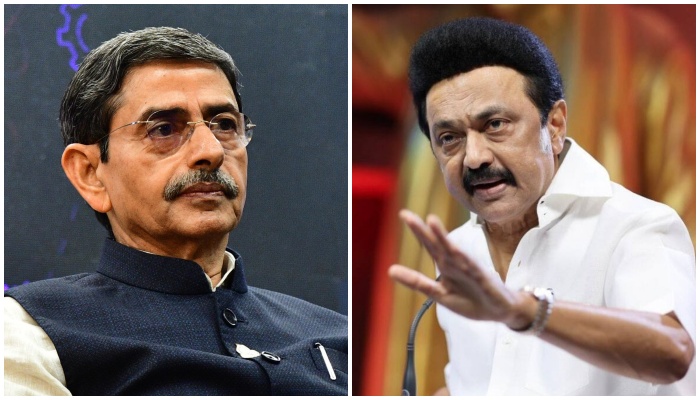

A ceremonial custom has once again sparked a controversy in the hallowed halls of the Tamil Nadu Legislative Assembly. Governor RN Ravi left the House without giving his customary address on January 20, 2026, for the third year in a row. What’s the trigger?
The Lok Bhavan’s stinging 13 point statement of response, which turned the protocol of debate into a harsh critique of the state administration, intensified the situation just minutes after the Governor’s departure. The statement explained that in addition to the anthem dispute, Governor Ravi’s unwillingness to read the message was due to the text’s numerous unsubstantiated claims. The governor said that in an act of ‘Emergency era censorship,’ his microphone was turned off, making it impossible for him to voice his disapproval on the floor.
Beyond protocol, the statement criticised the government’s performance, disputing the claimed ₹12 lakh crore in investments by pointing to a decline in FDI rankings from fourth to sixth place and denouncing the speech for ignoring serious shortcomings like a reported 55% increase in POCSO cases, widespread drug abuse, and an increase in atrocities against Dalits.
The governor’s abrupt departure has exposed a growing fault line in the name of federalism, despite the ruling DMK administration framing this as adherence to a decades old Dravidian tradition in which the Tamil Thai Valthu (Invocation to Mother Tamil) takes precedence at the beginning. It is now a symbolic struggle that many observers worry is planting the subtle, perilous seeds of division, undermining the Indian Union’s basic unity and integrity. It is no more merely a conflict of egos or formalities.
The incident unfolds
As the year’s first session got underway, the controversy broke out. The Governor is required to address the Assembly in accordance with Article 176 of the Constitution. Governor Ravi, however, insisted that the National Anthem be played at the start of the proceedings, either right before or after the Tamil Thai Valthu, in order to give the national anthem the respect it deserves.
When the Speaker of the Assembly, M. Appavu, and the state administration followed their tradition of playing only the state invocation at the opening and the National Anthem at the end, the Governor declined to read his prepared address. He walked out of the chamber, allowing the government to declare the address as, ‘read’ via a resolution, a procedural band-aid over a major political wound.
Governor Ravi’s position was straightforward, it is disrespectful to begin a constitutional function without playing the National Anthem. The Governor could not participate in an event where the National Anthem is insulted and a basic constitutional obligation is ignored, according to a statement later released by Raj Bhavan.
Historical context: The roots of protocol
One must delve into the history of the Dravidian movement and its intricate connection to Indian nationalism in order to comprehend why a song might spark a constitutional crisis.
Playing the Tamil Thai Valthu at the start and Jana Gana Mana at the end is a new political invention rather than an old custom. In 1970, then Chief Minister M. Karunanidhi designated the song Tamil Thai Valthu, written by Manonmaniam Sundaram Pillai, the state song (prayer song). The DMK’s ideology, which highlighted Tamil identity, language, and culture as unique and occasionally crucial, was symbolised by this action. But later on, the Assembly’s particular protocol became clear. The current model was strictly formalised in 1991 under J.Jayalalithaa’s term (AIADMK in alliance with Cong). The reasoning was that the state song opens the assembly and the National Anthem closes it, serving as a vote of thanks or last seal of national sovereignty.
Critics point to the optics, while the state government claims this shows respect for both. The ritual quietly perpetuates a Tamil Nadu First, India Second mentality by prioritising the regional invocation and delaying the National Anthem until the very end, when members are eager to depart. In a country founded on the idea of Unity in Diversity, constitutionalists view this reversal of hierarchy as a concerning indication of regional nationalism.
The constitutional and judicial perspective
The controversy is both legal as well as emotional. The Governor’s demand is based on how Fundamental Duties are interpreted and how important national symbols are.
Article 51A (a): The fundamental duty
Article 51A (a) of the Indian Constitution, which declares that each citizen has an obligation to abide by the Constitution and respect its ideals and institutions, the National Flag and the National Anthem, is the strongest argument in the Governor’s toolbox. Although respect is a broad phrase, the Governor’s office contends that it is against the spirit of this article to deny the Anthem its proper position at the start of a solemn constitutional function, such as the Governor’s Address. The Governor represents the President of India in the Assembly, which is a constitutional assembly rather than a private club.
The Bijoe Emmanuel precedent
On this matter, the judiciary has exercised caution. Bijoe Emmanuel v. State of Kerala (1986) is a landmark case concerning the National Anthem. The Supreme Court decided that it was illegal to expel Jehovah’s Witness students for declining to sing the anthem because of their religious convictions as long as they stood up respectfully.
The current dispute in Tamil Nadu, however, is different. This is about a state institution’s reluctance to play the anthem, not about an individual’s right to remain silent. The courts have consistently maintained that the Anthem deserves the highest level of protocol, even though they have stated that singing is not required. Despite the Governor’s request, the Anthem was purposefully left out at the beginning, which might be seen as a institutional violation of the principles outlined in Article 51A.
Ministry of Home affairs (MHA) guidelines
The MHA published directives pertaining to the National Anthem, outlining when it should be played (such as when the President or Governor arrives at official state functions). In a legislative calendar, the governor’s speech is possibly the most formal governmental event. The state government may be avoiding the spirit of federal protocol by treating the Assembly proceeding as a state-only affair until the very last minute.
The seeds of separation: A dangerous precedent
This persistent conflict suggests a problem that goes beyond procedural disagreement. It poses unsettling queries regarding Tamil Nadu’s future in federalism. A state government sends a message that goes beyond procedure when it adamantly demands that its regional anthem take precedence over the national one and refuses to make accommodations for the governor, the Indian Union’s representative, on the subject of national pride. One interpretation of this behaviour is that it is sowing the seeds of the state first and the nation second.
The normalisation of othering the Centre poses a subtle threat. The political narrative implies that the state’s identity is the fundamental loyalty, while the Indian identity is a formality, by presenting the National Anthem as an imposition or a secondary ritual to be recited only at the exit. Regional pride is essential in a diverse democracy. However, India’s unity and integrity are undermined when regional pride is used as a weapon to marginalise national symbols. The Constitution’s preamble pledges to protect the unity and integrity of the nation. A psychological gap between the citizen and the country is created by acts that symbolically diminish the National Anthem’s importance in a constitutional house.
India would cease to resemble a Union and begin to resemble a loose confederation of conflicting identities if every state adopted this State First model, refusing to play the National Anthem at the beginning of legislative sessions in favour of regional tunes. Therefore, the governor’s exit serves as a warning against this tendency. It emphasises that the National Anthem’s sacredness cannot be compromised and that the ‘Union of India’ rather than the ‘United States of India’ is the constitutional reality.
Conclusion
The Tamil Nadu Assembly standoff serves as a sobering reminder that symbols are important. They are the unseen strands that unite a billion disparate individuals into a single country. The governor is defending constitutional hierarchy by declining to take part in a session that ignores the national anthem. While the state administration hides behind tradition and federal rights, one must wonder who benefits from rigorous devotion to a practice that devalues the National Anthem? It contributes to a story of divide. It fosters a mentality in which the parts are larger than the whole.
The unification of India’s states is crucial as the country moves closer to becoming a global giant. The Tamil Nadu government’s refusal to play Jana Gana Mana at the beginning of the Governor’s address is a test of Indian unity, not a victory for Tamil pride. This modest but powerful act of resistance runs the risk of transforming the intricate fabric of Indian federalism into a patchwork of separatist beliefs. Instead of being an afterthought, the National Anthem should come first.