The right to die debate: Euthanasia’s global journey and India’s delicate balance between morality and lack of adequate palliative care
In a petition (Harish Rana v. Union of India) seeking to extend euthanasia rights beyond passive measures to include active euthanasia for patients experiencing intolerable, non-terminal suffering, such as advanced ALS or chronic pain syndromes, the Supreme Court of India reserved its judgment yesterday, January 15, 2026. This development rekindles the national discussion on Article 21’s right to die with dignity. It is the result of ongoing writs such as those in Dr MRS Revathy, and new challenges to the 2018 Common Cause framework. This article, written in anticipation of the verdict, traces the history of euthanasia, global laws, India’s judicial evolution, and ethical crossroads, asking readers to consider, in a democracy that values life, when does mercy cross into peril? Given the growing number of global precedents and the appallingly inadequate palliative care in India. The term ‘euthanasia,’ which comes from the Greek words ‘eu’ (good) and ‘thanatos’ (death), sums up humanity’s long-standing struggle to balance the sanctity of life with intolerable suffering. From intellectual reflections in antiquity to hotly contested laws around the world, this intentional acceleration of death, whether by active methods like fatal injection or passive removal of life-sustaining treatment, has developed over time. Societies struggle with autonomy vs vulnerability, compassion versus force, as medical advancements prolong terminal suffering. Euthanasia divides nations in 2026 due to ageing populations and secular trends; some support it as a dignified decision, while others condemn it as a step toward state-sanctioned death. Ancient Roots: Mercy in philosophy and practice The origins of euthanasia can be found in ancient times, when death was socialised rather than medicalised. Wounded warriors begged for allies to put an end to their suffering in Homer’s Iliad (c. 8th century BCE), illustrating the societal acceptance of mercy killings. Eastern traditions, Hindu texts like the Mahabharata permitted prayopavesa (fasting to death) for ascetics, while Confucian China prioritised filial piety, banning suicide. Euthanasia for the terminally ill was supported in Plato’s Republic (380 BCE), which argued that prolonged suffering burdens society. Stoic resolution was demonstrated by Socrates’ composed acceptance of hemlock in 399 BCE, accepting death as better to dishonor. However, Hippocrates’ Oath (c. 400 BCE) forbade active euthanasia ‘I will not give a deadly drug to anybody who asks for it, establishing a medical taboo that persisted for millennia and was based on Pythagorean respect for life. Rome blurred these lines. Seneca the Younger (4 BCE-65 CE) praised rational suicide for the terminally ill, influencing Stoicism. Galen (129-216 CE) permitted withholding sustenance from hopeless cases, foreshadowing passive euthanasia. Sparta practised senicide, where elders starved on mountainsides. Medieval shadows and enlightenment sparks Greco-Roman tolerance was overshadowed by Christianity. Citing Genesis’ life as a gift from God, Augustine’s City of God (426 CE) denounced suicide as self murder. In Summa Theologica, Thomas Aquinas (1225-1274) reaffirmed this by comparing euthanasia to murder. The Fourth Lateran Council (1215) required confession for aiding and abetting, whereas canon law condemned practitioners.Through Al Ghazali (1058-1111), Islam accepted passive aid removal to speed up death, but prohibited violent murder. The Talmud of Judaism permitted indirect hastening, such as using noise to calm the dying, but not medications. Up to the Enlightenment, these religious barriers remained in place. While David Hume (1711-1776) advocated the morality of deliberate suicide, John Locke’s Second Treatise (1689) alluded to bodily liberty. By using anaesthesia and surgery, the 19th-century industrialised medicine. The debate was sparked by Samuel D. Williams’ 1870 pamphlet Euthanasia, which suggested using chloroform for the terminally ill. Secularists were inspired by Ohioan Robert Ingersoll’s ‘The Right to Die’ speech from 1894. The Euthanasia Society of New York filed a petition for legalisation in 1906, but it was denied. 20th century shadows: Nazi atrocities and reformist stirrings The legacy of euthanasia was damaged by the twentieth century. The Binding-Hoche manifesto of 1920 demanded the abolition of life unworthy of living. Under the direction of doctors like Karl Brandt, the Nazi T4 program (1939-1945) exterminated 300,000 allegedly ‘retarded’ people at Nuremberg by gassing them. Euthanasia was stopped by post war terror that compared it with genocide.Reform, however, continued. The 1935 Voluntary Euthanasia Society in Britain, led by C. Killick Millard, produced an unsuccessful piece of legislation. The clergy supported America’s 1949 living will petitions. Although Derek Humphry’s Final Exit (1991) popularised self-deliverance, Cicely Saunders 1967 hospice movement provided p
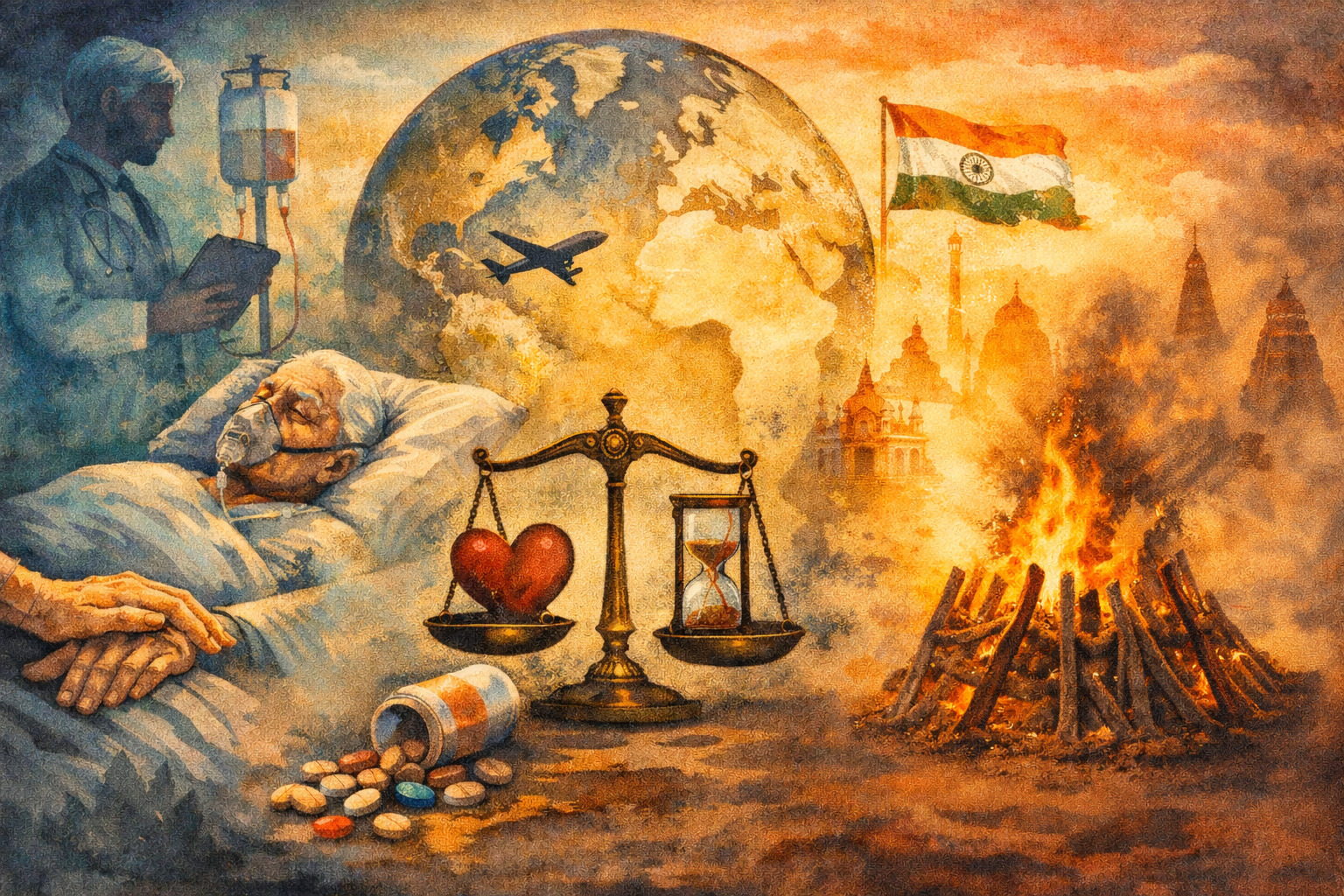

In a petition (Harish Rana v. Union of India) seeking to extend euthanasia rights beyond passive measures to include active euthanasia for patients experiencing intolerable, non-terminal suffering, such as advanced ALS or chronic pain syndromes, the Supreme Court of India reserved its judgment yesterday, January 15, 2026. This development rekindles the national discussion on Article 21’s right to die with dignity. It is the result of ongoing writs such as those in Dr MRS Revathy, and new challenges to the 2018 Common Cause framework.
This article, written in anticipation of the verdict, traces the history of euthanasia, global laws, India’s judicial evolution, and ethical crossroads, asking readers to consider, in a democracy that values life, when does mercy cross into peril? Given the growing number of global precedents and the appallingly inadequate palliative care in India.
The term ‘euthanasia,’ which comes from the Greek words ‘eu’ (good) and ‘thanatos’ (death), sums up humanity’s long-standing struggle to balance the sanctity of life with intolerable suffering. From intellectual reflections in antiquity to hotly contested laws around the world, this intentional acceleration of death, whether by active methods like fatal injection or passive removal of life-sustaining treatment, has developed over time. Societies struggle with autonomy vs vulnerability, compassion versus force, as medical advancements prolong terminal suffering. Euthanasia divides nations in 2026 due to ageing populations and secular trends; some support it as a dignified decision, while others condemn it as a step toward state-sanctioned death.
Ancient Roots: Mercy in philosophy and practice
The origins of euthanasia can be found in ancient times, when death was socialised rather than medicalised. Wounded warriors begged for allies to put an end to their suffering in Homer’s Iliad (c. 8th century BCE), illustrating the societal acceptance of mercy killings. Eastern traditions, Hindu texts like the Mahabharata permitted prayopavesa (fasting to death) for ascetics, while Confucian China prioritised filial piety, banning suicide. Euthanasia for the terminally ill was supported in Plato’s Republic (380 BCE), which argued that prolonged suffering burdens society. Stoic resolution was demonstrated by Socrates’ composed acceptance of hemlock in 399 BCE, accepting death as better to dishonor. However, Hippocrates’ Oath (c. 400 BCE) forbade active euthanasia ‘I will not give a deadly drug to anybody who asks for it, establishing a medical taboo that persisted for millennia and was based on Pythagorean respect for life.
Rome blurred these lines. Seneca the Younger (4 BCE-65 CE) praised rational suicide for the terminally ill, influencing Stoicism. Galen (129-216 CE) permitted withholding sustenance from hopeless cases, foreshadowing passive euthanasia. Sparta practised senicide, where elders starved on mountainsides.
Medieval shadows and enlightenment sparks
Greco-Roman tolerance was overshadowed by Christianity. Citing Genesis’ life as a gift from God, Augustine’s City of God (426 CE) denounced suicide as self murder. In Summa Theologica, Thomas Aquinas (1225-1274) reaffirmed this by comparing euthanasia to murder. The Fourth Lateran Council (1215) required confession for aiding and abetting, whereas canon law condemned practitioners.
Through Al Ghazali (1058-1111), Islam accepted passive aid removal to speed up death, but prohibited violent murder. The Talmud of Judaism permitted indirect hastening, such as using noise to calm the dying, but not medications. Up to the Enlightenment, these religious barriers remained in place. While David Hume (1711-1776) advocated the morality of deliberate suicide, John Locke’s Second Treatise (1689) alluded to bodily liberty.
By using anaesthesia and surgery, the 19th-century industrialised medicine. The debate was sparked by Samuel D. Williams’ 1870 pamphlet Euthanasia, which suggested using chloroform for the terminally ill. Secularists were inspired by Ohioan Robert Ingersoll’s ‘The Right to Die’ speech from 1894. The Euthanasia Society of New York filed a petition for legalisation in 1906, but it was denied.
20th century shadows: Nazi atrocities and reformist stirrings
The legacy of euthanasia was damaged by the twentieth century. The Binding-Hoche manifesto of 1920 demanded the abolition of life unworthy of living. Under the direction of doctors like Karl Brandt, the Nazi T4 program (1939-1945) exterminated 300,000 allegedly ‘retarded’ people at Nuremberg by gassing them. Euthanasia was stopped by post war terror that compared it with genocide.
Reform, however, continued. The 1935 Voluntary Euthanasia Society in Britain, led by C. Killick Millard, produced an unsuccessful piece of legislation. The clergy supported America’s 1949 living will petitions. Although Derek Humphry’s Final Exit (1991) popularised self-deliverance, Cicely Saunders 1967 hospice movement provided palliation.
Euthanasia in modern secular democracies
Secular democracies gave rise to modern perspectives on euthanasia. Before a federal override in 1997, Dr Philip Nitschke’s (founder of suicide Pod) four assisted suicides were permitted by Australia’s Northern Territory (1995 Rights of the Terminally Ill Act). With 3,500+ deaths by 2025 under stringent safeguards, mental competency, two physician approvals, a 15-day wait, and self-administration, Oregon’s 1997 Death with Dignity Act pioneered assisted dying for terminal adults (with a six-month prognosis) in the United States.
After the 1973 judicial tolerance, the Netherlands (2001 Termination of Life on Request Act) allowed active euthanasia, requiring excruciating suffering, consultation, and reporting. Luxembourg (2010) followed Belgium (2002) in extending to minors (2014). Dignitas (1998), was born out of Switzerland’s legalising of assisted suicide in 1942. Following the Carter verdict, Canada’s 2016 Medical Assistance in Dying (MAiD) program saw 15,300 instances in 2024, prompting concerns about the spread of mental illness (delayed to 2027).
Assisted dying forms are allowed in Spain (2021), Austria (2022), Australia (2017), New Zealand (2021 referendum), Colombia (2014 decriminalization), Ecuador (2024), and Portugal (2023, revoked). In 2026, there are 13 jurisdictions in the US (Oregon model), 40 states will have bans. France and the UK prioritize sedation, while Germany (2020) permits assisted suicide. Scandinavia emphasizes hospice and forbids all. While Muslim countries impose Sharia prohibitions, Japan in Asia allows disengagement.
India’s judicial odyssey: Art 21 and the Right to die
The Supreme Court’s interpretations of Article 21’s right to life with dignity, which strike a balance between autonomy and the sanctity of life upheld by cultural and religious traditions, are how India’s euthanasia debate develops rather than through legislation. Sections 306 (abetment of suicide) and 309 (attempted suicide) of the colonial Indian Penal Code (IPC) provide the legal framework and carry a maximum sentence of ten years in prison for abetment and a year to attempt it. Suicide attempts are a sign of desperation, not criminality, according to early challenges like P. Rathinam v. Union of India (1994), which attempted to overturn Section 309 as unconstitutional. In Gian Kaur v. State of Punjab (1996), the Supreme Court upheld Section 309 to protect life after first agreeing, yet decriminalisation disputes persisted.
Aruna Shanbaug: The sassive euthanasia precedent
India’s euthanasia shift was signalled by the historic Aruna Ramchandra Shanbaug v. Union of India (2011). After being raped in 1973, Aruna, a nurse from Mumbai, sustained brain damage and spent 42 years in a persistent vegetative state (PVS) at KEM Hospital. In her writ petition, journalist Pinki Virani requested the removal of life support, or passive euthanasia. Citing Hippocratic oaths, religious purity, and abuse dangers in India’s socioeconomic setting, a two-judge bench consisting of Justices Markandey Katju and Gyan Sudha Misra denied active euthanasia. However, it allowed passive euthanasia for PVS patients under strict criteria, including annual compliance reports, referral to another hospital’s committee, magistrate clearance, and primary hospital ethics committees consisting of three senior doctors who were unrelated. No motivation for organ donation is permitted. Although Aruna passed away naturally in 2015, the ruling established the legitimacy of passive euthanasia and set it apart from active killing.
Common cause: Advance medical directives and dignified death
India’s framework was changed by the NGO Common Cause v. Union of India (2012-2018). It was filed in 2005 by advocate Prashant Bhushan, who wanted advance medical directives (AMDs), which are living wills that refuse terminal care, to be recognised as a right to die with dignity. It was referred to a Constitution Bench by a two-judge bench in 2012. A five-judge panel consisting of Chief Justice Dipak Misra, Justices A.K. Sikri, A.M. Khanwilkar, D.Y. Chandrachud, and Ashok Bhushan unanimously ruled on March 9, 2018, that passive euthanasia and AMDs are basic rights under Article 21. Notarized AMDs refusing disproportionate care (such as ventilators for irreversible coma) could be executed by competent individuals. Two witnesses, a medical assessment, and police notification after death were all necessary for execution. Medical Boards, consisting of three professionals, would make decisions for PVS/incapacitated patients after consulting their families. Under IPC 306/309, assisted suicide and active euthanasia were still prohibited.
Refinements and implementation challenges
The implementation was not successful. The laborious notarization process of AMDs discouraged adoption. The Supreme Court shortened procedures in Dr. MRS Revathy v. Union of India (2023) by allowing gazetted officers to certify AMDs, requiring three witnesses (one independent), clear/competent declarant stipulations, and durable storage (e.g., KRYA site). Medical boards became required for PVS cases, with appeals to appellate authorities; foreign AMDs received limited recognition. Notarization was made easier by a 2021 Registrar General circular. By 2026, judicial rules will take precedence over any government legislation. The decriminalisation clause in Section 115 of the Mental Healthcare Act of 2017 expired, and private members’ bills such as the 2019 Euthanasia Bill failed.
Contemporary cases and gaps
Limits are highlighted by recent incidents. A Kerala nurse couple requested euthanasia in 2024, but their request was turned down since psychological distress does not meet PVS/terminal conditions. The National AIDS Control Organisation’s 2022 advisories helped HIV patients understand AMD. The Centre is promoting palliative care under the 2017 National Palliative Care Policy; petitions such as 2025’s non-terminal suffering cases (such as ALS patients) are pending. Due to rural illiteracy, family pressures, and medico-legal concerns, coverage is still appalling 1-2% of necessary patients according to Lancet estimates. Due to a duty-bound society, families frequently take precedence over patient autonomy, and doctors hesitate, citing liability.
India’s legal system is complex. PVS cases require Medical Board approval, although passive euthanasia and AMD are permitted for capable individuals who refuse pointless treatment. Active euthanasia is still illegal.
Conclusion: Navigating autonomy, abuse and India’s path forward
The global history of euthanasia exposes a fundamental ethical conundrum where the promise of autonomy collides with real risks of abuse and the potential for criteria to be enlarged. Since 2001, the number of instances in the Netherlands has increased by 15% annually, reaching 9,958 in 2024.
Reports of dementia patients being put to death with prior authorisation and psychiatric cases have raised concerns about the effectiveness of safeguards. Following 2016, Canada’s Medical Assistance in Dying (MAiD) program saw a sharp increase, accounting for 15,300 deaths in 2024 (4.7% of all deaths), including non-terminal diseases. Eligibility for mental illness was postponed until 2027 due to concerns about coercion among vulnerable populations, such as the impoverished and disabled.
Over 3,000 assisted deaths were recorded by 2025 under Oregon’s Death with Dignity Act, a U.S. pioneer since 1997. However, the median patient age fell to 76, and the number of non-cancer cases increased, suggesting criteria creep.
In the end, euthanasia provides mercy, but in cultures where confidence is lacking, courts face danger. Should India strengthen its palliative infrastructure or jump to active legalisation like Canada, risking abuse, while striking a balance between Article 21’s dignity and IPC protections? The moral dilemma stands. Does the right to die free the individual or endanger society’s most vulnerable members in a world that prolongs life while barely reducing suffering? It is up to you to decide between the triumph of individuality and the untouchable sanctity of life.