The Smithsonian’s National Museum of Asian Art in USA agrees to return 3 ancient bronze figures, which were stolen from India: Read details
The Smithsonian’s National Museum of Asian Art in Washington, D.C., is returning three stolen Indian bronze statues to the Indian government. The statues include a 12th-century ‘Somaskanda,’ which shows Shiva with his wife, the 16th-century ‘Saint Sundarar With Paravai,’ and a dancing Shiva known as ‘Shiva Nataraja,’ made around A.D. 990. As per reports, the museum said on Wednesday (28th January) that, after “rigorous provenance research”, the three artefacts were found to have been smuggled out of India. “The return of these sculptures, the result of proactive research, reflects our dedication to ethical museum practice,” museum director Chase F. Robinson said. “The National Museum of Asian Art is committed to stewarding cultural heritage responsibly and advancing transparency in our collection. Because we aim to understand the objects in our collection in their full complexity, we carry out a robust programme of research that seeks to trace not just how they came to the museum, but the history of their origins and movements across time,” he added. A statement by the museum mentioned that the Indian government had agreed to place ‘Shiva Nataraja on long-term loan. The arrangement would allow the museum to display the statue and share the information about the origins, removal and repatriation. The statue will be on display as part of the exhibition ‘The Art of Knowing in South Asia, Southeast Asia, and the Himalayas.’ Robinson told the Washington Post that the museum has a strong belief that the full biographies of the objects “are really interesting and compelling stories, and we are increasingly integrating them into our galleries and as a feature of our exhibitions.” The popularity of the bronze artefacts shot up after an early-20th century writing by art historian Ananda Coomaraswamy described the statues as emblems of India’s exceptionalism. The museum is in touch with the Indian embassy to finalise the arrangements for executing the agreement. According to the statement, the repatriation of the ancient artefacts followed the efforts of the provenance team of the National Museum of Asian Art and curators of South and Southeast Asian Art, with support from the Photo Archives of the French Institute of Pondicherry and several other organisations and people around the world. How the stolen statues landed at the Smithsonian’s It is reported that the ‘Shiva Nataraja’ was originally placed in the Shir Bhava Aushadesvara Temple in Tirrutturaippundi taluk in the Tanjavur district of Tamil Nadu. It was photographed in the temple in 1957. “Shiva Nataraja,” Chola period, circa A.D. 990, Tamil Nadu state, India. (National Museum of Asian Art, Smithsonian Institution, Freer Collection) (Image via The Washington Post) It entered the museum in 2002 through the National Museum of Asian Art’s Doris Wiener Gallery in New York. According to the museum, it was discovered through research that the gallery had produced forged documents to facilitate the sale. The office of the Manhattan district attorney revealed that Wiener was notorious for his “shopping trips” through South Asia, during which he used to pick “stolen antiquities that would later be smuggled into New York.” Wiener’s daughter, Nancy, who was a part of the gallery operations, pleaded guilty in 2021 to trafficking illicitly acquired works and creating false provenance records. “Saint Sundarar With Paravai,” Vijayanagar period, 16th century, Tamil Nadu state, India. (National Museum of Asian Art, Smithsonian Institution, Arthur M. Sackler Collection) (Image via The Washington Post) Museum director Chase F. Robinson said that the researchers at the museum tried to trace the origins of the ‘Shiva Nataraja’ bronze statue that they got from Wiener. However, they were not able to locate a gallery matching the name mentioned in the documents provided by Wiener. Nor could they find any street matching the gallery’s given address. The ‘Somaskanda’ was photographed at the Visvanatha Temple in Alattur village, Mannarkudi taluk, in 1959 and ‘Saint Sundarar with Paravai’ was photographed at the Shiva Temple in Veerasolapuram village, Kallakuruchi taluk, in 1956. Both the statues reached the museum as part of a gift of 1000 objects in 1987 by Arthur M Sackler for the inauguration of his namesake gallery at the museum. “Somaskanda,” Chola period, 12th century, Tamil Nadu state, India. (National Museum of Asian Art, Smithsonian Institution, Arthur M. Sackler Collection) (Image via The Washington Post) The new ‘ethical return policy’ of the museum In 2022, the museum adopted a new policy of repatriating the artefacts called the Smithsonian’s Shared Stewardship and Ethical Returns Policy. The new policy widened the grounds of return of objects mentioned under the old policy, which provided for returning items obtained illegally. Last year, the museum appointed Nancy Karrels as associate director of provenance and object histories, a n
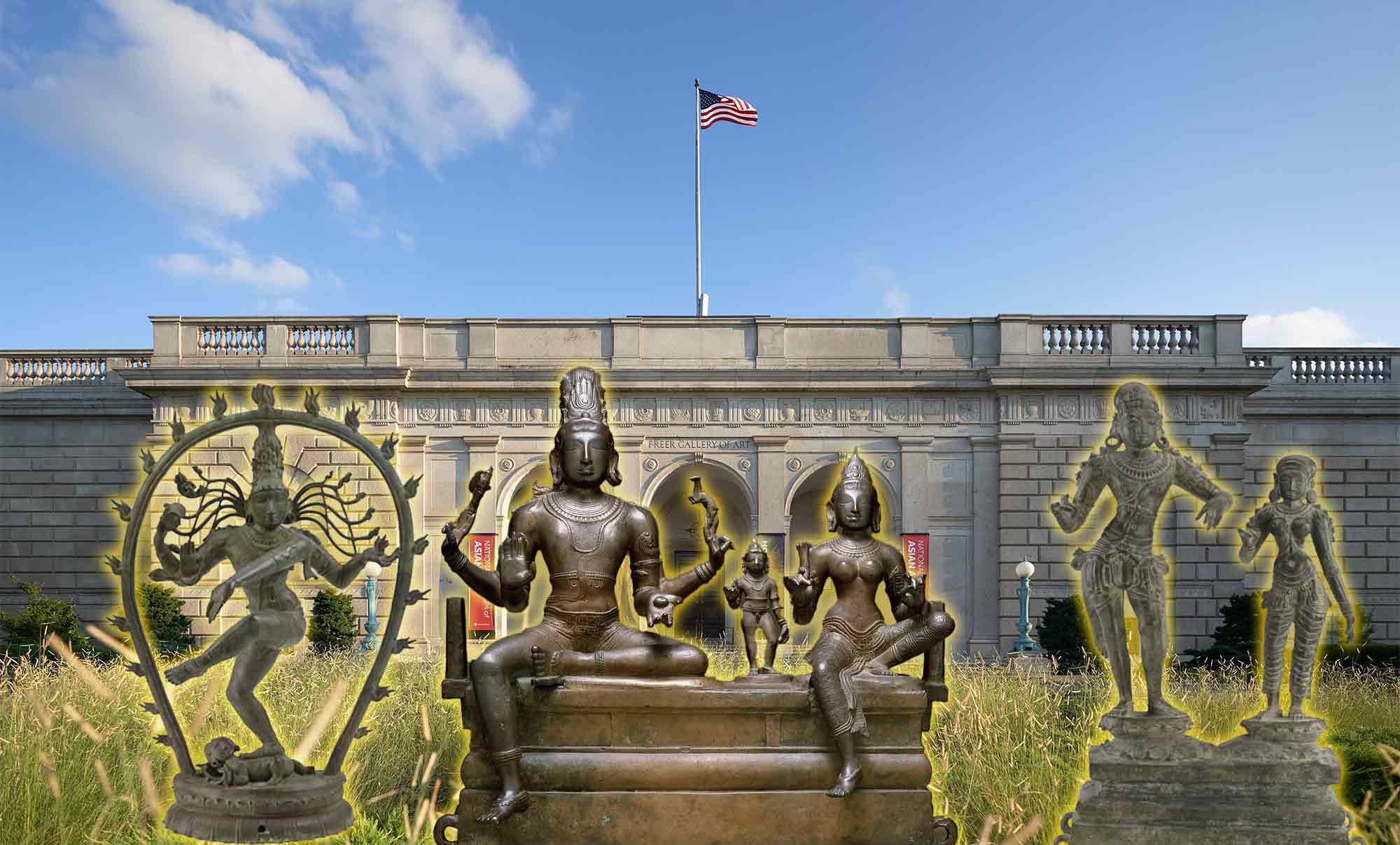

The Smithsonian’s National Museum of Asian Art in Washington, D.C., is returning three stolen Indian bronze statues to the Indian government. The statues include a 12th-century ‘Somaskanda,’ which shows Shiva with his wife, the 16th-century ‘Saint Sundarar With Paravai,’ and a dancing Shiva known as ‘Shiva Nataraja,’ made around A.D. 990.
As per reports, the museum said on Wednesday (28th January) that, after “rigorous provenance research”, the three artefacts were found to have been smuggled out of India. “The return of these sculptures, the result of proactive research, reflects our dedication to ethical museum practice,” museum director Chase F. Robinson said. “The National Museum of Asian Art is committed to stewarding cultural heritage responsibly and advancing transparency in our collection. Because we aim to understand the objects in our collection in their full complexity, we carry out a robust programme of research that seeks to trace not just how they came to the museum, but the history of their origins and movements across time,” he added.
A statement by the museum mentioned that the Indian government had agreed to place ‘Shiva Nataraja on long-term loan. The arrangement would allow the museum to display the statue and share the information about the origins, removal and repatriation. The statue will be on display as part of the exhibition ‘The Art of Knowing in South Asia, Southeast Asia, and the Himalayas.’ Robinson told the Washington Post that the museum has a strong belief that the full biographies of the objects “are really interesting and compelling stories, and we are increasingly integrating them into our galleries and as a feature of our exhibitions.” The popularity of the bronze artefacts shot up after an early-20th century writing by art historian Ananda Coomaraswamy described the statues as emblems of India’s exceptionalism.
The museum is in touch with the Indian embassy to finalise the arrangements for executing the agreement. According to the statement, the repatriation of the ancient artefacts followed the efforts of the provenance team of the National Museum of Asian Art and curators of South and Southeast Asian Art, with support from the Photo Archives of the French Institute of Pondicherry and several other organisations and people around the world.
How the stolen statues landed at the Smithsonian’s
It is reported that the ‘Shiva Nataraja’ was originally placed in the Shir Bhava Aushadesvara Temple in Tirrutturaippundi taluk in the Tanjavur district of Tamil Nadu. It was photographed in the temple in 1957.

(National Museum of Asian Art, Smithsonian Institution, Freer Collection) (Image via The Washington Post)
It entered the museum in 2002 through the National Museum of Asian Art’s Doris Wiener Gallery in New York. According to the museum, it was discovered through research that the gallery had produced forged documents to facilitate the sale. The office of the Manhattan district attorney revealed that Wiener was notorious for his “shopping trips” through South Asia, during which he used to pick “stolen antiquities that would later be smuggled into New York.” Wiener’s daughter, Nancy, who was a part of the gallery operations, pleaded guilty in 2021 to trafficking illicitly acquired works and creating false provenance records.

(National Museum of Asian Art, Smithsonian Institution, Arthur M. Sackler Collection) (Image via The Washington Post)
Museum director Chase F. Robinson said that the researchers at the museum tried to trace the origins of the ‘Shiva Nataraja’ bronze statue that they got from Wiener. However, they were not able to locate a gallery matching the name mentioned in the documents provided by Wiener. Nor could they find any street matching the gallery’s given address.
The ‘Somaskanda’ was photographed at the Visvanatha Temple in Alattur village, Mannarkudi taluk, in 1959 and ‘Saint Sundarar with Paravai’ was photographed at the Shiva Temple in Veerasolapuram village, Kallakuruchi taluk, in 1956. Both the statues reached the museum as part of a gift of 1000 objects in 1987 by Arthur M Sackler for the inauguration of his namesake gallery at the museum.

(National Museum of Asian Art, Smithsonian Institution, Arthur M. Sackler Collection) (Image via The Washington Post)
The new ‘ethical return policy’ of the museum
In 2022, the museum adopted a new policy of repatriating the artefacts called the Smithsonian’s Shared Stewardship and Ethical Returns Policy. The new policy widened the grounds of return of objects mentioned under the old policy, which provided for returning items obtained illegally. Last year, the museum appointed Nancy Karrels as associate director of provenance and object histories, a new role at the institution. The announcement about the return of its batch of works under the new policy was made last month after years of work by a four-member Asian Art provenance research team.
How the museum found out about the origins of the statues
The repatriation of the bronze statues followed a systematic review of the South Asian collection of the museum, in which a detailed investigation into the origins of the three statues was conducted. According to Robinson, the museum received a tip-off that the three bronze statues appeared in pictures in the Photo Archives of the French Institute of Pondicherry. In 2023, the museum researchers, in collaboration with the Photo Archives of the French Institute of Pondicherry, confirmed that the statues had been photographed in temples in Tamil Nadu, India, between 1956 and 1959. The findings were further reviewed by the Archaeological Survey of India, which affirmed that the statutes had been taken out of India illegally.
Subsequently, a curator visited the archives and found that the statues were documented in temple settings in Tamil Nadu in the 1950s. Robinson said that such “in situ” photographs form a legal basis in India to establish theft and confirm the unauthorised removal of the sculptures from India.
The problem of theft of Indian artefacts and the efforts to get them back
The theft of ancient Indian artefacts has been a long-standing and complex problem. Ancient sculptures, temple idols, coins, paintings, and several such objects of historical origins have been the subjects of these thefts. Many incidents of theft of these ancient artefacts go unreported, which makes it difficult to assess the scale of the damage. Ancient Indian artefacts fetch very high prices in Western museums, private collectors and auction houses, which incentivises the theft of these items. The Indian government has been lenient in addressing the problem, which is why the theft of these objects continued unchecked.
However, recently, with the efforts of organisations like the India Pride Project and the Modi government, India has been successful in retrieving ancient Indian artefacts from across the world. InSeptember 2024, the Indian government received 297 stolen artefacts from the United States. The artefacts, mostly made of terracotta, dated back 4000 years (2000 BC to 1900 AD). These included Apsara in sandstone, Jain Tirthankar in bronze, Lord Ganesh in bronze, Standing Lord Buddha in sandstone, Lord Vishnu in Bronze, Anthropomorphic figure in copper, Lord Krishna in bronze, and Lord Karthikeya in granite. The United States has, so far, returned 578 cultural artefacts to India in the past 8 years (10 in 2016, 157 in 2021, 105 in 2023). The total number of stolen antiquities recovered since 2014 now stands at 640.