Where the soul experiences union with Shiva: Read about the Bhavnath Fair held on Shivratri, known as Gujarat’s ‘Mini Kumbh’
At the foothills of the sacred Girnar mountain, regarded as a land of penance for yogis, a nurturing refuge for sages and saints, and a place that offers devotees supreme peace and spiritual bliss, the Bhavnath Fair has been held for centuries. This grand confluence of devotion, faith, and spiritual splendour begins on Maha Vad Nom and continues till Mahashivratri. Sadhus, saints, mahants, and devotees from across Gujarat and the rest of India gather here for satsang and the worship of Lord Shiva. This year, the Bhavnath Fair is being held from 11 February and on a much grander scale than usual. Considering the scale of preparations and magnificence, the fair is being described as a “Mini Kumbh.” This year, the administration of the Bhavnath temple is also under the government, which is making special efforts to preserve the sanctity of the fair and give it recognition at the national and global level. Final touches are currently being given to the arrangements and preparations. The fair is organised at the highly sacred Bhavnath Mahadev Temple, situated on the banks of the Suvarnarekha River at the foothills of Girnar. The Shiva Linga in the temple is self-manifested (swayambhu). The name “Bhavnath” means the “Lord of Bhava” (the manifested world), that is, Lord Shiva, the creator and master of worldly existence. What are the legends associated with the temple? According to legend, during the time of cosmic dissolution (Pralaya), the entire creation merged into Rudra, and the day of Brahma came to an end. At dawn, Brahma, Vishnu, and Rudra manifested again in the forms of Sattva, Rajas, and Tamas. During Pralaya, Lord Shiva was in deep meditation within the waters. A dispute arose among the three about who was supreme. Shiva intervened, assigned Brahma the task of creation, Vishnu that of preservation, and Rudra that of destruction, and thus resolved the conflict. Brahma, the father of the world, then requested Shiva to reside in the world and help resolve the joys and sorrows of human beings. Lord Shiva surveyed the earth, and his gaze fell upon the forest-clad Ujjayant mountain (Girnar), where he chose to reside. Meanwhile, in Kailash, Parvati could not find Mahadev and began searching for him. After hearing from the other gods, she set out in anger to find Shiva and, along with the deities, reached Girnar. On that day, Lord Shiva manifested here in the form of Bhavnath, it was the full moon day of Vaishakh Shukla Paksha. Parvati came to reside on Girnar in the form of Ambika, Vishnu took the form of Damodar and stayed at Damodar Kund, and other gods, yakshas, and gandharvas also made different places on Girnar their abode, such is the popular belief. The story of Mrigi Kund, located beside the temple of Lord Mahadev, is equally fascinating. It is said that King Bhoj of Kanyakubja was told by his attendants that in the forests of Revatachal (Girnar) there roamed a being with the face of a deer and the body of a woman. After much effort, King Bhoj brought her to his palace, but scholars could not solve the mystery. Finally, the king went to an ascetic practising severe penance at Kurukshetra. The sage granted the “deer-faced woman” the power of human speech. She narrated her past life: earlier, King Bhoj was a lion, and she was a doe. While being hunted, her head got stuck in a bamboo thicket, and her body fell into the Suvarnarekha River. By the sacred waters of the river, her body assumed a human form, but her face remained that of a deer. On the sage’s instructions, the king retrieved the skull of the doe from the thicket and immersed it in the waters of the Suvarnarekha. As a result, her entire body became human. King Bhoj then married her, and at her suggestion, built this kund at the foothills of Girnar, hence it came to be known as Mrigi Kund. This is a legend based on popular belief, and even today, on Shivratri, sadhus take a ritual bath here. Why is this place called “Vastraput Kshetra”? This region is also known as “Vastraput Kshetra.” According to a story mentioned in the Skanda Purana, Lord Shiva and Goddess Parvati were once travelling in a celestial chariot when one of Parvati’s divine ornaments fell at this spot. Since then, the place came to be known as Vastraput Kshetra. This story is also mentioned in the Gujarat government’s Information Department publication “Gujaratna Lokotsavo ane Mela” (Folk Festivals and Fairs of Gujarat). The special significance of the sadhus’ bath at Mrigi Kund The central focus of this fair is not householders but sadhus and saints. On the day of Nom, the fair is formally inaugurated by hoisting the flag at the Bhavnath temple, in the presence of sadhus who come from all over the country. The administration takes responsibility for arranging their camps and accommodations. On one side are the ascetics’ camps, and on the other, service organisations set up tents. Religious stalls come up, and for four days, the entire f
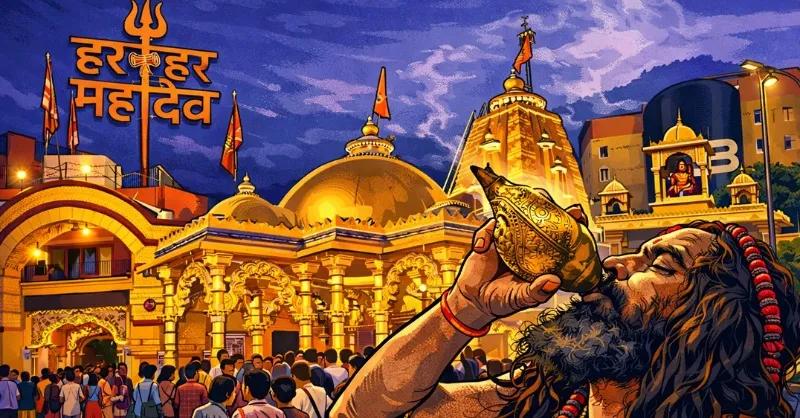

At the foothills of the sacred Girnar mountain, regarded as a land of penance for yogis, a nurturing refuge for sages and saints, and a place that offers devotees supreme peace and spiritual bliss, the Bhavnath Fair has been held for centuries. This grand confluence of devotion, faith, and spiritual splendour begins on Maha Vad Nom and continues till Mahashivratri. Sadhus, saints, mahants, and devotees from across Gujarat and the rest of India gather here for satsang and the worship of Lord Shiva.
This year, the Bhavnath Fair is being held from 11 February and on a much grander scale than usual. Considering the scale of preparations and magnificence, the fair is being described as a “Mini Kumbh.” This year, the administration of the Bhavnath temple is also under the government, which is making special efforts to preserve the sanctity of the fair and give it recognition at the national and global level. Final touches are currently being given to the arrangements and preparations.
The fair is organised at the highly sacred Bhavnath Mahadev Temple, situated on the banks of the Suvarnarekha River at the foothills of Girnar. The Shiva Linga in the temple is self-manifested (swayambhu). The name “Bhavnath” means the “Lord of Bhava” (the manifested world), that is, Lord Shiva, the creator and master of worldly existence.
What are the legends associated with the temple?
According to legend, during the time of cosmic dissolution (Pralaya), the entire creation merged into Rudra, and the day of Brahma came to an end. At dawn, Brahma, Vishnu, and Rudra manifested again in the forms of Sattva, Rajas, and Tamas. During Pralaya, Lord Shiva was in deep meditation within the waters. A dispute arose among the three about who was supreme. Shiva intervened, assigned Brahma the task of creation, Vishnu that of preservation, and Rudra that of destruction, and thus resolved the conflict.
Brahma, the father of the world, then requested Shiva to reside in the world and help resolve the joys and sorrows of human beings. Lord Shiva surveyed the earth, and his gaze fell upon the forest-clad Ujjayant mountain (Girnar), where he chose to reside. Meanwhile, in Kailash, Parvati could not find Mahadev and began searching for him.
After hearing from the other gods, she set out in anger to find Shiva and, along with the deities, reached Girnar. On that day, Lord Shiva manifested here in the form of Bhavnath, it was the full moon day of Vaishakh Shukla Paksha. Parvati came to reside on Girnar in the form of Ambika, Vishnu took the form of Damodar and stayed at Damodar Kund, and other gods, yakshas, and gandharvas also made different places on Girnar their abode, such is the popular belief.
The story of Mrigi Kund, located beside the temple of Lord Mahadev, is equally fascinating. It is said that King Bhoj of Kanyakubja was told by his attendants that in the forests of Revatachal (Girnar) there roamed a being with the face of a deer and the body of a woman. After much effort, King Bhoj brought her to his palace, but scholars could not solve the mystery. Finally, the king went to an ascetic practising severe penance at Kurukshetra.
The sage granted the “deer-faced woman” the power of human speech. She narrated her past life: earlier, King Bhoj was a lion, and she was a doe. While being hunted, her head got stuck in a bamboo thicket, and her body fell into the Suvarnarekha River. By the sacred waters of the river, her body assumed a human form, but her face remained that of a deer.
On the sage’s instructions, the king retrieved the skull of the doe from the thicket and immersed it in the waters of the Suvarnarekha. As a result, her entire body became human. King Bhoj then married her, and at her suggestion, built this kund at the foothills of Girnar, hence it came to be known as Mrigi Kund. This is a legend based on popular belief, and even today, on Shivratri, sadhus take a ritual bath here.
Why is this place called “Vastraput Kshetra”?
This region is also known as “Vastraput Kshetra.” According to a story mentioned in the Skanda Purana, Lord Shiva and Goddess Parvati were once travelling in a celestial chariot when one of Parvati’s divine ornaments fell at this spot. Since then, the place came to be known as Vastraput Kshetra. This story is also mentioned in the Gujarat government’s Information Department publication “Gujaratna Lokotsavo ane Mela” (Folk Festivals and Fairs of Gujarat).
The special significance of the sadhus’ bath at Mrigi Kund
The central focus of this fair is not householders but sadhus and saints. On the day of Nom, the fair is formally inaugurated by hoisting the flag at the Bhavnath temple, in the presence of sadhus who come from all over the country. The administration takes responsibility for arranging their camps and accommodations. On one side are the ascetics’ camps, and on the other, service organisations set up tents. Religious stalls come up, and for four days, the entire foothill area becomes immersed in devotion to Shiva.
Although the fair has been held for centuries and has seen some changes over time, its essence remains intact, the ritual bath by sadhus in Mrigi Kund. Just as the Shahi Snan is significant at the Kumbh Mela, the bath at Mrigi Kund holds special importance at this fair.
The midnight processions of sadhus on Shivratri are the main attraction
The biggest attraction of the fair is the chariot processions and ceremonial parades taken out by sadhus at midnight on Shivratri. Naga sadhus, Aghori sadhus, and ascetics from various akhadas ride on horses, carriages, or elephants, proceeding with conch shells and bands playing music, on their way to take a ritual bath at Mrigi Kund. Along the way, they also display feats like physical exercises, swordplay, and staff-fighting.
The Shahi Snan is led by the Panchdashnam Juna Akhada, along with mahants, mandaleshwars, and thousands of sadhus from other akhadas. These processions reach Mrigi Kund one after another, and the saints and Naga sadhus take turns bathing.
It is believed that Naga sadhus who live in the caves of Girnar also join these processions, and there is a popular belief that some sadhus disappear after bathing and are never seen emerging from the kund again. After the sadhus complete their bath, aarti and maha puja of Lord Shiva are performed at the Bhavnath temple. By morning, the fair comes to its conclusion.
Speaking to OpIndia, Mahant Ramjubapu of Ambika Ashram said, “This fair is as sacred and purifying as the Kumbh. Here, on Mahashivratri, thousands of Naga sadhus and Aghoris take the Shahi Snan in the kund, but they do not come out after bathing. To this day, no one knows where these sadhus come from and where they disappear after taking a dip in Damodar Kund.”
Social organisations engage in service activities
On the land of Saurashtra, such a religious congregation cannot happen without service activities. At the Bhavnath Fair too, social organisations and donors from across Gujarat and India arrive in caravans from as early as the fifth day to serve the sadhus and devotees. Their camps and lodgings are pre-decided, such as Jerambapa’s Girnari camp, Toraniya’s camp, Parab’s camp, Bhurabhagat’s tent, Laxman Barot’s camp, Khodiyar Ras Mandal’s tent, and others.
At these places, arrangements are made for meals three times a day and for overnight stay. Continuous bhajans, satsangs, and saintly discourses go on. Some well-known artists also arrive and participate in devotional performances. Devotees keep coming and going throughout the day, and all arrangements are made so that they can partake in both food and worship.
The Bhavnath Fair held at the Bhavnath temple is not merely a festival; it is a unique confluence of devotion, penance, service, and satsang, where the soul experiences union with Shiva.