‘Caste by birth remains the same even if one changes religion’: How Allahabad HC’s verdict on a case under SC-ST Act can lead to misinterpretations and misuse
On 10th February (Tuesday), the Allahabad High Court declared that caste, which is conferred by birth, does not change in spite of intercaste marriage or religious conversion. Justice Anil Kumar was hearing a criminal case concerning atrocities under the Scheduled Castes and Scheduled Tribes (Prevention of Atrocities) Act. It concerned a SC woman who married a man outside the community. Dinesh and eight other individuals had moved a criminal appeal against the order of the Special Judge under the SC/ST Act who had ordered them to stand trial for violations under Sections 323, 506, 452 and 354 of the Indian Penal Code (IPC) and Section 3(1)(R) of the SC/ST Act but the plea has been denied. The woman accused these persons of attacking, abusing and hurling casteist slurs at her during a confrontation. She registered a criminal complaint against them and expressed that three persons including herself were wounded in the instance. The occurrence transpired in the Aligarh district of Uttar Pradesh. The court noted that both the events detailed in the First Information Report (FIR) and specified in the complaint happened simultaneously on the same day. It emphasised, “The allegation in the complaint is that the informant was assaulted and abused by the appellants. The complainant has also stated that the appellants used casteist slurs during the altercation. Three persons, including the informant, were injured in the incident. Hence, the claim of the appellants that the present complaint was lodged as a counterblast is untenable. Therefore, this criminal appeal lacks merit and is liable to be dismissed.” The court listens to arguments and pronounces its verdict The plaintiffs contended that they had been wrongfully implicated and an FIR had been launched against the woman before the current complaint. They maintained that the injury reports are on file confirming that other members of their family had also been hurt. They further argued that she is “a resident of West Bengal, where she belongs to the SC/ST community. She has now married a person belonging to the Jat community. However, she has concealed this fact and has claimed herself to be a woman belonging to the SC/ST community. Once she married a person belonging to the Jat community, she cannot claim herself to be a woman belonging to the SC/ST community.” They then highlighted that a woman who marries someone from a different caste loses her original caste. She transforms into a member of her spouse’s caste. Therefore, it is unsustainable and subject to revocation to call them for the purported infractions as well as under the SC/ST Act. “The existence of a cross-case does not constitute a ground to discard a complaint filed by the opposite party on a rival version. Hence, it cannot be said that the learned trial court has committed any illegality in summoning the appellants for the alleged offences,” the court observed. Afterwards, it concluded, “So far as the contention that the informant has lost her caste after marrying a person belonging to the Jat community is concerned, the said contention has no force. Though a person may change religion, his or her caste remains the same despite conversion to another religion. Hence, marriage does not change a person’s caste. Therefore, the said contention is unsustainable. Accordingly, the appeal is dismissed.” The order of special judge, SC/ST (Prevention of Atrocities) Act On 27th July 2022, Special Judge Sanjeev Kumar Singh, presiding over the court of the SC/ST (Prevention of Atrocities) Act pronounced the verdict following a complaint lodged by Jyotirai Devi. She prayed that defendants, Dinesh, Mahendra, Satish, Lotan, Bharat Bhushan, Tikesh, Ajit, Subhash, Rinku, Rajesh Devi and Manju Devi should be summoned for trial and face punishment. Jyotirai Devi claimed to be a SC and asserted that they are influential members of the Jat community. The court order read that she had contested the village chief’s election the previous year which led to animosity from the accused. It further reported that she was preparing food in her courtyard when some bricks fell into her space on 6th September 2021. She objected but Dinesh and Mahendra entered the house brandishing sticks. Bharat Bhushan had a country-made pistol, Tikesh was equipped with an iron pipe, Ajit had a sickle and Subham as well as Rinku were holding bricks and sticks. Rajesh Devi had a brick in his hand and Manju Devi was also armed with a stick. The complainant and her family members were assaulted and abused by them. The accused wanted to teach her a lesson because she had been quite vocal in the community and was attempting to establish herself as a leader. These individuals pushed her down while making these remarks and Dinesh grabbed her private parts. Meanwhile, Mahendra, Satish, Rajesh Devi and Manju Devi battered Jyotirai Devi with sticks and bricks. Bharat Bhushan discharged a firearm at her f
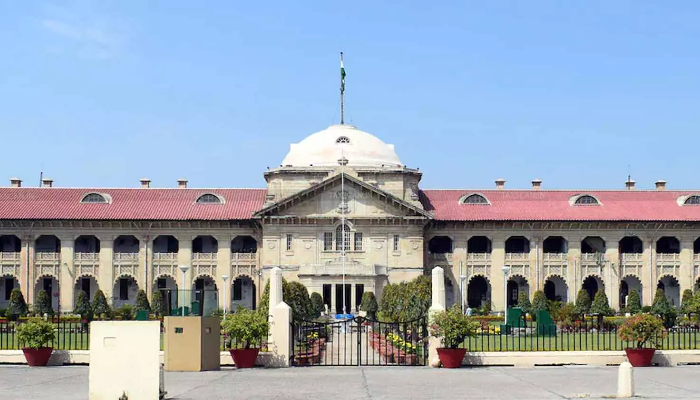

On 10th February (Tuesday), the Allahabad High Court declared that caste, which is conferred by birth, does not change in spite of intercaste marriage or religious conversion. Justice Anil Kumar was hearing a criminal case concerning atrocities under the Scheduled Castes and Scheduled Tribes (Prevention of Atrocities) Act. It concerned a SC woman who married a man outside the community.
Dinesh and eight other individuals had moved a criminal appeal against the order of the Special Judge under the SC/ST Act who had ordered them to stand trial for violations under Sections 323, 506, 452 and 354 of the Indian Penal Code (IPC) and Section 3(1)(R) of the SC/ST Act but the plea has been denied.
The woman accused these persons of attacking, abusing and hurling casteist slurs at her during a confrontation. She registered a criminal complaint against them and expressed that three persons including herself were wounded in the instance. The occurrence transpired in the Aligarh district of Uttar Pradesh.
The court noted that both the events detailed in the First Information Report (FIR) and specified in the complaint happened simultaneously on the same day. It emphasised, “The allegation in the complaint is that the informant was assaulted and abused by the appellants. The complainant has also stated that the appellants used casteist slurs during the altercation. Three persons, including the informant, were injured in the incident. Hence, the claim of the appellants that the present complaint was lodged as a counterblast is untenable. Therefore, this criminal appeal lacks merit and is liable to be dismissed.”
The court listens to arguments and pronounces its verdict
The plaintiffs contended that they had been wrongfully implicated and an FIR had been launched against the woman before the current complaint. They maintained that the injury reports are on file confirming that other members of their family had also been hurt.
They further argued that she is “a resident of West Bengal, where she belongs to the SC/ST community. She has now married a person belonging to the Jat community. However, she has concealed this fact and has claimed herself to be a woman belonging to the SC/ST community. Once she married a person belonging to the Jat community, she cannot claim herself to be a woman belonging to the SC/ST community.”
They then highlighted that a woman who marries someone from a different caste loses her original caste. She transforms into a member of her spouse’s caste. Therefore, it is unsustainable and subject to revocation to call them for the purported infractions as well as under the SC/ST Act.
“The existence of a cross-case does not constitute a ground to discard a complaint filed by the opposite party on a rival version. Hence, it cannot be said that the learned trial court has committed any illegality in summoning the appellants for the alleged offences,” the court observed.
Afterwards, it concluded, “So far as the contention that the informant has lost her caste after marrying a person belonging to the Jat community is concerned, the said contention has no force. Though a person may change religion, his or her caste remains the same despite conversion to another religion. Hence, marriage does not change a person’s caste. Therefore, the said contention is unsustainable. Accordingly, the appeal is dismissed.”

The order of special judge, SC/ST (Prevention of Atrocities) Act
On 27th July 2022, Special Judge Sanjeev Kumar Singh, presiding over the court of the SC/ST (Prevention of Atrocities) Act pronounced the verdict following a complaint lodged by Jyotirai Devi. She prayed that defendants, Dinesh, Mahendra, Satish, Lotan, Bharat Bhushan, Tikesh, Ajit, Subhash, Rinku, Rajesh Devi and Manju Devi should be summoned for trial and face punishment.
Jyotirai Devi claimed to be a SC and asserted that they are influential members of the Jat community. The court order read that she had contested the village chief’s election the previous year which led to animosity from the accused. It further reported that she was preparing food in her courtyard when some bricks fell into her space on 6th September 2021.
She objected but Dinesh and Mahendra entered the house brandishing sticks. Bharat Bhushan had a country-made pistol, Tikesh was equipped with an iron pipe, Ajit had a sickle and Subham as well as Rinku were holding bricks and sticks. Rajesh Devi had a brick in his hand and Manju Devi was also armed with a stick.
The complainant and her family members were assaulted and abused by them. The accused wanted to teach her a lesson because she had been quite vocal in the community and was attempting to establish herself as a leader. These individuals pushed her down while making these remarks and Dinesh grabbed her private parts.
Meanwhile, Mahendra, Satish, Rajesh Devi and Manju Devi battered Jyotirai Devi with sticks and bricks. Bharat Bhushan discharged a firearm at her family members with the intent to kill, resulting in them narrowly escaping harm but she endured injuries. On the other hand, Dharamveer and Sitaram from the neighbourhood heard the chaos and landed at the scene to try to help her. However, the accused issued threats to kill her as the two departed.
No action on the police complaint and the court’s decision
Jyotirai Devi attempted to file a report at the police station but it was not accepted. She subsequently submitted an application to the Senior Superintendent of Police (SSP) in Aligarh on 21st September 2021. Nevertheless. no action was taken.

The complainant had been examined in oral evidence in accordance with sections 200 and 202 of the Code of Criminal Procedure (CrPC). Photocopies of medical examination reports pertaining to her, Vishnu Kumar and Ramesh had been given to the SSP.
An application was previously put forward by the complainant under section 156 (3) CrPC in respect of which a report was summoned from the police station. It highlighted that Dinesh had registered an FIR under sections 147, 323, 308, 504 and 506 of the IPC against her husband Vishnu Kumar and 8 others in the Khair police station of the Aligarh district.
Jyotirai Devi’s statement outlined that the aforementioned medical analysis had also been provided. She stressed that all the opposing parties were responsible for the incident but the witness called by her, Vishnu Kumar who is her husband, did not state that Rajesh Devi Manju Devi were implicated in the crime. Hence, summoning the duo for trial was unwarranted.
However, the order added that a prima facie case had been lodged under sections 323, 506, 452 and 354 of the IPC and Section 3(1)(R) of the SC/ST Act which justified their presence for trial based on the examination of the proof associated with the complaint.

The court instructed Dinesh, Mahendra, Satish, Lotan, Bharat Bhushan, Tikesh, Ajit, Subhash and Rinku to stand trial under sections 323, 506, 452 and 354 of the Indian Penal Code along with section 3(1)(r) of the SC/ST Act and urged the complainant to submit the necessary defence within a week. It added that the accused must attend the hearing scheduled for 18th September 2022.

Lotan Singh’s FIR accuses Vishnu and his companions
On 7th September 2021, an FIR was initiated by Lotan Singh son of Bhagwan Sahay of Mathna hamlet with the officer-in-charge of the Khair Police Station. He conveyed that Vishnu and others had an issue with him because he did not support them through his vote during the election of village head (pradhan). OpIndia has a copy of the official complaint.
He stated, “Shyam Singh son of a moneylender Ramesh, Jugendra Singh son of Ramlal Vishnu and Sitaram, Mahendra Singh, Lal Singh alias Lalu who are sons of Yashveer along with Harikishan (Kalu) and Shyam Singh (Shyam) forcibly entered my residence armed with sticks and bricks and commenced to assault me at around 6:30 pm on 6th September.”
He mentioned that Dinesh son of Girraj and Satish son of Devdutt, rushed to intervene owing to the commotion, however, they were also thrashed by the attackers. “My sons, Bharat and Dinesh, endured a severe beating. They have sustained serious head injuries and I have also suffered wounds,” the complainant charged.
“The level of brutality has exceeded all bounds. I arrived at the police station in a critical state and since I was unable to file a report yesterday, I have come today,” he added, demanding strict action in the matter. The authorities invoked sections 147, 323, 308 and 452 of the IPC.
Judgement could open the door to the Dalit Christian reservation
The decision, although made to address a conflict between two sides, might lead to significant implications for the broader society. Its reference to the maintenance of SC/ST caste status for women even when they marry outside their community and the assertion that religion does not influence caste has the potential to open a Pandora’s box.
This could cause numerous people who have converted to Christianity and even other faiths to seek a stake in the reservations that are intended solely for SC/ST individuals affiliated with Indic religions like Hinduism and others.
Notably, the Supreme Court earlier clarified that an individual loses their caste immediately upon embracing Christianity and expressed, “In any case, upon conversion to Christianity, one loses her caste and cannot be identified by it.” The court further underscored the sensitivities linked to the reservation and the fundamental motive behind the action, pointing out that even entering the fold of Hinduism to gain caste benefits is a deception against the Constitution. It added that reservations are meant to rectify historical injustice and advance social justice.
Additionally, Indian courts have consistently maintained that the reservation is not for those who have left Hinduism and become Christians. Interestingly, the Allahabad High Court last year directed the district magistrates of the state to identify those who have converted yet continue to reap the benefits of SC status, deeming it a “fraud on the Constitution.”
On the other hand, the concept of caste does not exist in Christianity or any other religion. Nonetheless, there is a caste system within the Indian Christian community. Many Christians follow the same even though the Vatican and other religious organisations do not support it. These people adhere to the caste that they or their ancestors were a part of prior to their conversion. This is utilised as a foundation to often demand reservations for them.
However, it seems very outlandish to renounce the Hindu religion while retaining its fundamental aspects when embarking on a new spiritual journey. Furthermore, Christian missionaries have been known to target Hindus from lower castes in an effort to convert them by ensuring that there is “no place for discrimination” in their religion. Nonetheless, if the promise is revealed to be untrue, then they can easily do “ghar wapsi” and become a Hindu.
More importantly, considering them for reservation represents a grave injustice inflicted upon SC/ST Hindus who have not been swayed to abandon their faith in the name of bogus promises and hold a valid right to the reservations.
If the category is expanded to include Christians, it will result in fewer seats in jobs and educational institutions for bona fide members of the SC/ST community, as thousands of new candidates are going to compete for the opportunities reserved for the latter, making it more difficult for the already marginalised sections of the demographic to ascend the economic ladder.
Moreover, the government exclusively seizes donations from Hindu temples and sacred sites under the pretext of taxes. Therefore, reservations serve as a means to elevate the marginalised members of the Hindu community. Universalising reservations will also result in a loss of their real character and the purpose for which they were originally introduced. This situation will also be exploited by the vested interests groups and several will jump ship to switch religious allegiances as per convenience, thus defeating the whole purpose of the laws.
Hence, the remarks in the recent judgment of the Allahabad High Court could introduce several new challenges for a developing India and carry extensive outcomes, particularly in relation to the Hindu SC/ST community.