Delhi HC calls out anti-India activist Amrit Wilson over cancellation of her OCI card, cites IB report of her activities, says ‘we can’t allow the country to be maligned’
On 16th February, the Delhi High Court made strong oral observations while hearing a petition filed by pro Islamist UK based academic, writer and journalist Amrit Wilson. In her petition, 82 year old Wilson has challenged the cancellation of her Overseas Citizen of India, OCI, card. Justice Purushaindra Kumar Kaurav remarked that India cannot be “such a tolerant State that we allow our own country to be criticised or maligned at international platforms”. His remarks showcased the seriousness with which the Court viewed the allegations placed before it against Wilson. The remarks by Justice Kaurav came after the Bench reviewed the confidential material submitted by the Central Government in a sealed cover. The Court noted that there were Intelligence Bureau reports concerning Wilson and that the allegations against her went beyond isolated social media posts. In open court, the judge observed that there were not merely “two tweets” involved but allegations of participation in activities considered adverse to India’s interests. The Court made it clear that issues touching upon sovereignty and integrity cannot be treated lightly. In March 2023, the High Commission of India in London revoked her OCI status. The show cause notice issued to her in November 2022 pointed towards her engagement in several anti India activities. The notice stated that she participated in “detrimental propaganda” against the Government of India, posing a threat to the sovereignty and integrity of the country and the interests of the general public. Senior Advocate Trideep Pais appeared for Wilson. He claimed before the Court that the show cause notice lacked details to effectively respond to the allegations. He also objected to the reliance on sealed cover submissions. He contended that such a practice has been deprecated in certain Supreme Court decisions. On the other hand, the Central Government submitted that while publicly available material had been shared, certain intelligence inputs were confidential in nature and directly related to matters affecting national security. After examining the sealed material, the Court observed that the allegations reflected therein were serious. It directed both parties to file written submissions and listed the matter for further hearing in August. The Bench’s observations indicate that the issue is not merely procedural but concerns the broader question of whether activities undertaken abroad, if found detrimental to India’s sovereignty, can justify withdrawal of OCI privileges. OCI is a statutory privilege, not citizenship or a right There have been several cases where the Government of India has revoked OCI status. Such cases include that of controversial academic Nitasha Kaul, author Aatish Taseer, Ashok Swain and several others. One thing that needs to be pointed out is that an OCI card is just a privilege and not a right. It does not grant political rights, voting rights, or constitutional status equivalent to that of an Indian citizen. It is a long term visa facility extended to certain categories of foreign nationals of Indian origin under Section 7B of the Citizenship Act, 1955. In 2020, the Central Government clarified before courts that OCI status is a statutory right created by legislation and policy. It is not a fundamental or constitutional right. In an affidavit filed in the Delhi High Court, the Ministry of External Affairs explicitly stated that fundamental rights guaranteed under the Constitution are only for Indian citizens and cannot be claimed as a matter of entitlement by OCI cardholders. The affidavit emphasised that the grant of OCI privileges depends entirely upon the policy of the Central Government. Since the facility is conferred by notification under statutory provisions, the scope of rights and the conditions attached to them are determined by the executive within the framework of law. This means that the continuation of OCI benefits is conditional upon compliance with Indian law and conduct consistent with the sovereignty and integrity of the nation. Under the Citizenship Act and the relevant rules, the government is empowered to revoke OCI registration if it is satisfied that the registration was obtained by fraud, concealment of material facts, or if the cardholder has shown disaffection towards the Constitution of India, engaged in unlawful trade or communication with an enemy state, or acted in a manner prejudicial to the sovereignty and integrity of India. Therefore, legally speaking, OCI status is not an immutable entitlement. It is a facility that can be withdrawn if statutory conditions are triggered. In the simplest possible terms, it is just a glorified visa with some additional features, nothing more. Revocation does not amount to permanent exclusion An important aspect often overlooked in public discourse is that cancellation of an OCI card does not amount to a blanket ban on entering India. A person whose OCI st

On 16th February, the Delhi High Court made strong oral observations while hearing a petition filed by pro Islamist UK based academic, writer and journalist Amrit Wilson. In her petition, 82 year old Wilson has challenged the cancellation of her Overseas Citizen of India, OCI, card. Justice Purushaindra Kumar Kaurav remarked that India cannot be “such a tolerant State that we allow our own country to be criticised or maligned at international platforms”. His remarks showcased the seriousness with which the Court viewed the allegations placed before it against Wilson.
The remarks by Justice Kaurav came after the Bench reviewed the confidential material submitted by the Central Government in a sealed cover. The Court noted that there were Intelligence Bureau reports concerning Wilson and that the allegations against her went beyond isolated social media posts. In open court, the judge observed that there were not merely “two tweets” involved but allegations of participation in activities considered adverse to India’s interests. The Court made it clear that issues touching upon sovereignty and integrity cannot be treated lightly.
In March 2023, the High Commission of India in London revoked her OCI status. The show cause notice issued to her in November 2022 pointed towards her engagement in several anti India activities. The notice stated that she participated in “detrimental propaganda” against the Government of India, posing a threat to the sovereignty and integrity of the country and the interests of the general public.
Senior Advocate Trideep Pais appeared for Wilson. He claimed before the Court that the show cause notice lacked details to effectively respond to the allegations. He also objected to the reliance on sealed cover submissions. He contended that such a practice has been deprecated in certain Supreme Court decisions. On the other hand, the Central Government submitted that while publicly available material had been shared, certain intelligence inputs were confidential in nature and directly related to matters affecting national security.
After examining the sealed material, the Court observed that the allegations reflected therein were serious. It directed both parties to file written submissions and listed the matter for further hearing in August. The Bench’s observations indicate that the issue is not merely procedural but concerns the broader question of whether activities undertaken abroad, if found detrimental to India’s sovereignty, can justify withdrawal of OCI privileges.
OCI is a statutory privilege, not citizenship or a right
There have been several cases where the Government of India has revoked OCI status. Such cases include that of controversial academic Nitasha Kaul, author Aatish Taseer, Ashok Swain and several others. One thing that needs to be pointed out is that an OCI card is just a privilege and not a right.
It does not grant political rights, voting rights, or constitutional status equivalent to that of an Indian citizen. It is a long term visa facility extended to certain categories of foreign nationals of Indian origin under Section 7B of the Citizenship Act, 1955.
In 2020, the Central Government clarified before courts that OCI status is a statutory right created by legislation and policy. It is not a fundamental or constitutional right. In an affidavit filed in the Delhi High Court, the Ministry of External Affairs explicitly stated that fundamental rights guaranteed under the Constitution are only for Indian citizens and cannot be claimed as a matter of entitlement by OCI cardholders.
The affidavit emphasised that the grant of OCI privileges depends entirely upon the policy of the Central Government. Since the facility is conferred by notification under statutory provisions, the scope of rights and the conditions attached to them are determined by the executive within the framework of law. This means that the continuation of OCI benefits is conditional upon compliance with Indian law and conduct consistent with the sovereignty and integrity of the nation.
Under the Citizenship Act and the relevant rules, the government is empowered to revoke OCI registration if it is satisfied that the registration was obtained by fraud, concealment of material facts, or if the cardholder has shown disaffection towards the Constitution of India, engaged in unlawful trade or communication with an enemy state, or acted in a manner prejudicial to the sovereignty and integrity of India.
Therefore, legally speaking, OCI status is not an immutable entitlement. It is a facility that can be withdrawn if statutory conditions are triggered. In the simplest possible terms, it is just a glorified visa with some additional features, nothing more.
Revocation does not amount to permanent exclusion
An important aspect often overlooked in public discourse is that cancellation of an OCI card does not amount to a blanket ban on entering India. A person whose OCI status has been revoked can still apply for a regular tourist, research, employment or business visa like any other foreign national.
Such visa applications are processed in accordance with prevailing immigration rules and security clearances. The government retains discretion, as it does with all foreign nationals, to grant or refuse entry based on policy considerations and security assessments. However, revocation of OCI does not, in itself, permanently sever the possibility of visiting India.
This distinction is crucial. OCI is frequently described as a form of “quasi citizenship,” but in reality, it is closer to a long duration visa with additional conveniences such as exemption from registration with the Foreigners Regional Registration Office and parity with non resident Indians in certain economic and educational matters. It does not create a constitutional bond equivalent to citizenship.
Those whose OCI status gets revoked often behave as if India has stripped them of their citizenship. In reality, it is just cancellation of a long duration visa.
Background of public positions and controversies
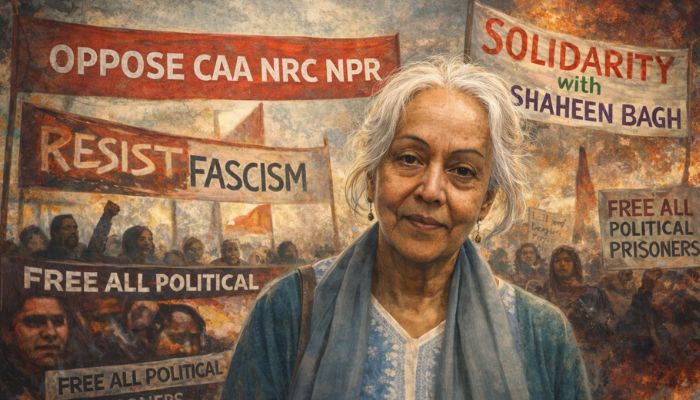
Wilson has publicly criticised various policies of the Government of India. She has opposed the Citizenship Amendment Act, CAA, the proposed National Register of Citizens, NRC, and the National Population Register, NPR. She has described Prime Minister Narendra Modi and his government in strong terms in public forums, often calling them fascist.
It is important to note that while protests against NRC and NPR were widespread, no operational rules were ever notified for implementation of NRC or NPR at a nationwide level.

In addition to criticism of domestic politics, Wilson has participated in international events where India’s legislative measures were described as Islamophobic and as steps towards “ethnic cleansing”. She has also made statements regarding the unrest in Leicester. She claimed that RSS supporters were transported to provoke conflict and to strengthen a narrative of Hindus as victims. Such claims were strongly contested by several community organisations and commentators who cited evidence of Islamist mobs attacking Hindu homes and temples.
Wilson has been associated with the South Asia Solidarity Group based in Britain, which has organised protests outside the Indian High Commission and has frequently posted material critical of the BJP and RSS on social media. The group has portrayed developments in Kashmir through a lens that aligns with separatist narratives and has participated in campaigns framing India as an aggressor in the region.
Her social media activity has included use of symbolic imagery associated with separatist campaigns after the abrogation of Article 370, further placing her in alignment with narratives viewed by the Indian government as hostile to its territorial integrity.
The likes of Wilson, Nitasha Kaul, Aatish Taseer and Ashok Swain have lost their OCI privilege not because of any vendetta of the government against them. They lost the privilege because of their anti India actions that were a threat to the sovereignty and national security of the country.